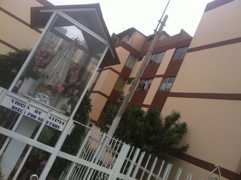
Catholasism is the main religion here and there are signs of respect all through the neighborhoods.
The food here is fantastic! We go into town again. This time to the popular touristy parts on the coast. The beaches are unusual here. Out there is the uninterrupted Pacific Ocean so there are waves crashing onto the beach. The beach isn’t sand but a very course gravel consisting of well-worn rocks and it is easy to see where that comes from. Behind the beach is a geologically interesting cliff of about 100 meters, of which Lima sits atop. The cliff is made up of a very course conglomerate (sedimentary rock) suggesting a time when this region was deep under the ocean accumulating materials washed down from the mountains however long ago. The ocean’s erosive ways now make a course beach out of this interesting cliff. Micht tells me there is sand on the beaches further south.
Lunch is a smorgasbord at a popular restaurant in this part of town. It’s a great opportunity for me to sample all sorts of traditional dishes at once but I always get into trouble with this style of dining. And this time is no different. In attempting to try everything I end up hopelessly overeating and being uncomfortable for the rest of the afternoon. They have a black colored corn here with which they make a popular traditional non-alcoholic drink called chirimoya. It’s a deep purple in colour and has an interesting sweet taste.
This area is a mix of old and new. Some very old addresses are located beautifully at the edge of the cliff and have been cleverly converted to restaurants and pubs. These beautiful rustic old buildings with fantastic views create a great atmosphere for eating and drinking. There are also very new and modern hotels and shops and many of the American fast-food chains are here. Much of the cliff edge is made up of parks and recreational spaces popular with tourists and locals.
 angusmccoll