From the overnight hostel we start to walk. We are behind shedule because some of the Israelies have left gear at the las stop and we have to wait for a bus to deliver. The young Israelies group are a strange lot. They are rude and demanding of the guide and they are always slow to get going, dictating the pace of the whole tour. The outnumber us Aussies by 10 to two and never apologise to us for always being late. Their friendly enough to us but have very hard manners.
The delayed walk takes us back and forth along the Urubamba River where we pass through small agricultural villages. They grow a wide range of horticultural produce on the mountain slopes. We pass a huge man-made hole in the mountain wall where water gushes out. It’s part of a hydro-electric scheme. Further up we come to another huge hole in the mountain wall, very high up. This one is natural and the water is ice melt.
From here the track takes us into rainforest. We are following the railway line now. Either side are high mountain ridges with sheer sides and pointed peaks. The guide points out some structures way up on top. That is Machupicchu. ‘You’re joking’. You stewing your neck to look up but just visible are terraces and structures on the ridge edge. It is good seeing Machupicchu from this angle because it gives a real sense of the impossibility of what the Incas have achieved. It’s so far up, even with a good telephoto lens you can barely see the place. Nearby is a tall peak called Waynapicchu. We will climb to the top of that as well as visiting Machupicchu.
After seven hours in the trail we finally make it to our hostel in Aguas Calientes. This place is pure tourism, hostels, restaurants, markets and buses and trains. It is the access point fir Matchupicchu.
Samuel, our guide, is just 22 years if age and was brought up in the town of Ollantaytambo, not far from Cuzco. He’s a fit young fellow who likes to run marathons for a goby. Training in Cuzcos high altitude would give him great advantage at sea level and he came fifth in a large marathon in Lime. Great effort. He can speak the old Chetchya Inca language too, like Victor who I met in Cuzco previously. And like Victor, Samuel was taught by his grandparents. Sadly Samuel’s mother died of cancer last month, aged 42 years.
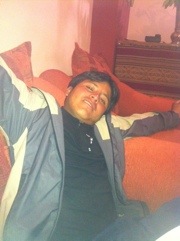
Samuel, our guide, after a few drinks! He doesn’t normally drink but he agreed to have a few with Penola (other Aussie) and me. The Israelies have driven him to drink I think. They have given him a difficult time. He calls the ‘the crazy Israelies’ and I don’t blame him.
 angusmccoll