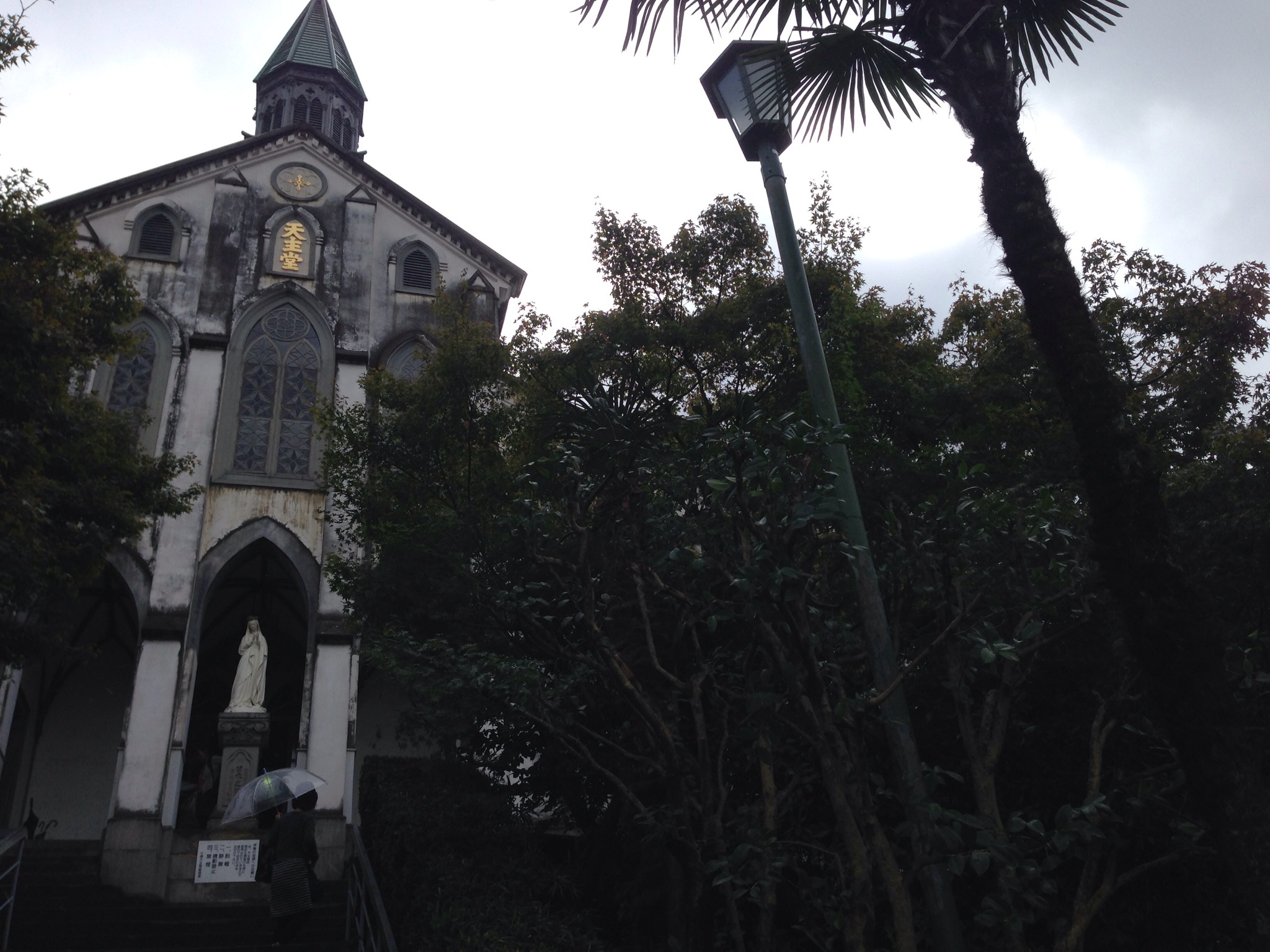
Nagasaki is a unique city in Japan in many ways. It has experienced a very different history, with European influences immediately apparent in certain parts of the city. There are churches. Christianity was introduced by the Portuguese in the 16th century and despite the best efforts of the ruling shogunates of the time, still survive today. Christians were persecuted to the point of being publicly executed in the streets, but still they persisted. The Portuguese were expelled for their trouble but then the Dutch and English came to trade and develop industries. This was allowed by the rulers of this area, which was very unusual for isolationist Japan. There were limitations. All foreigners were restricted to Dejima island within the city. There is European styled architecture here and a beautiful old Catholic Church that has survived Nagasaki’s tumultuous past. This is Oura Catholic Church and it was built in 1865 to commemorate the death of 26 Christians crucified in the streets by the ruling Shogun, Toyotomi.
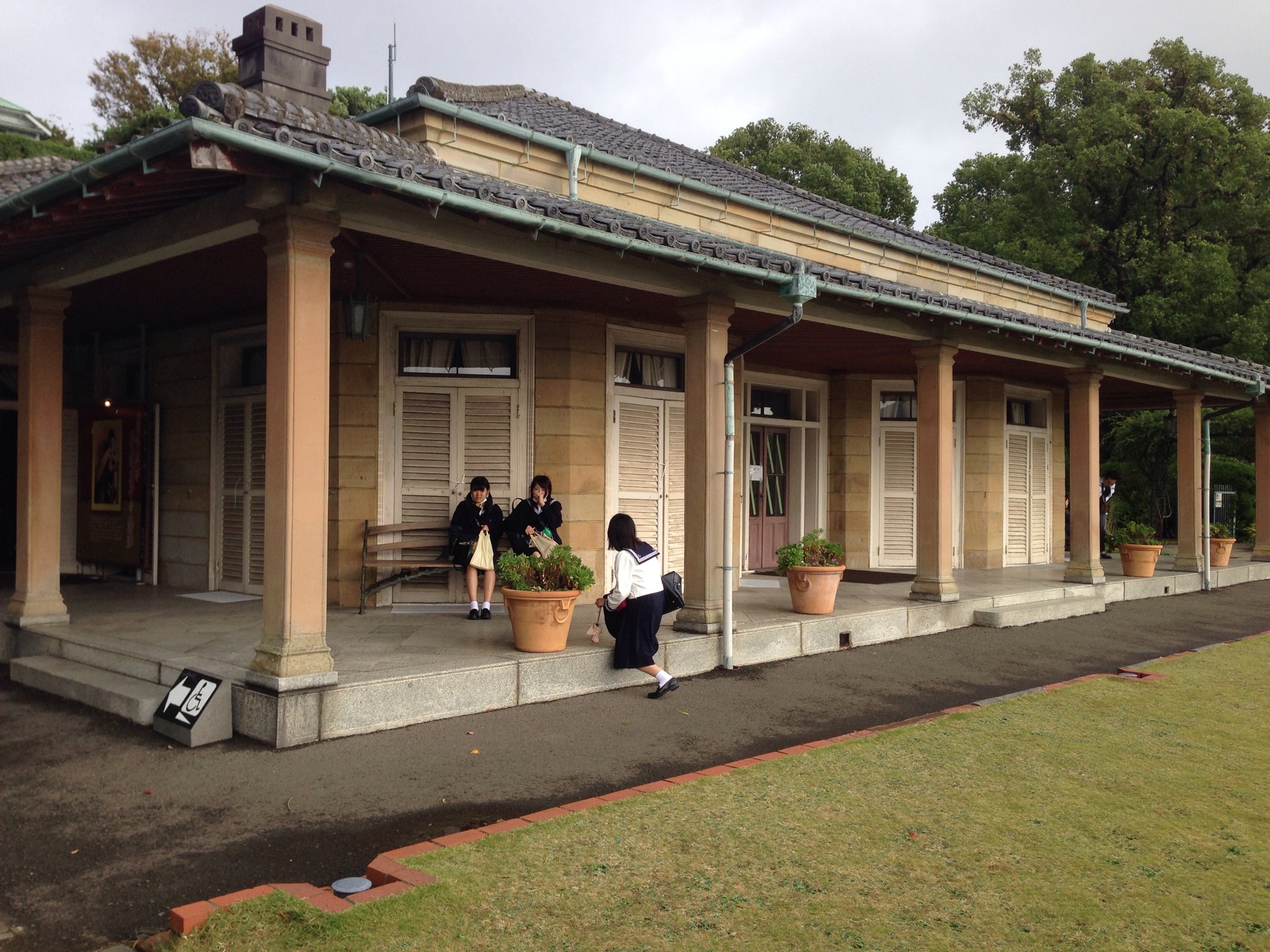
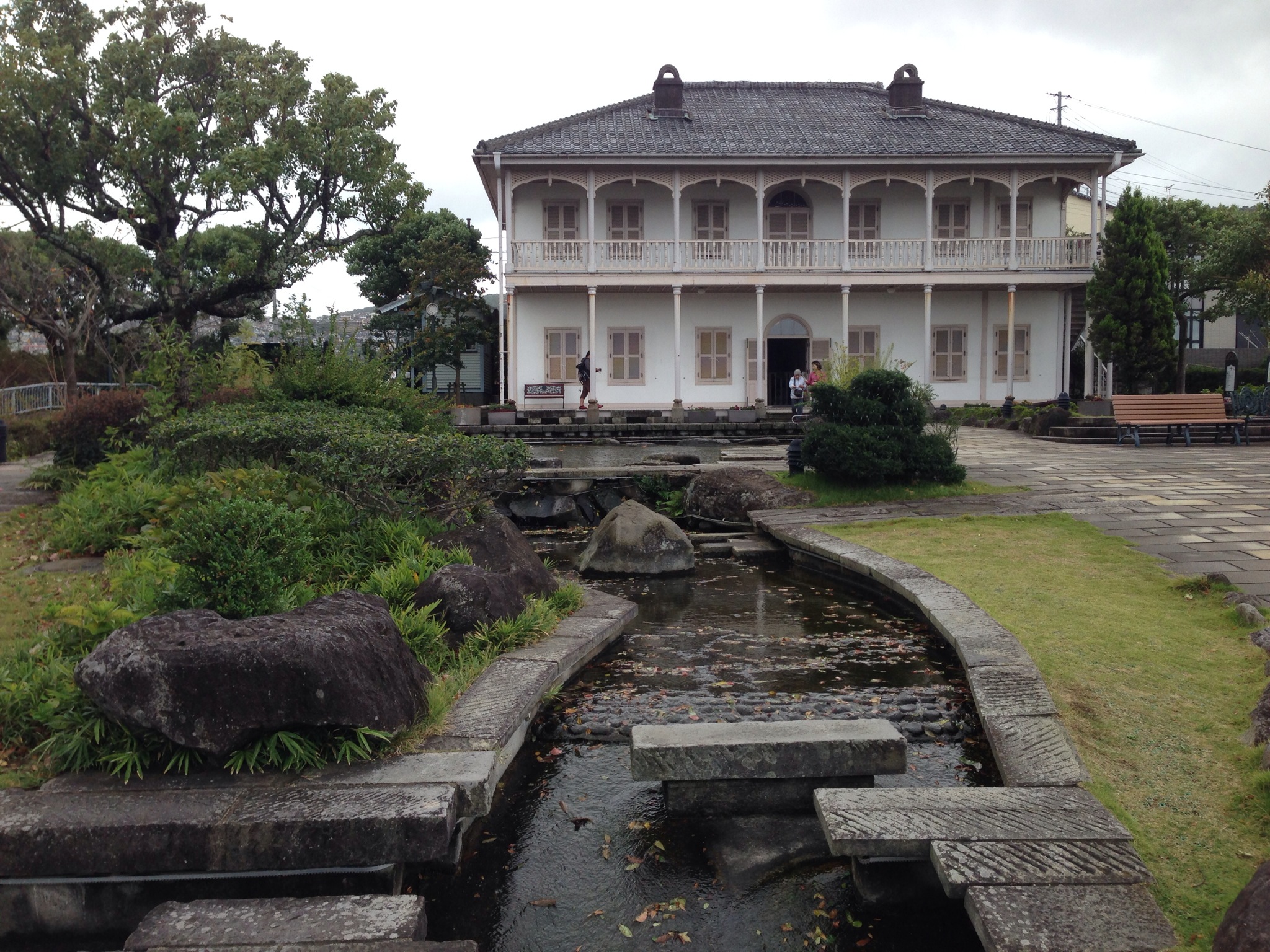
There is an area here called Glover Garden, where a Scotsman Robert Glover and his family lived for many years. Glover came via China in his mid twenties and was instrumental in introducing industry to Nagasaki. Ship building and railway construction were his thing, then later brewing. He helped set up a brewing company that is the parent of one of the big breweries today. Glover’s home, along with his associates, have all been preserved in an area called Glover’s Garden. It’s beautiful. Not far away is a beautiful Catholic Church. Walking around Glover’s Garden you can hear bagpipes coming through speakers, which is something you do t expect to hear in Japan.
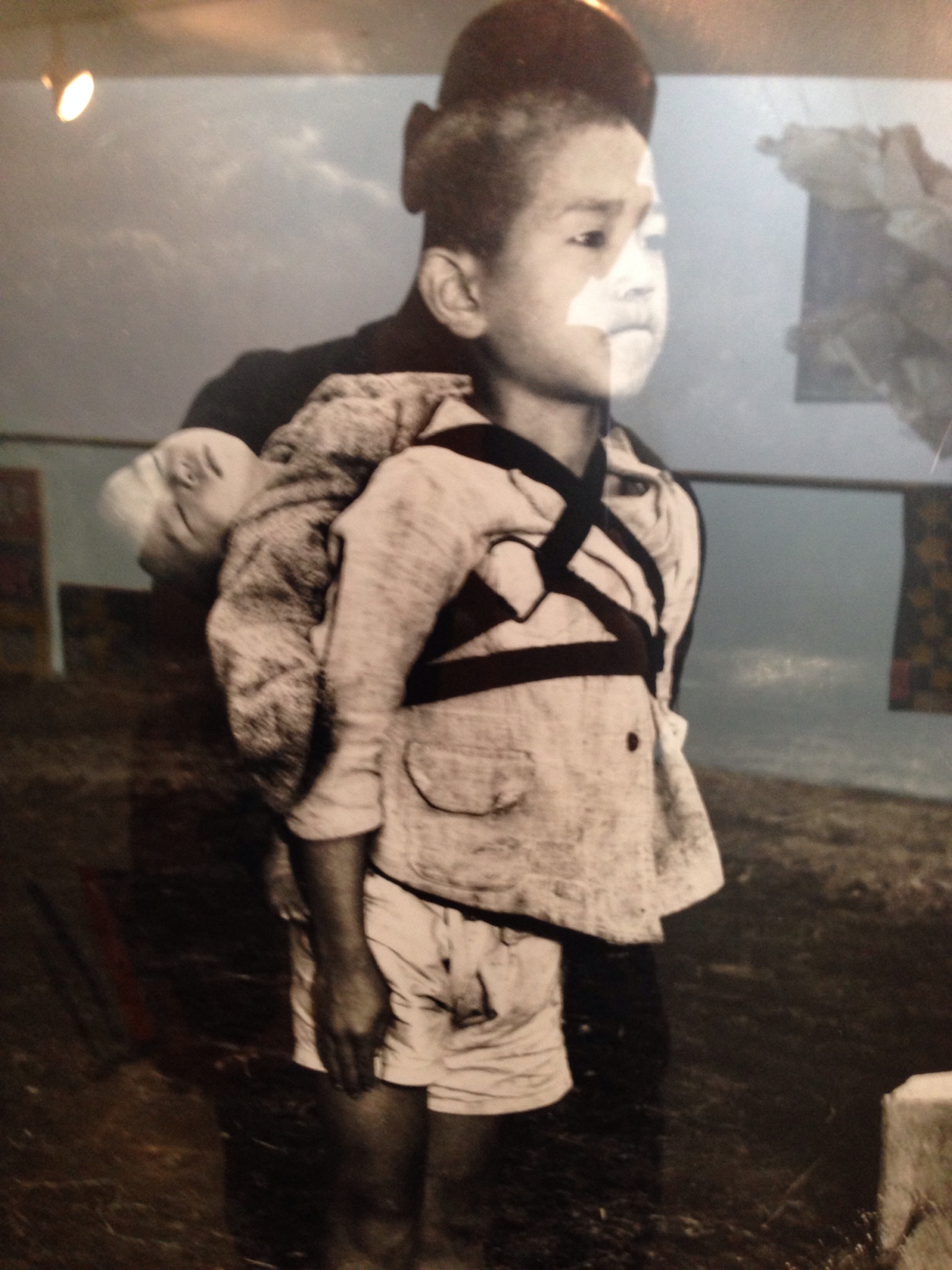
Like Hiroshima, they have a peace park here too. There is a marker showing exactly where the atomic bomb detonated 500m above. The museum tells the story most graphically. Some of the misery and horror of the time is on display. The photos and displays of children’s charred clothing tear at your heart, and for me, boil my blood. Damn the Americans for doing this to the most vulnerable of all, children and everyday people trying to survive in a war that was hard for them also. But of all of the sadness I witnessed throughout the museum, it wasn’t until I was on my way out and there on the wall I was knocked for six. On the wall was a photograph taken by an US Marine photographer, Joe O’Donnell, days after the blast and he records this tragic moment in time. A young boy has a baby strapped to his back. The boy is 5 or 6 years old and has come to a place where dead bodies are being cremated. The photographer goes on to explain that the boy stands there motionless. The attendants see the boy, approach and remove his dead baby brother from his back to cremate him. The boy then turns and walks away, his silent anguish showing itself in his blood-soaked bitten lips. To my mind, this is one of the world’s greatest humanitarian images of our time.
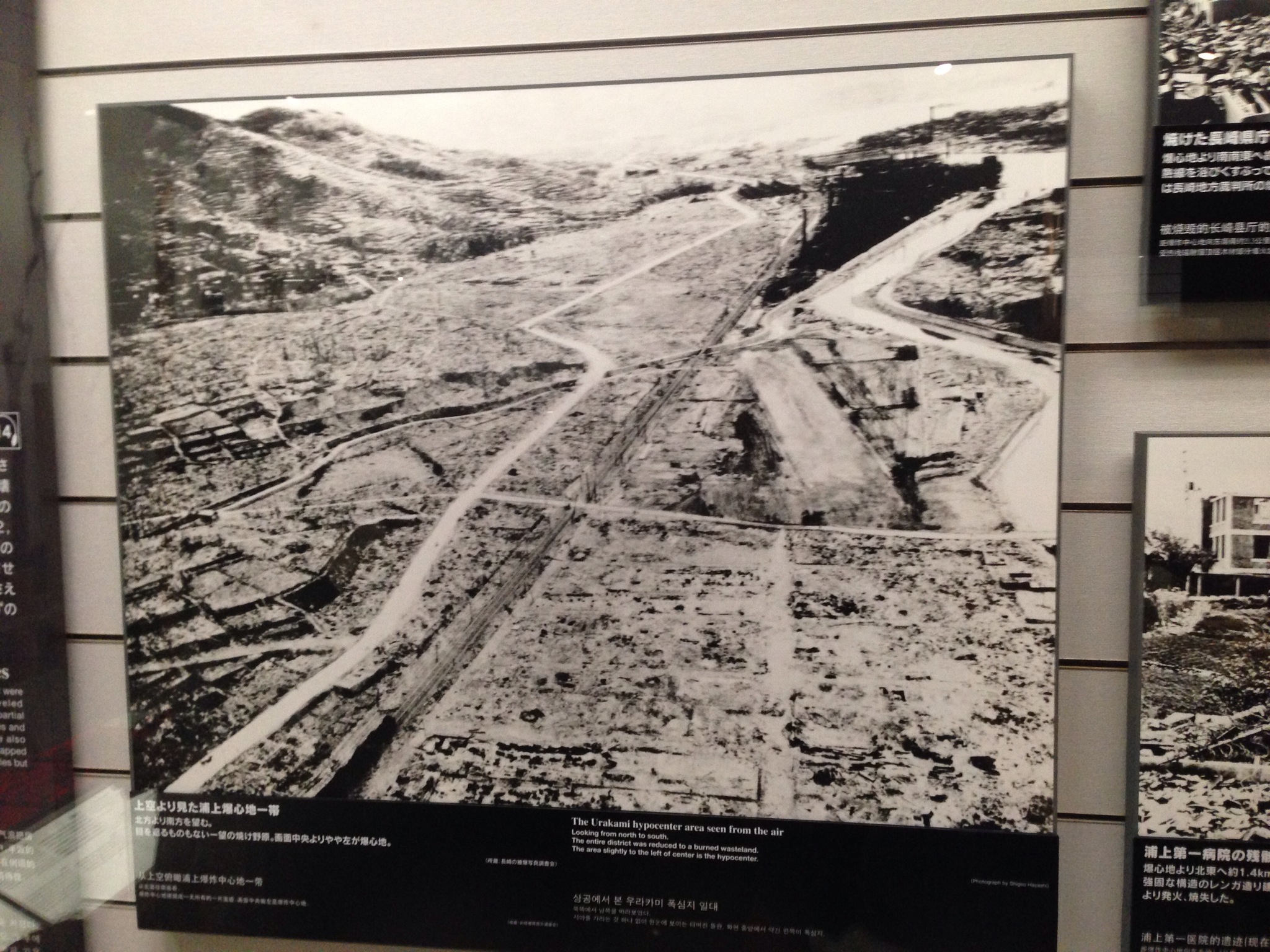
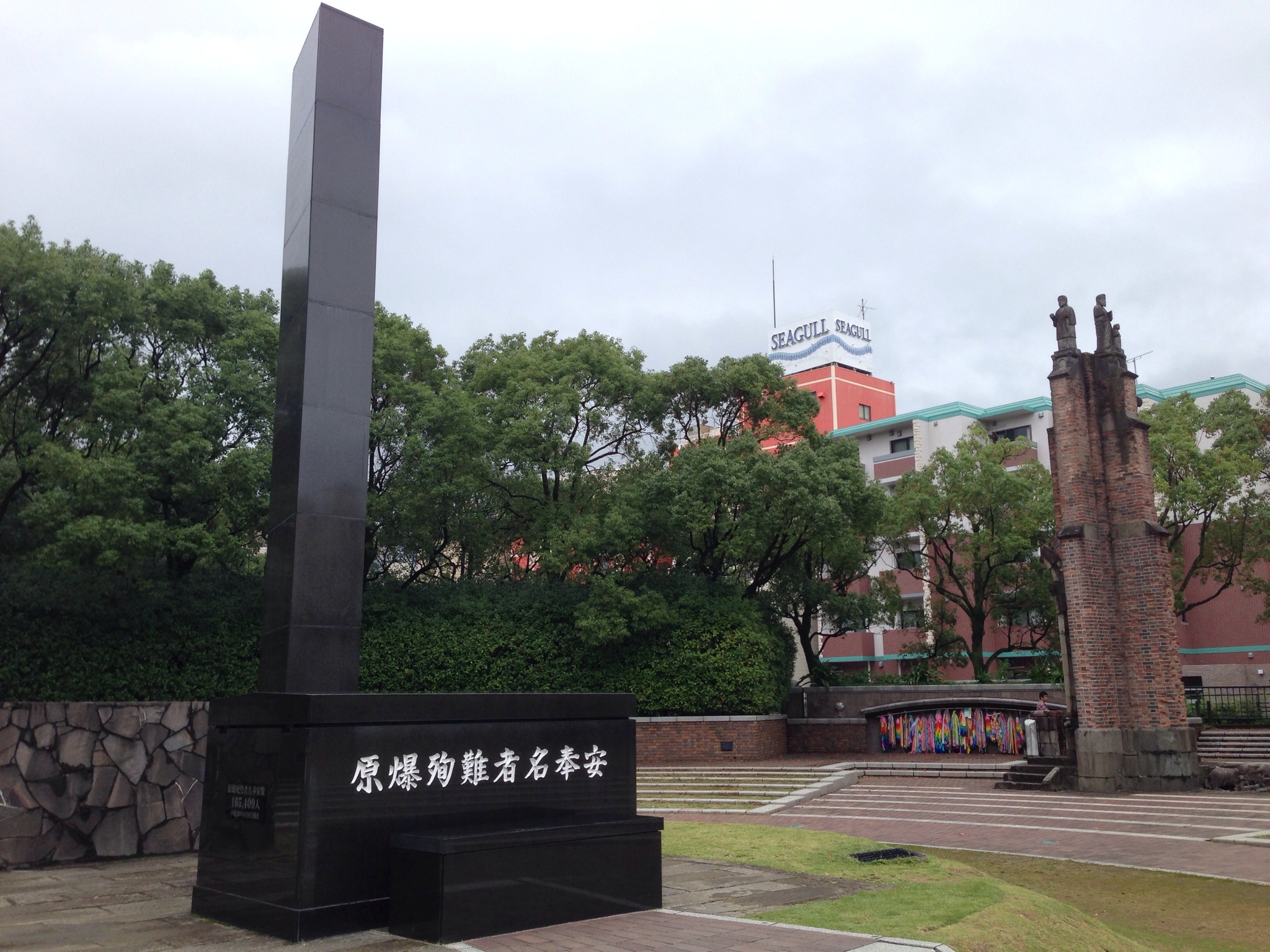
Here is the thing: It’s 1945 and Germany has already surrendered. Japan is on it’s knees and one atomic bomb has already devastated Hiroshima with unimaginable consequences. Russia breaks it’s treaty and declares war on Japan just two days later. Yet, the following day on 9 August, President Truman gives the order to release another atomic bomb on Japan. Nagasaki was not the first choice of target on that day but cloud and smoke interfered with the first choice. Nagasaki was hit just after 11am. With a population of around 240000, about 75000 were killed and around the same number were injured. Countless more no doubt died as a result over the coming weeks, months and years. President Truman says it was necessary “to save young American lives”. Some say it was to justify the billions of dollars spent on developing the atomic bomb in the Manhattan Project. I say “why is this not a war crime?” There was an option to use the bomb on a Japanese naval fleet. If you had to use it why not there? Both bombs caused unfathomable misery to the most innocent of participants in this ugly, sorry bit of history. Anyway, the Japanese have moved on where I clearly haven’t and now embrace the United States and all that it represents. But they haven’t forgotten. The moving museums and Peace Parks are testament to that. And the many school children that I’ve seen pass through these institutions suggest this history is an important part of the education curriculum.
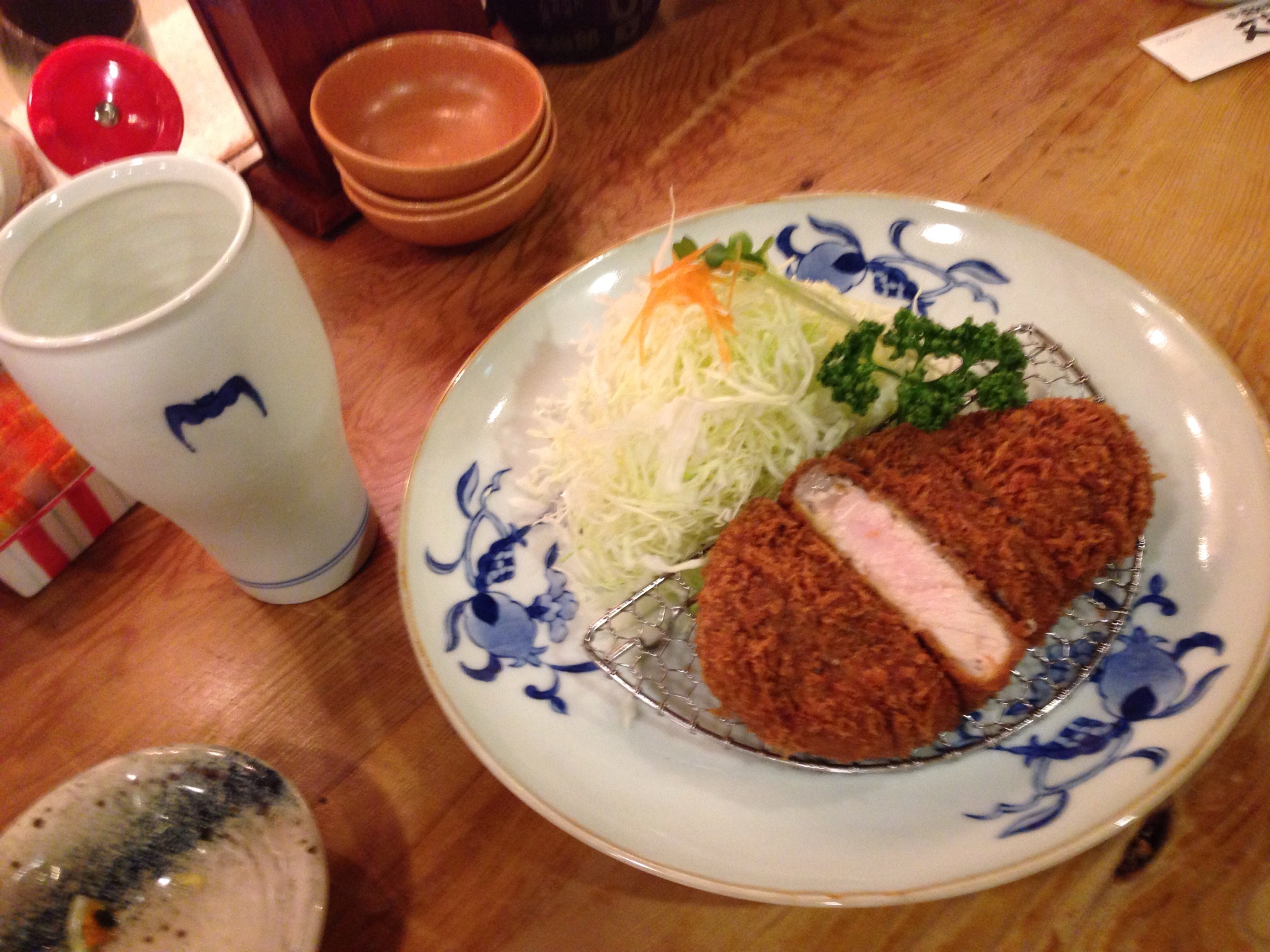
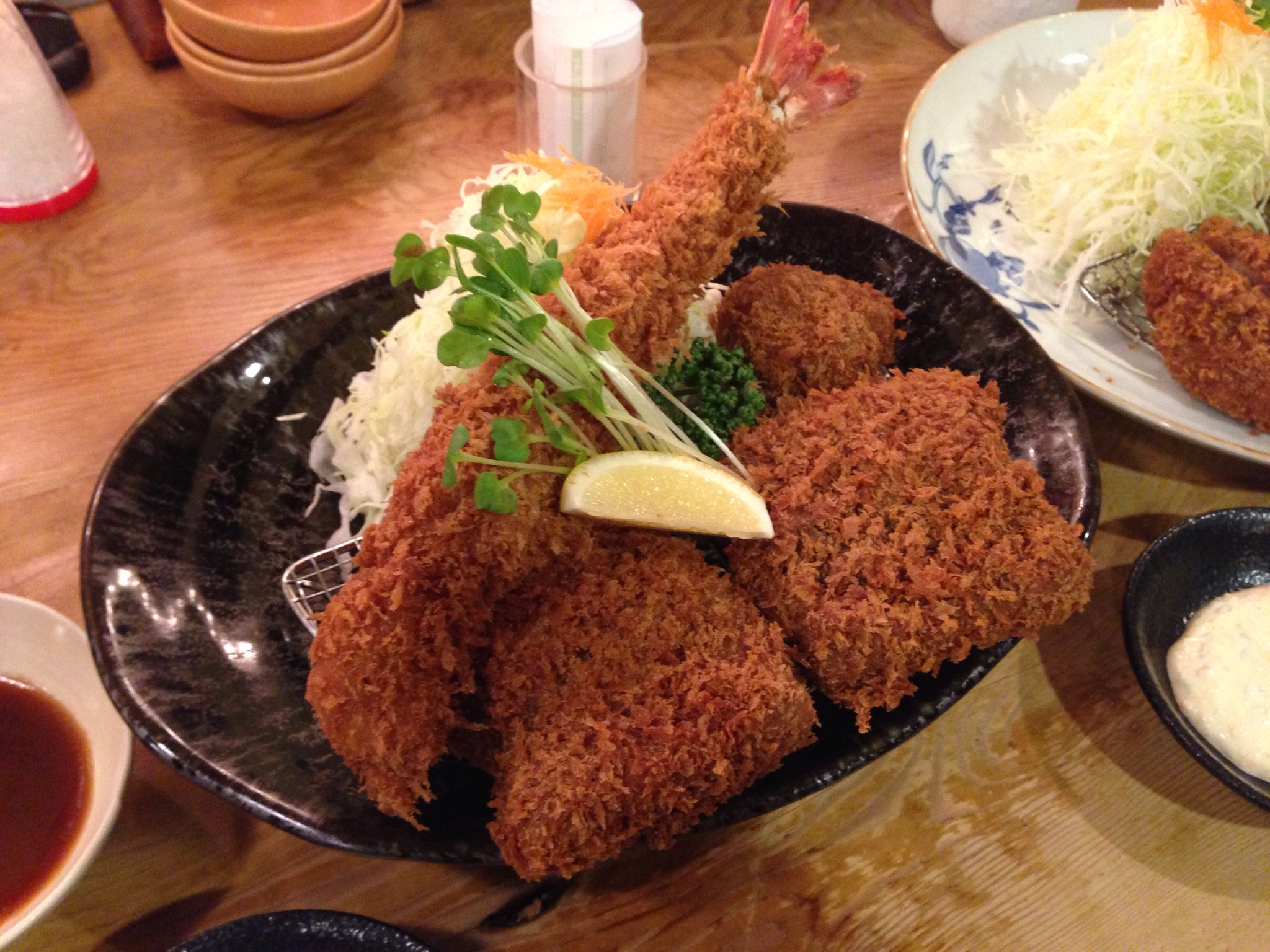
I meet Allan. He is a young native of the Carribean and has been teaching English in Japan for many years. He lives in Tokyo now but lived in Nagasaki for 5 years. He has returned to his old stomping ground for a friends wedding. We dine at his friend’s restaurant for dinner after a night stroll around his favourite parts of Nagasaki’s waterfront. It’s beautiful. While strolling around here the noise of clapping and cheering catches our attention. Like moths to a light we zone in on the noise to a sporting arena. Being far bolder than I, Allan takes us to the entrance and with adequate Japanese asks permission to enter. We’re welcome. Inside is badminton being played on many courts and competing are high schools from all over Japan. The local schools are up against competitors from outside and they are keen to win. The atmosphere is amazing. Badminton is a popular sport in Japan. I learn from Allan that Nagasaki is hosting a national high school sporting competition. This explains why I had problems finding affordable accommodation here. The local guy wins and all is good. Allan’s restaurant friend specialises in a Japanese dish called Tonkatsu, which is pork deep fried in crumbs with shredded cabbage, and rice and meso soup on the side. It’s delicious. The pork is so tasty and tender. With Tonkatsu the rice and meso soup are bottomless so topping up is included in the price. We are also dished up a plate with a large deep-water shrimp, tuna and whale in the same way. I felt naughty eating the whale and found it quite unremarkable. It tasted a lot like salty beef – hardly worth threatening a species over!
 angusmccoll