Friday 5 February 2016

Another day at the school. I took class 9 for an English session. Then helped one of the teachers with English. The teachers are keen for tuition to improve their English, both for them and their teaching. Lunch was followed by an easy afternoon. I went down to the spring for a bath and just after stripping off a man walked past… A bit embarrassing. He didn’t seem to mind.

Dinner was had and off to bed around 8.45pm. Around 10.30pm the building shook. There was a noise like thunder and the building shook. I jumped up and dashed out if the building to find the others already outside. The guys in the building didn’t even wake. We stood in the freezing night for about 20 minutes contemplating what just happened. Some of the girls were shaken. After a call to Sujan in Kathmandu we hear they felt it too. Terrifying for them there.

Wednesday 3 February

 Breakfast is at 8. Porridge, an egg and pancakes. We wander down to the school about 9.30 and the day starts with assembly. Classes line up in their rows and there are some exercises to do. Then there are speeches and welcomes to Chloe and me as well as farewell to Claudia and Lilly. Arneil’s sister makes a speech in English about tourism in nepal. They have a useful microphone and speaker for making announcements. Classes start and I get Grade 9s. We just provide the English lessons and I think each class has a session (45 min) of English per day. I’m not sure what to teach so I go to their set text book and work through it. After 45 minutes I go to class 8 and go through the same process.

Monday 1 February 2016

I meet the others at Pilgrams hotel. Padmyer (Som’s sister) is our guide and Arneil is Chloe’s porter. We get a taxi to the entrance to the national park and start walking to chisubani. It’s all up hill for the first half and I tire of carrying my pack. We break at a monastery on the way. The monks are chanting and drumming. Arneil takes me inside and I get offered yak butter tea by I very young monk. It’s salty and creamy. On the trail we break again at a Hindu site in the middle of no where. There is a small cave there where a Hindu ‘witch doctor’ (padmayer’s description) is blessing someone. We get offered to have the spot in the forehead and we accept. I took photos but was told by her not to! She was a striking looking young woman colorfully dressed.
I struggle on and eventually we get to chisubani. The small village on top of the range is a mess, destroyed by the quake. It was popular to travelers so there were many hotels there. The community is quickly rebuilding and we get to stay comfortably. One of the multistory hotels collapsed intact, windows unbroken. But six people died here. 4 doctors and two workers were underneath the building having a meeting when the building simply dropped on them. If they were upstairs they would have survived. Of all the skills to be lost that day, medical professionals would have to be the most missed. It’s freezing here.

Tuesday 2 February 2016

Tuesday 2 February

We leave chisubani around 8. The trail is much easier than yesterday because we are going down into Batase. We pass through villages on the way, busy with rebuilding, tending the farms, and schooling. Not all of the villages have schools so students have to walk to another village for school.We get to Batase around 1.30pm. We are given lunch of pasta and fried potatoes. After throwing my sway I head for the showers. The shower was broken this morning! Our porter arneil takes me down the hill to a spring and its s case of having a hose shower in the open. Nobody around and the water isn’t too cold thankfully.

Sunday 30 January 2016

Hiking into Batase village tomorrow to volunteer teach. Batase is a two-day hike from Kathmandu and was badly effected by the earthquake. Many lives were lost and the community left traumatised by the disaster. I’m not sure what wifi will be available there so my posts may be rare over the next two weeks. Don’t worry. May not be able to keep you up to date on how the Nepal cricket team is going…

Will post when I can.so I spent the day just packing and preparing for the following two weeks.

Saturday 30 January 2016

Visited the World Heritage listed Pashupatinath Temple today and my guide, Bikram Tamang, gave me a great insight into this amazing Hindu place of worship. Bikram gave me access to places I wouldn’t have had the courage to go and saved embarrassment from places I wasn’t allowed. He explained that this place is as significant to Hindus in Nepal as Mecca is to Muslims. Every Nepalese Hindu strives to come here at least once in their life. We witnessed the cleansing of a body in the river water (tributary of the Ganges River) and cremations. Ashes are swept into the river. Within this Centre is a place where the homeless and handicap are cared for. A hospice for the dying is located next to the cremation area. Just up from there are separate caves where Hindu priests and Buddhist monks pray and meditate. 

Note to self: maps aren’t necessarily drawn to scale. Walking from Thamel to here wasn’t as easy as I thought!

I met with Madeoline and ??? At the Funky Buddha for dinner to discuss going out to Batase. They have been teaching there and explained to me what it’s all about. The met with Som’s brother Dinesh to discuss how I can get out to the village. He is escorting another teacher Cloe on Monday so I will go with them. It means walking from Kathmandu for 2 days. Could be interesting.


Thursday 28 January 2016

Testimony to the demise of the royal family in Nepal is the Royal Palace Museum.

This version of the palace was built in the 1960s after an earthquake humbled the previous version in 1934, taking the king’s two daughters with it. Typical of palaces the building is grand and filled with Royal intrigue. Tragedy struck in 2001 when the crown prince snapped and shot the King and Queen and other members of the royal family before turning the gun on himself. He lived long enough to be crowned king for a few days. His untrustworthy uncle became king and eventually oversaw the death of the monarchy in Nepal. Nepal is now a democratic republic.

The massacre happened in a building behind the officious part of the palace. Signs show where each of the family fell and explain bullet holes in the wall. The building was destroyed after the event to try and erase it from the conscious. But now, they are rebuilding it! Not sure why.

Some Nepalese will not visit the museum because of its dark past. The King and Queen were well liked and their undignified end still pains many in Nepal.

Prior to visiting the museum I went to the Peace Gardens. These gardens were built in the early 1900s by the son of the then Prime Minister. European styled pavilions positioned around the gardens represent the seasons. On his death the gardens were handed over to the government. Neglect saw the grounds deteriorate badly but now they have been restored and are a peaceful refuge from the noise of the city. Locals come here to hang out. Some of the buildings suffered from the recent earthquakes.

Friday 29 January 2016

Durbar square featured on our tv screens in Australia last April 25 when this ancient heritage-listed Royal Centre crumbled to the ground. The earth shook and down came a lot of beautiful ornate structures that had been standing for hundreds of years. Lives were lost. It’s a popular area for both locals and visitors. I expected the worst when I came to visit today but was pleasantly surprised to find most of it still standing in some form. Wooden stays support leaning walls but apparently this is enough. It’s no problem to walk around and through. A guide shows me around. The square is surrounded by multi-story shops and residences that were spared or perhaps more structurally sound to withstand the earthquake.

Adjacent to the square is a bustling, colorful market filling a labarynth of endless crisscrossing streets. It would be easy to get lost here but the urge to just wander aimlessly is powerful. This is outside the tourist area so as a tourist you can feel free to observe and absorb without being hassled. They are not interested in you unless you are interested in them. Photos don’t do justice to the atmosphere you experience here. Hindu shrines color throughout the busy lane ways. This doesn’t compare to the sterility and mindnumbingness of shopping in Australia. 

For dinner I visit KCs. It’s a popular resteraunt here in the touristy part of Kathmandu and has been operating since the early 1970s. It’s quiet now because there are few tourists in town. The earthquake and the Indian petrol embargo have kept tourists away. Fuel shortages have led to power sharing throughout the city. Today  the power comes on at 7pm. Power cuts makes life even more difficult for traders and tourists. Rapul is my waiter. He’s 22 years old and is working in the stressed tourism industry here for little pay. He sees the only future for him is to follow his two brothers and work abroad in menial jobs in the UAE. They have been able to send money back to his family here in Nepal and he hopes to do the same.

Wednesday 27 January 2016

Brisbane to Singapore: 11.55pm to 5.30am, Singapore Airlines

Singapore to Kathmandu: 11.10am to 2.30pm

I was to meet Raju at the airport on arrival in Kathnandu but the flight was delayed and he had come and gone. He arranged for someone else to pick me up. I arrive at Hotel Lily to be greeted by a beaming Raju. It’s so great to see him. My room is organised and we sit and talk about old times. He has offered to be so helpful to me and I will do some hiking with him but firstly I want to organise some volunteer teaching.

TUESDAY 21 OCTOBER – Tokyo

IMG_2911.JPG

IMG_2910.JPG

IMG_2902.JPG

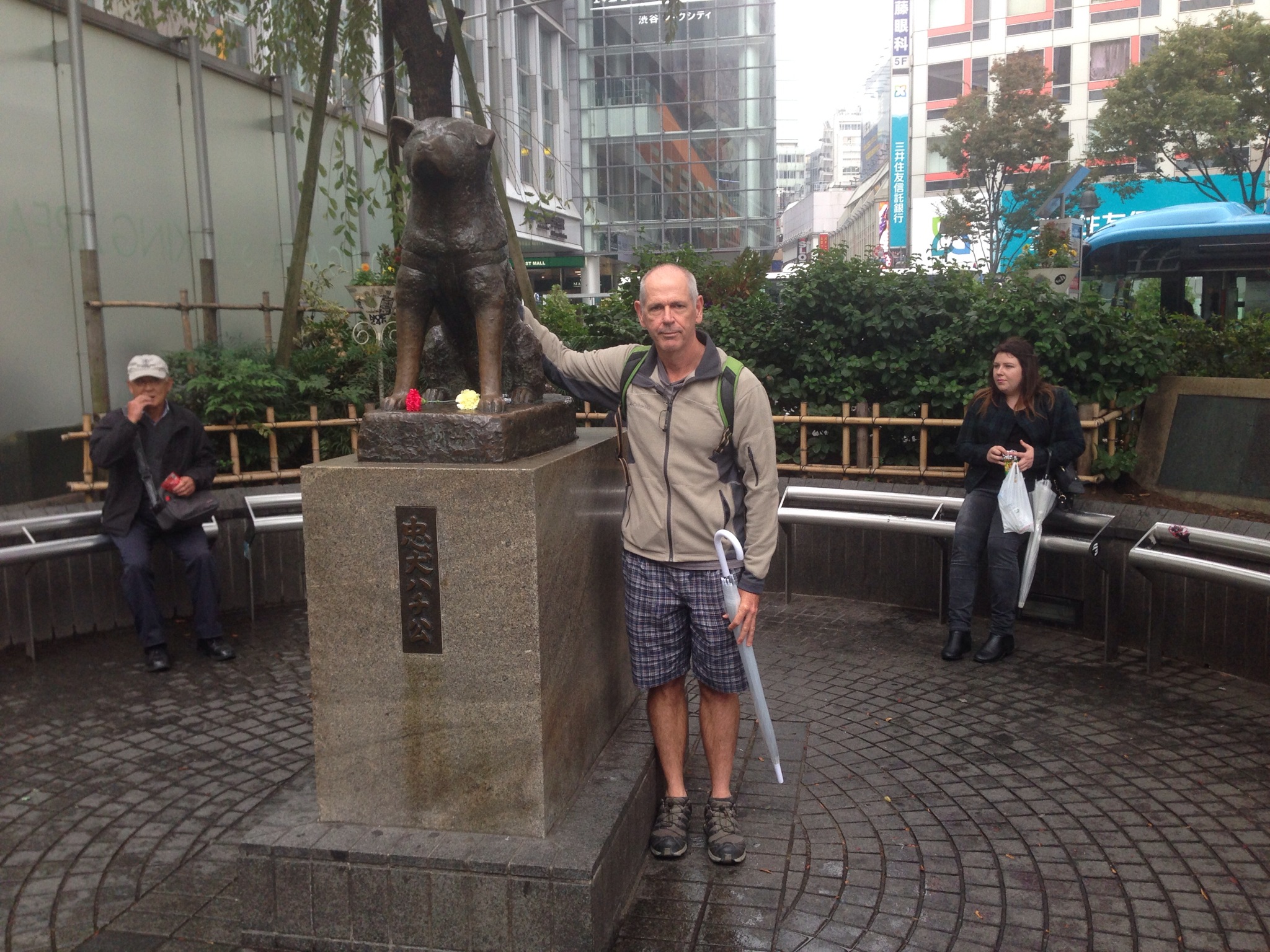
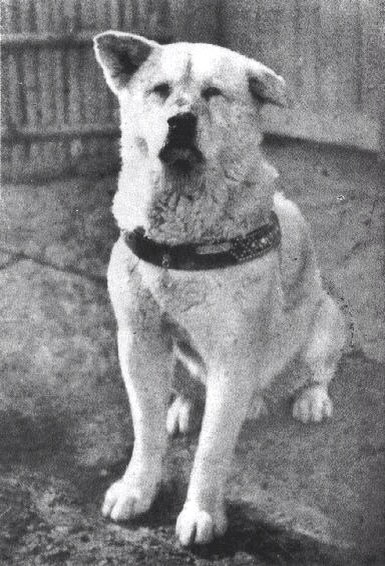
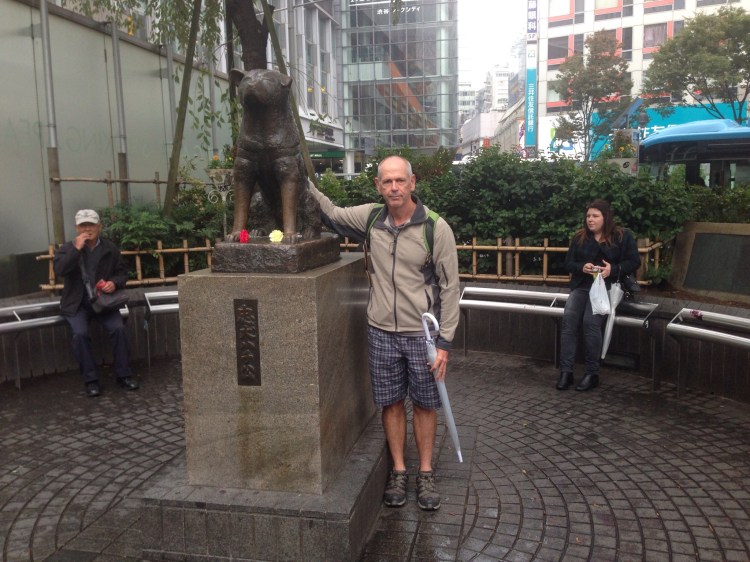
I visited Shibuya train station today. There is a statue of a dog there that is behind an amazing story. Hachikō used to walk his owner, Hidesaburo Ueno, to the Shibuya station every day. This is in the early 1920s. He would make his own way home, then return at the right time to walk Hidesaburo home again. Hidesaburo was a professor at the agricultural department if the university of Tokyo. Their routine continued until May 1925 when Hidesaburo failed to emerge from the train station. He had suffered a stroke at work and died. For 10 more years Hachikō continued to come to the train station to wait for his owner. His loyalty became well known locally but it was a series of articles published by one of Hidesaburo’s students that brought this extraordinary show of loyalty to the nation and world’s attention. This faithfulness and loyalty to his master appealed greatly to the Japanese people and now Hachikō is immortalised in sculpture. It’s amazing the number of people here, both Japanese and foreign, lining up to have their photo taken with Hachikō’s statue. The story is clearly well known.

Sadly the propagandaists tapped into the peoples sentiment to encourage such loyalty and faithfulness in their own Emperor.

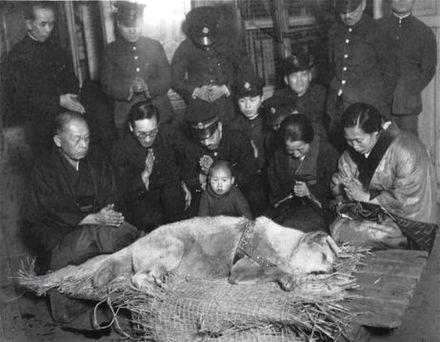
Hachikō died in the streets of Subuya on March 8, 1935. There is a photo of his final moment with his owners wife and train station staff. A film has been made based on this story.
IMG_2903.JPG

IMG_2906.JPG

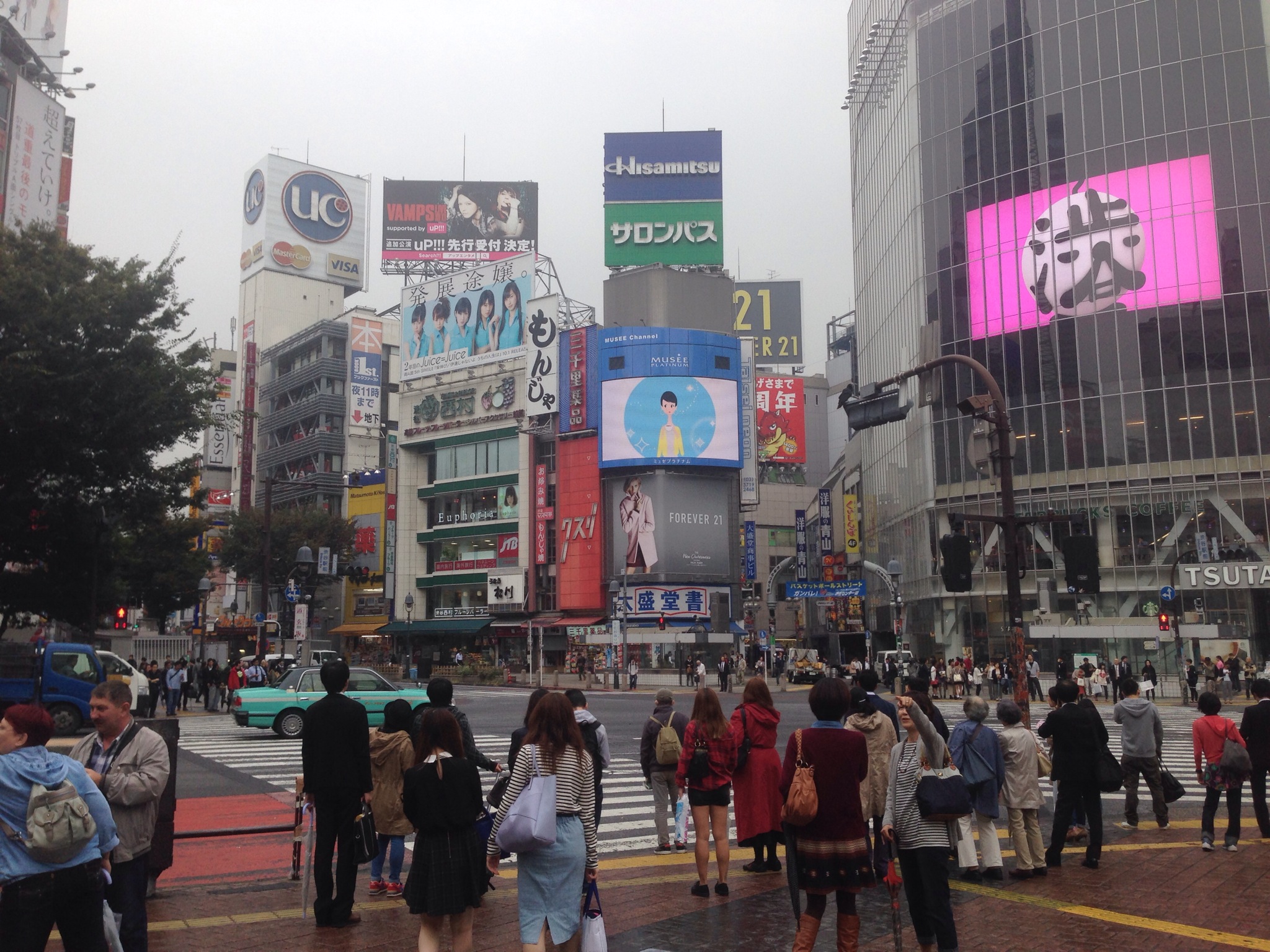
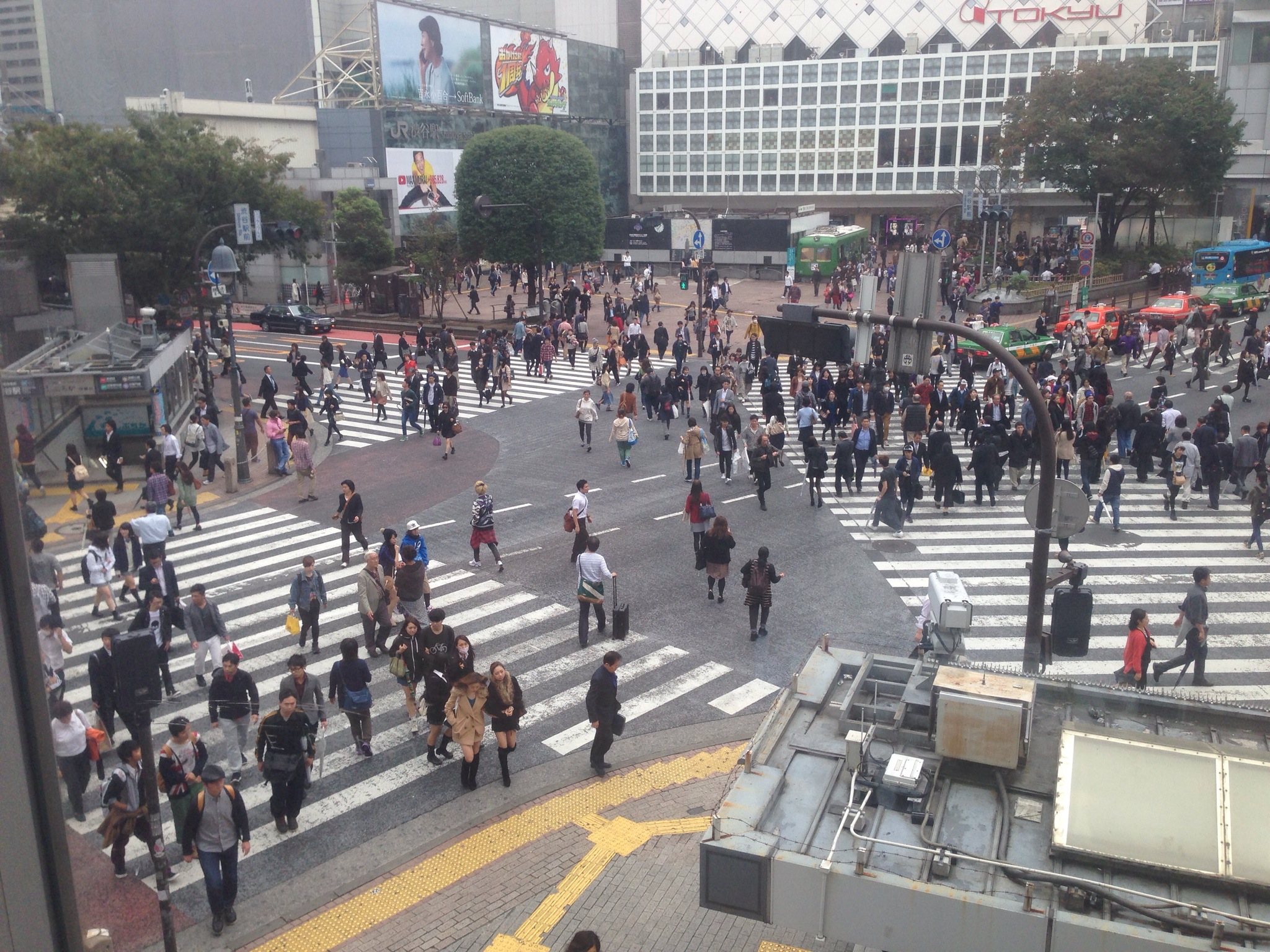
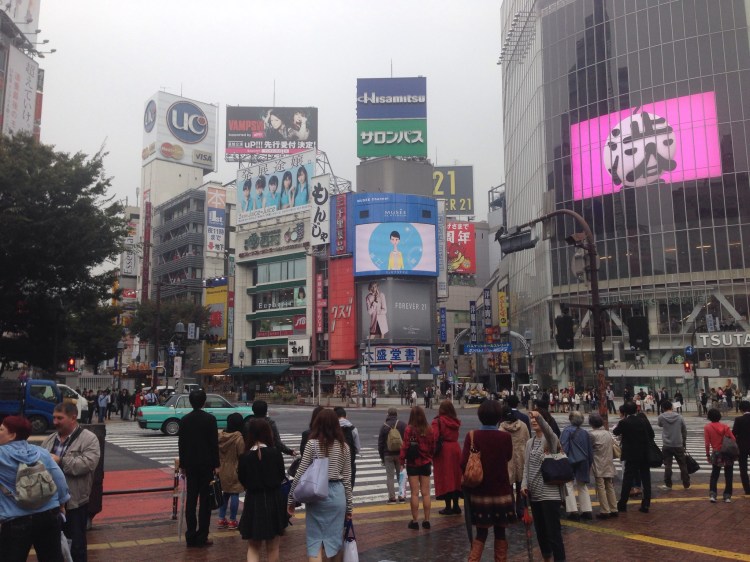
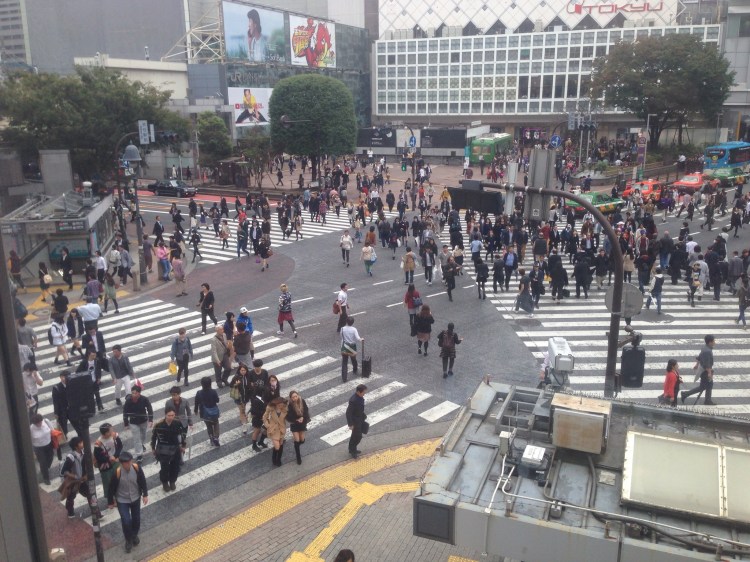
Outside of the Shibuya station is a multi directional street crossing that holds some record for the number of people who cross there everyday. Apparently over 3 million bits of humanity can cross here every day. Despite having trouble getting my head around such statistics, it’s mesmerising to watch. Shibuya station is at the junction of several train lines so all day people are streaming from the station and into the shops across the roads. Shibuya is a massive shopping precinct. The traffic flows, people bank up at the crossing, then when the lights say so, masses of people cross both ways. It’s famous. There is a multi storied Starbucks right on this corner that is a very popular viewing spot.

I’ve also come here to find some very Japanese stuff to take home. But there isn’t anything here that is tradition Japan. It’s all so western. Halloween is in full swing too. It’s huge here…sadly.