Dubai (Tuesday 8 November)

20111110-232351.jpg
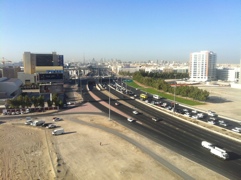
The view from Neil and Karen’s apartment in Dubai

Arrived Dubai at 7.30 this morning.

I enjoyed my time in Europe more than I thought I would. Visiting Europe has always been a lesser priority for me because I have always considered it too modern, too ordered, too comfortable. But the parts of Europe I visited had plenty of character and the people were great. My time in both Germany and France was very memorable and I could easily return for more.

Neil and Karen meet me at the Dubai airport. They are long-time great friends from University days who have been living and working in Dubai for the past three years.

First thing on the agenda is a quick look around Dubai. Visually this place is amazing. The tallest building in the world lives here and all around are high rises that are architecturally fascinating. Architects seem to have been given free reign here to do what they like and they have. Some of the shapes are irregular and far from the standard straight up and down. One high rise currently under construction twists around in a clockwise direction so that by the time it is completed, it will have done a 90 degree twist. It must be hard to utilise fully the internal space in such oddly shaped buildings. They certainly are visually entertaining. Dubai has a modern sky metro rail system. The trains are pilotless! Even the metro stations are beautifully designed.

Some of the ideas here are bigger than big and a bit bizarre. The tallest building is evidence if that. You may be familiar with the man-made islands made to various shapes and home to hotel resorts and mansions. Some of the islands are completely surrounded by water but accessible by tunnel roads. It is possible to purchase your space at huge cost on some of these islands but then you have to pay for essential utilities to be brought to your block and connected.

The GFC has hit Dubai hard. There are many big constructions that have come to a standstill with the cranes still in place. There is a huge oversupply of shopping space and accommodation. It is a good time to be renting. Neil and Karen live in a high rise outside of the main centre and balcony views take in the busy airport (planes are moving constantly), the busier through-city highway, and the city centre.

Amiens to London (Monday 7 November)

Today has been a day of solid traveling.
1. hotel to Amiens train station via bus
2. Amiens to Lille-Flanders via train
3. Lille-Flanders to London via Eurostar Rail
4. London to Heathrow Airport via underground
5. London to Dubai via plane.

It’s overcast, foggy and freezing today. Visibility out of the train window is poor but the scenery us still interesting, in a different way. Villages and farms dominate the view but splattered across the French landscape are huge piles of sugarbeets and military cemeteries. The cemeteries are everywhere, easily identified by their whiteness against the dirt background. They literally take up space amongst the crops. I’m not sure what determines where they locate these cemeteries. And have the Germans treated their war dead with as much respect? I don’t know. I will have to find out.

The gloomy visibility plays with the way things appear on the landscape. Huge power-line towers stand arms out like scarecrows, in lines that dissolve into the gloom. Wind turbines silently spin in the misty halflight doing their bit for the energy needs of Europe. Cows look like cows. I change trains at Lille-Flanders and board Eurostar for London.

Eurostar is a high-speed train service that services most of Europe I think. It’s a beautiful smooth ride and the wheels don’t scream against the track, they sing. It’s fast! The scenery is a blur now. And without fanfare or warning it races into a tunnel. The next bit of light we see is England. The thought of being under the English Channel played on the nerves for a while and I was keeping an eye out for leaks but no problem. It was easy!

Amiens (Sunday 6 November)

I accidentally went to church today. While meandering aimlessly around Amiens I came across a beautiful old church and wandered in. A service was in progress. I found a seat at the back and as it happens, right beside a confessional box. If I stray in there I may never come out. The huge church is nearly full and there are many families with small children and babies. There are also teenagers here unaccompanied by parents and seemingly here of their own accord. Christianity is alive and well in Amiens. This is a great opportunity to check out the acoustics of this loverly old church, and to get out of the freezing wind for a while. The sound is so rich within these ancient walls. The organ and choir sound fantastic and the congregation are in fine voice as well. A small boy of about four years of age runs across the back of the congregation and straight into the confessional box beside me. What a funny thing to do but I suspect if he is like any Australian boy of that age he probably does have plenty to confess!

This morning while waiting for the bus, something else amusing happened. On the quiet Sunday morning street a young man came freewheeling down on a shopping trolley half full of something. While in motion he would push himself up on the handlebar in gymnastic style and balance on one hand while freezing his body horizontally. A bit strange but very clever – and very entertaining – and probably very French. He gave us a half glance before disappearing down a side street.

Amiens (pronounced ‘Amia’ by the French and ‘Amen’ by the Anzacs) has a population of around 130000 people and is located on the Somme River. The river makes it’s way through the city via natural waterways and man-made canals. Bordering the canals are chic old terraced houses. I like it. I could live here if it wasn’t for the terrible winters I’ve been told about. The Cathedral here is the largest in France, nearly twice the size of The Notre Dame de Paris. And Jules Verne married an Amiens’ local and lived here from 1871 until he died in 1905.

It is a sombre day today, overcast, cold and windy, but I have a comfortable enjoyable time wandering the streets and parks. It’s beautiful here.

On the way home I share the bus stop with a drunk Frenchman, who ‘sort of’ asks me when the next bus is due. I have a timetable on me but I can’t understand it and he can’t read it because he doesn’t have his glasses with him. I make up a time and try to communicate that to him. He works out that I am Australian and kangaroos are mentioned several times in the very broken conversation. Even though he is not convinced that I have the bus time right he doesn’t talk to French people also here at the stop.

I like Amiens. And I love the look of the villages I have visited. I could easily spend time on the Somme and I doubt that this will be my last visit here.

Amiens and WW1 battlefields (Saturday 5 November)

Today I visited the town where Hitler lost a testicle! Yes it’s true. He was caught in a shell blast here and as a result came out one ball less. How different things would have been if that injury had of happened to some part of his body he really did need! Perhaps this is what made him so cranky! He was also pretty pissed off at the way that war ended. To him Germany did not lose the war and technically he was probably right. The armistice that was signed on 11 November 1918 was a ceasefire that never resumed. Neither side had the desire continue fighting. The Treaty of Versailles that technically ended the war wasn’t signed until the following year. For Hitler the seeds of hatred for Jews were probably sown here. He saw them as sitting at home getting fat on the profits of war while Germans were being slaughtered on the battle field.

Anyway I’m not here to follow in Hitler’s footsteps. I’m here to follow in the footsteps of three relatives who were involved in the war effort here. My Grandfather and his two brothers all played a part here on what was known as the Western Front. They fought on the Somme, which is an administrative region on the Somme River and it saw some of the most atrocious moments of the war. The conditions on the Western Front were arguable some of the worst of any modern war. The winters here can be severe and weather records were broken during the terrible years of the war. Trenches filled with water, mud so deep and sticky men had to be dragged out by horse, soldier’s feet rotting from trench feet, snow, blizzards and more. Many young men chose to take their own lives and who could blame them. Millions from both sides died on this front are they are said to have given their lives for the greater cause here but to me that is a nonsense expression. Their lives were taken, many unnecessarily. Incompetent command was greatly responsible. Much of this war was under the command of the British, who employed outdated battle techniques developed from as far back as the Nepoleonic wars. They seem to have had little consideration for the advancement in war technologies. Frontal charges from the trenches were now met by machine-guns, not single shots, bows and arrows or spears! The Germans were no smarter. They were happy to throw their soldiers at certain death as well, until there was the last man standing. This was known as a war of attrition and our guide describes attrition as the devil’s arithmetic. I think he is right. It was the intention of the military commanders to keep throwing troups in there until the other side ran out of soldiers.

It wasn’t until towards the end of the war that Australian troops were finally united under an Australian commander, General John Monash. He introduced innovation and intelligence to the battle front, qualities completely foreign to British commanders. He wanted to maximize effect with minimal loss of life. What a novel approach! I could be wrong but I think he may have invented the technique of ‘creeping artillery’ – where soldiers advance behind a forward creeping line of heavy artillery. This didn’t always work. There was a famous instance where allied forces were advancing into a strong gale and the shells were falling short because of the wind onto their own men. Monash had many important successes. Why did it take so long for him to be put in charge? He was an Australian, of Jewish heritage and from a humble background. He did not fit in with the elitist British command. Even after his successes he was never properly recognised. To my mind the war in Europe would have been shorter if he had have been given proper command earlier.

Where we are visiting today was the frontline. Over the life of the war this line went back and forth, in just meters in some places, a few kilometers in other places, but at the cost of millions of lives. It was an insane standoff. Many of the villages we are visiting were taken over by the Germans and suffered terribly at the hands of the German soldiers. These villages were eventually won back by Australian and New Zealand troups and the locals are forever grateful. Australian flags fly and museums tell the stories. Villers Bretonneux has streets and shops named after Australia places.

There are monument cemetries all across the land here. Between the villages is farmland and the rolling hills are covered in crops of all sorts. A common one is sugar beet which has just been harvested. It’s like a large turnip and it is Europes way of making sugar. No sugar cane here. It sits in the side of the road in huge piles awaiting collection. The cemeteries around here are full of Australians. But not all Australian dead made it to a cemetery. On this tour with me is Leeta and her mother. They are from near Mildura in Victoria after moving from Cairns.
Leeta would be in her mid twenties and has extraordinary knowledge of the battlefields here and the areas her relatives fought. She took us out into a paddock now under crop where several Australians are known to lay according to her research. The ground is wet from morning rain and the history books talk of the sticky impossible mud the soldiers had to deal with. I can confirm it is amazingly sticky. Like a magnet it grabs onto my shoes like no other mud I have experienced. Today, 5 November, is the anniversary of a major offensive of the allied forces. Amazingly most of the roads and tree lines I’m looking at today are exactly as they were back in 1918. the trenches and crater marks are gone but farmers are still digging up shells, grenades and other armaments. They just pile them up in a corner of the paddock. Many are still active and accidents happen frequently, 90 years later!
20111106-181554.jpg
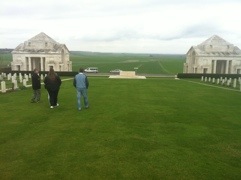
The beautiful peaceful Villers Bretonneux war memorial cemetery.

The biggest monument and cemetery for Australians is just outside the quaint village of Villers Bretonneux. Anzacs took this village back from the Germans at great cost. Each year a dawn service is held here. It’s a beautiful peaceful place and I’m told many local French people come here for quiet contemplation. There is a tower and large wall of names at the back. The tower has bullet holes in it from a mischievous Messerschmitt pilot from WW2. Interestingly these memorial cemeteries were put in place just prior to the Second World War. Hitler gave instructions for these sacred places to not be destroyed. The memorial at Saint Quentin had a statue of an Anzac bayonetting an eagle, a symbol of the Third Reich. The German soldiers of WW2 found that offensive and removed it but apart from that they mainly complied to Hitler’s wishes.
20111106-181338.jpg
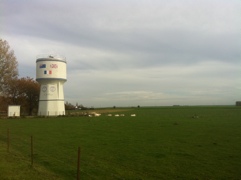
The water tank on the left was the German front line while a tree line, just out of view on the right, was where the Australian troupes were trenched. So close they were probably cursing each other.
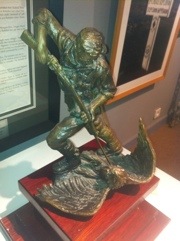
20111106-200943.jpg
A model of the statue found offensive by the Germans in WW2 so they removed it from the Saint Quentin war memorial.

Amiens (Friday 4 November)

PHOTOS TO BE ADDED

I catch a bus into town and make for the most dominant feature on the city skyline. You guessed it – the Cathredal. You may think I’m a cathedral fanatic but it is hard not to be drawn to these amazing structures. They are after all the heart and soul of these cities and like other Christian cities, Amiens’ Cathedral is huge. It reminds me of the giant Cathedral in Calogne, though smaller. This isn’t surprising as the design of the Calogne Cathedral came from France. Calognes Cathedral differs also because it lacks the gothic style circular widow feature that is so prominent in most cathedrals. The very tall narrow design didn’t allow for it.

Even if you aren’t Christian, or even religious, you still have to marvel at these structures. I see these things as a measure of how powerful faith in a religion can be. How powerful a force must a Christian faith can be to motivate meer mortals to physically build something as large and ornate as this? The effort required is unimaginable. Such power in the wrong hands would be a bad thing and sadly human history is filled with accounts of misused faith.

Each Cathedral seems to house a treasure. It’s as if they all need some sort of marketing gimic to attract the masses to their church. The Calogne Cathedral had the remains of the Three Kings, or Three Wise Men, inside a gold shrine. Amiens’ Cathedral has John the Baptist’s head! Behind bars within a recess in the wall is this mummified-looking face under Perspex (or is it glass?). Is that real? Anyway I’m sure that probably inspired many a pilgrimage to this church. Past Bishops are buried here beneath bronze statues, which is unusual apparently.

Amiens is a beautiful city, especially now in her autumn colours. And the people are beautiful too. I don’t know what they have done with the ugly ones because they certainly aren’t walking the streets, during the day anyway.

Dortmund to Amiens (Thursday 3 November)

I’m leaving Germany for France today. I want to go to Amiens and I can do that from Dortmund entirely by electric train, all in the one ticket. The trip requires a few train changes but that is no problem. I farewell Andreas at the train station. I can’t thank him enough for taking me on an authentic tour of his part of Germany, both good and bad. From the magnificant churches of Colonue to the dark history of Nazi persecution at Bergen-Bensen, the experiences are unforgettable. And then there was the great food. I hope I can return the favour one day – minus the concentration camps if course!

The transition from the efficiency of Germany to the flair of France was seamless. I didn’t know I had crossed into France until the conductor started speaking French. At last a foreign language i can manage. I studied the language at high school for two years. In my mind I speak French fluently. What comes out of my mouth is mostly English with a strong French accent and the locals are fairly bemused!

Bergen-Belson Concentration Camp Memorial (Tuesday 1 November)

PICTURES TO BE ADDED

We’re on the autobahn cruising at 140km/hour and we’re in the slow lane! There are three lanes each way and the inside lane is for the fastest, slowest use the outside lanes. At 140k/h we are frequently overtaken at such speed that it rocks the car. You know that rocking effect when you pass an on-coming car at speed, except in this case we’re being overtaken and not passed. The speeds are terrifying!

Travelling the autobahn can be beautiful. In places you frequently travel through avenues of trees of many types, which at this time of the year are autumning in a wide variety of colours. And these colours are coordinated so beautifully as if an artist had been at work. It’s mesmerising for the passenger, hopefully not so for the driver!

We are on our way to experience the Bergen-Belsen Memorial. During WW2 Bergen-Belsen started as a POW (prisoner of war) camp or Starlag for Russian prisoners. The SS moved in converting half of the area to a concentration camp for Jews, opponents of the Nazi regime, homosexuals and law breakers. By the time the allied forces liberated this camp just prior to the end of the war, 50000 Russian prisoners had died from torture, disease, starvation and murder. Over 30000 Jews lost their lives here, many murdered. There weren’t any gas chambers here but those in charge still found ways to mass exterminate.

The whole area is now a memorial and at the heart of this memorial is an impressive building that is the information and exhibition centre. The design of this Centre is very fitting for here I think. It’s architecture is brutal and simple. It’s a long thin rectangular structure of cement and glass. It looks like a large above-ground bunker from the outside and within. There is no decoration, ornation or colour to distract from its primary function and that is to educate the visitor to the black past of this place. Within the open-plan exhibition room which takes up two thirds of the building, the details of this place’s history is displayed beautifully on large back-lit perspex wall-panels. Much of the information is personalised with actual photos and camp records of many inturns. Ilya Novikov was a handsome young man interned here to be later transferred to another camp and murdered. There are thousands of these stories. And the tragic treatment of women and children simply amplify the agony splattered all over the informational walls here.

I simply cannot imagine the horrors these people lived with to try and survive. They would have been constantly surrounded by fear and death. And the cruel mind games – a transfer to another camp would give hope but then to get there and be murdered anyway.

A film is on show. It was shot by the allied forces as they discover the place. The footage shows the mass disposing of emancipated corpses and is literally sickening. Neither of us can watch it. Andreas walks out before I do. Sadly liberation did not mean instant recovery for the prisoners. Many died, to sick and damaged to survive.

Outside of this centre it is possible to walk the grounds and get a sense of where everything lay. There is a moving cemetery for the Russian POWs buried here. Monuments mark the area and mass graves are identified and memorialised. It’s just impossible for us to get our heads around this history. Bergen-Belsen was one of Germany’s main concentration camps for a time. It then became a transfer station where interns were relocated to other camps, never to be heard of again.

The fact that this camp and others have their torturous dehumanising past so respectfully memorialised is such a good thing. It suggests to me the German people’s admit to their past and are doing everything in their power to ensure this doesn’t happen again. There are many people here today on this Monday and there are bus-loads of school children going through the facilities. This tragic era will never be forgotten or diluted for as long as these memorials survive.

Cologne (Monday 31 October)

We are off to visit Cologne (Koln in German). Cologne is a beautiful city located on the Rhine River approximately 200 kilometers north west of Frankfurt. It was built initially by the Romans and you only have to dig under the present city to find plenty of evidence of that.

20111104-200145.jpg

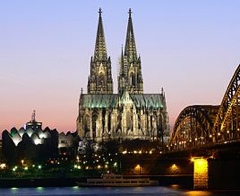
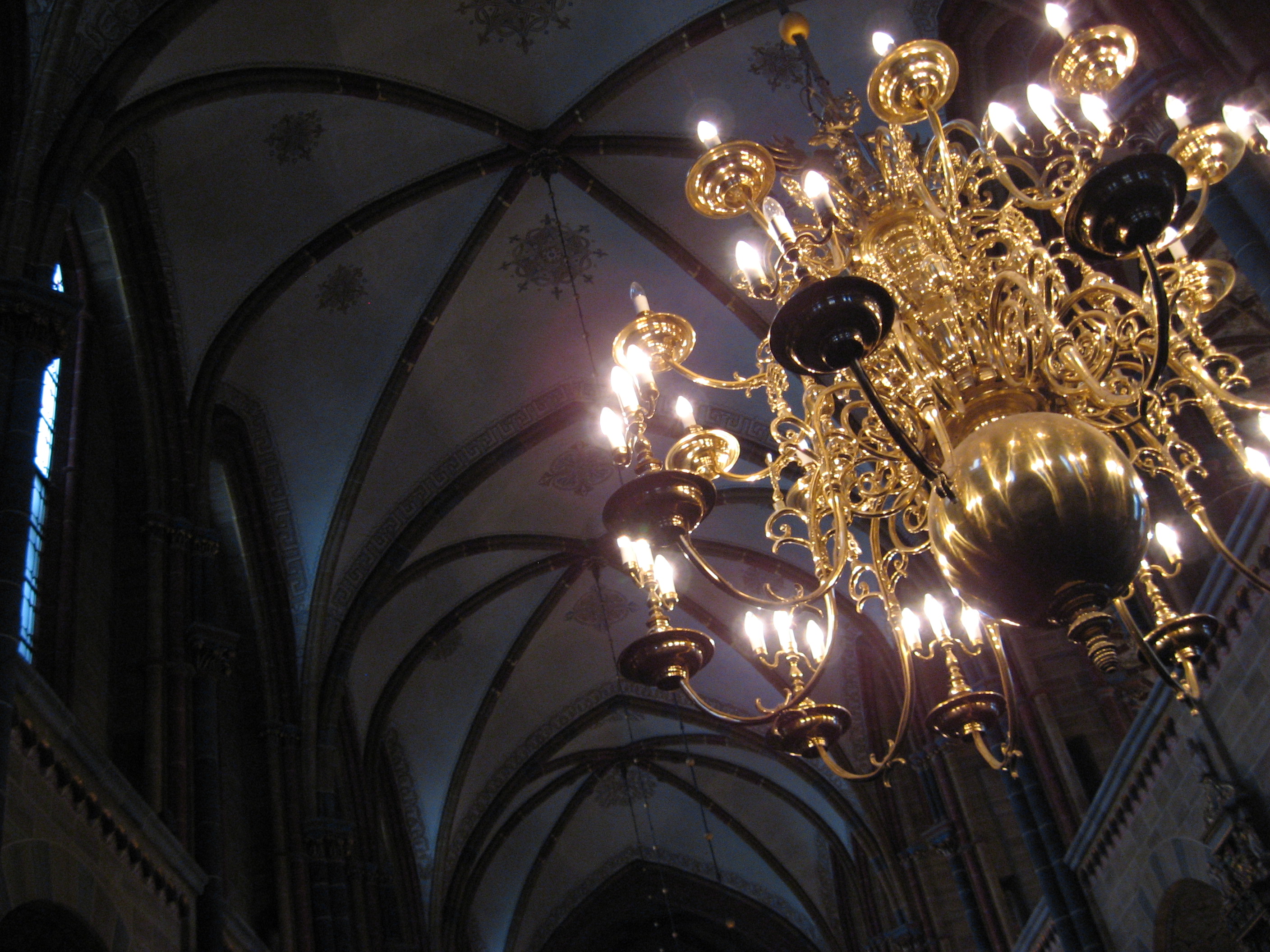
The city is probably most famous for it’s cathedral. The Cologne Cathedral commands the city skyline from every angle. It is the most amazing building I have seen. Pictures can’t do this place justice. And this is why we have come to Cologne for the day. The Cathedral has motivated us to visit, just like it has inspired pilgrimages to it’s doors for centuries, but for different reasons. I’m here for the magnificence of the structure and it’s stories. Pilgrims came here to be close to what is inside this huge Catholic church. Inside is a golden shrine, which houses the skeletal remains of the Three Kings or three wise men (of ‘bearing gifts to Jesus in the manger’ fame). The Three Kings are Patron Saints of Cologne and feature in its flag. Their bones were acquired from Milan, Italy, and brought to Cologne in what has to be one of the world’s cleverest marketing coups. This instantly put Cologne well and truely on the Christian map and the people came, in droves. The famous relics drew the faithful from all of Europe making the Cologne Pilgrimage one of the largest of the middle ages. A golden crypt was made to house the bones. The church of the time was knocked down to make way for a structure more fitting this treasure and in 1248 construction of this cathedral began. The chief architect turned to the modern Gothic architecture of the French cathedrals. But of course this one will be bigger!

The Colgne Cathredal took over 600 years to complete. We learn something of it’s secrets by taking a guided tour. Apparently there is some doubt about the authenticity of the bones inside the shrine. On a special day each year the lid is lifted on the shrine and a lucky few can view the contents. One witness was a doctor who determined from the size and shape of the skulls that one was an old man, another was a middle-aged man and the other was a boy. Some don’t think these are the three kings but there isn’t any hard evidence yet to disprove the Church’s story. The Church won’t allow carbon dating to be carried out on the bones!

Also buried in crypts inside the church are past Bishops.

The Cathedral is in a constant state of repair and maintenance. There is no time throughout the year that some part of the structure isn’t covered by scaffolding. Acid rain and pollution blackens the external stonework and the many stained glass windows, statues and paintings need constant attention. The intricate ornate features on the outside frequently drop off and need repairing. The local Colognians are said to not walk to closely beside the building for fear of being hit by falling bits!

20111104-201643.jpg
Calogne’s flag

Oberhausen (Sunday 30 October)

Today we drive to Oberhausen, a town about 50 kilometres away. It has an industrial past but now has cleverly turned many of its unused industrial spaces into museums, exhibition centres and artist education facilities.

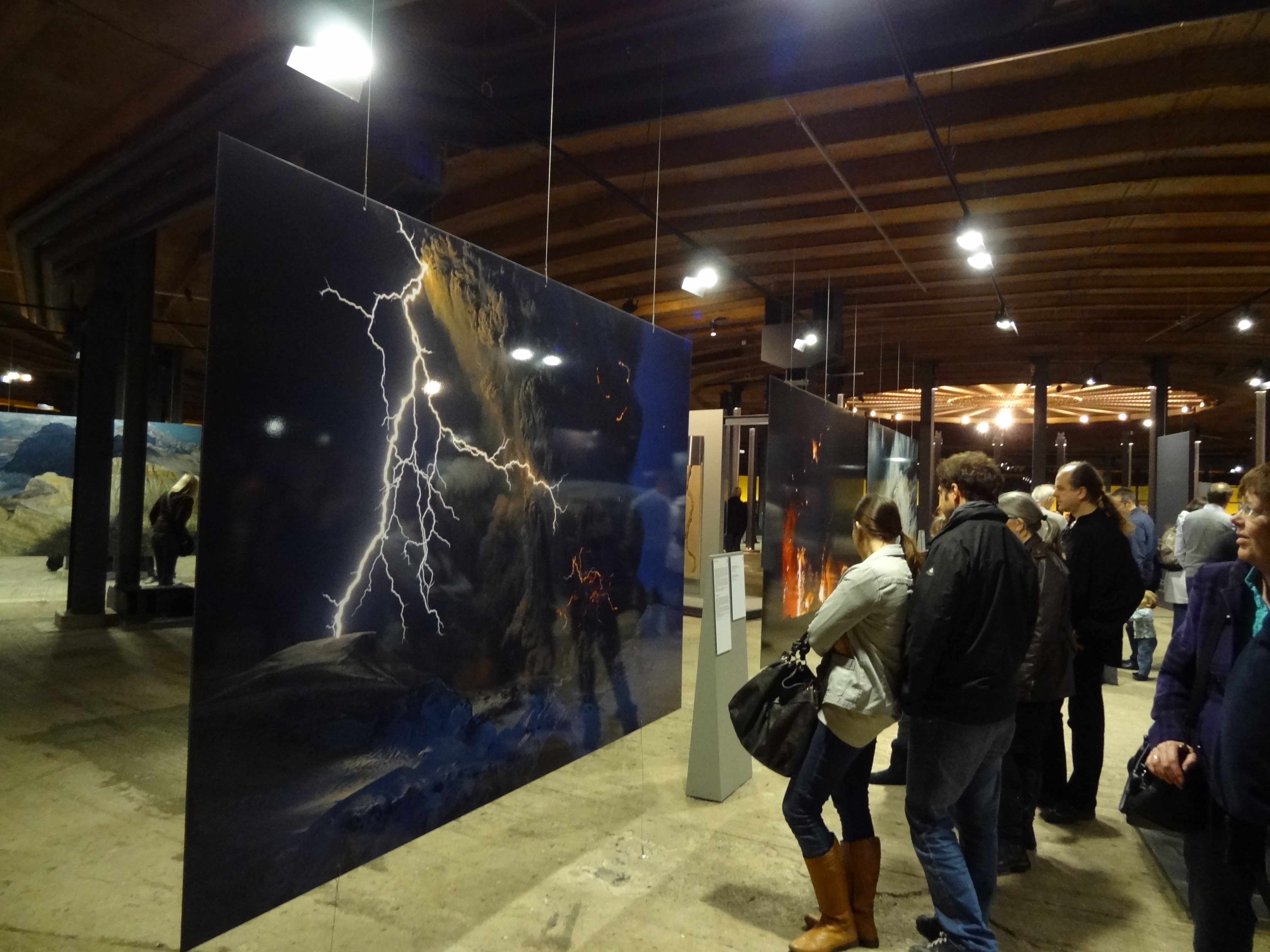
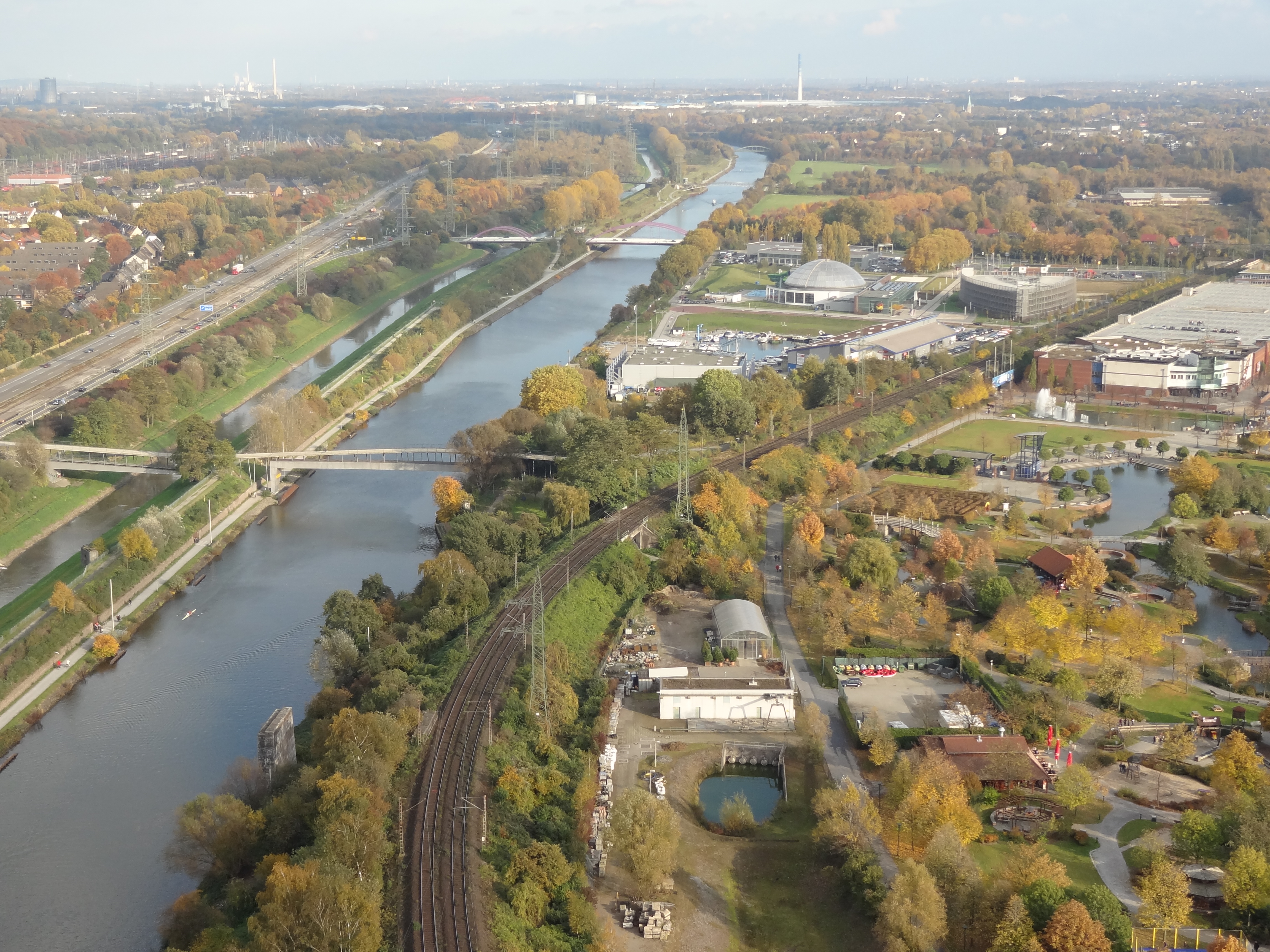
We visit the Gasometer. It is a tall round silo-shaped tank that was used for storing gas during the war and beyond. It is now an exhibition cventre. On show at the moment is an exhibit of large photos and exhibits from the most wonderous places of the world. Both natural and man-made wonders are beautifully displayed in huge photo posters. Australia has featured several times with Uluru, rainforests of far north Queensland and Aboriginal paintings.

A model of a giant buttressed rainforest tree

Central to everything is a huge full-sized model of a buttressed rainforest tree. It could be Australian! It’s over 30 meters tall. I guess they have to fill this huge tall space with something big. A glass external lift takes you to the roof of the tank. From here byou get great views of the city as well as a good dose of chilled air. The autumn trees splatter the city with great colour.

A view of Oberhausen from atop of The Gasometer

From here we visit Zeche Zollverein. It’s now a disused coal mine that has been converted into a museum and artist space.