San Francisco is seriously a tourist town. I headed down to Fishermans Wharf because that is where it is all at. From here it is a big walk to the famous Goldengate Bridge, and short walk to the famous cable cars. There is food and drinking and shopping and people everywhere! It’s clostrophobic! There isn’t much English being spoken amongst the throngs of tourist, they are from everywhere. It is hard work just walking amongst them. I will have to find some other part of SF to spend time but first I hope to hire a pushbike and ride across the great bridge. Sadly this is a popular thing to do and I will be mixing it with a million other tourists (yes I admit I’m one too). I will see how I go.
I’ve managed to workout the busses fir getting in and out of the main part of town. And the bus drivers are friendly and helpful (Cairns bus drivers rake note). On the way home something interesting happened. There are beggars here in SF. They’re don’t aggressively solicit, just sit on the pavement with a sign asking for donations. An elderly man getting on the bus behind me explained to the driver he had ‘come on bad times’. The driver let him on for free and he sat at the front near an information board with take-away timetables. By the way he dressed you couldn’t tell he was destitute. After a while a lady from the back of the bus came to the front pretending to look for something from the information board and in the process, discretely pushed some dollars into the mans hands. He was surprised but thankful. How did she know? People have been very polite on the public transport I have experienced. They quickly make way for elderly people getting on and the slightest brush will bring on an apology, even from the toughest looking customers. It’s refreshing to see!
There are no trees between LA and San Francisco, well…not many anyway. I catch the bus to SF. It’s a cheap option and is an opportunity to see some of the countryside. Surprisingly it is largely treeless. The hills are brown and naked. The sky is without cloud and the valley we are driving through is full of agriculture. There are irrigation channels everywhere giving life to a wide range of crops and orchards and all that green is a colorful contrast to the brown surrounding hills. I didn’t expect this at all. Towns are few and far between. Those amazing freeways extend well beyond the city limits and even out here there are aerial roads as freeways cross over and combine with each other. Cement is king here!
I arrive in San Francisco at 5.30pm and taxi to hotel. The taxi driver is from Nigeria and has been here for 30 years. He loves San Francisco and has no trouble telling me all of the things I need to see.
After booking in I find a bar and the Guinness I’m tucking into is my first beer in America (the drugs I have been on wouldn’t allow it earlier!). I’m celebrating because I have just become a Great Uncle and no that isn’t some award for being special to my nephews and nieces. Nephew Dan and his wife Rebecca have just had a baby girl. My sister is a Grand Mother and Dad is now a Great Great Grandfather. Congratulations to all for this special life milestone. And my age-related insecurities are just fine!!!
‘Americans love their cars’ it has been said and from what I can see, is true. The cars are big and there are plenty of them. Australians love their cars too so what’s the difference? Americans seem to design their cities around their cars (in LA at least) where Australian cities seem to treat them as a second thought. The roads here are impressive and the freeways are engineering marvels. There are levels upon levels of aerial roads – towers of cement everywhere. I’ve seen images of these freeways but nothing compares to seeing and hearing them for real.
I finally got the public transport worked out and found the Queen Mary. She’s bigger than the Titanic was and resides in Longbeach Harbour on the southern side of town. Hollywood is a suburb on the northern edge and Santa Monica is a suburb to the west and on the coast. Los Angeles centre is just below Hollywood and well inland. It’s nothing spectacular. There are no coffee shops and cafes associated with the high rises as there are in the cities of Australia. Where do they eat? There’s not much character here, just a lot of cement and palm trees.
Football season is about to start and the Helen Keller Park (isn’t she an Australian who helped find a cure for polio) just down the road from where I am staying is full of kids of all ages training for grid iron. Kids of 6 years of age are decked out in huge shoulder pads and helmets and by the sound of the frustration coming out of the coaches, the attention span of these kids is no different to Australian kids! All the kids are Afro-Americans, probably a symptom of the neighborhood social demographics. The Hispanic kids must play soccer. It was one of the few times I didn’t have my camera and I missed some priceless opportunities. It was hilarious watching the antics of these kids. There is a fantastic simple ad showing on tv at the moment promoting the up-coming football season – unlike the psychotic overproductions Australian Rugby League roles out each year. It has a simple message ‘It’s good to be back – back to foitball’. Baseballs king for a short while linger. LA’s team are the ‘Dodgers’ and they’re on the nose with the locals. Attendances are way down, the team is fighting amongst themselves, overpaid teamsters are thumbing their noses at the fans and the owner is being run out if town! Australian sport us dull in comparison!
I’m off to San Francisco tomorrow, and a whole new public transport system to learn!
I took on the LA bus service today, with varying consequences. The first effort resulted in getting lost while looking for the Queen Mary. This grand old oceanliner from another era is now permanently anchored in Longbeach Harbour and is home to shops and restaurants. Neither of the two bus drivers I asked knew of it let-alone tell me how to get to it. How could something so big be so invisible to the bus drivers of this city?
While walking around lost I stumbled onto a typical American ‘diner’! You know – the ones where you can sit up at the counter and order pancakes and applepie or eggs over-easy (what ever that is), and endless cups of coffee while being waited on by some friendly young waitress! The coffee mug is constantly being topped up if you don’t stop them. ‘It’s bloody annoying when they do that’ says Steve next to me. ‘You get your milk and coffee just right and they wreck it by topping it up with black coffee’. It doesn’t stop him coming here every Tuesday, Saturday and Sunday. What was the food like? Pretty ordinary. Plenty of fried potato arrived with my mushroom and avocado omelette and the quality was of something I could have created myself. But this place was packed. The ‘diner’ seems to be an important part of the routine for locals.
Back on the buses and I head for the other end of LA. I end up in Hollywood, for no other reason than that is where the bus took me. It was the end of the line. I get off for a cup of coffee then retreat. Sorry, I get more of a buzz out of eating at a ‘diner’ then walking down Hollywood boulevard.
Health still not perfect. Ironically the side effects from the drugs are similar to the symptoms of my condition so I’m not sure how I’m to know when I’m cured!
Everywhere I go I try to look for the defining feature of the city I am in. For LA it is the smoggy backdrop and the unusually shaped palm trees that dominate the skyline. This may be a feature of other west-coast cities so I will continue my research.
Oh…another feature of my time on the buses. Now that I look back on it, I was the only white person on all of the buses I travelled on today. I’m not sure what that means!
I found and booked the ‘Sea Rock Inn’ on the Internet. It appealed because it was cheap and I suspect it is that way because of it’s location. It’s a bit out of downtown LA and I’m one of the few white dudes around. And English seems like a second language. It is mainly Hispanics and African Americans here, which makes it fascinating. I am in a real part of town. There is a massive freeway (and I mean bloody massive) just to the east, pawn (not porn) shops are everywhere and casinos seem to be on every block. Oh…and the stone fruit here are fantastic – plums like bowling balls (slight exaggeration, more like grapefruits) and sweat as!
I left Cairns with the tail of a flu. I was so sick back there that I considered delaying my flights out by a few days. I eventually recovered enough to continue with my plan and I am here now but still not at full health. The fluey symptoms gave subsided but a persistent stomachache and nausea have worsened. I’ve experienced these symptoms before. I feel weak, the discomfort is constant and I have lost all appetite for food…and coffee! It’s Giardiasis I think and the only treatment available is a course of prescribed drugs. Giardia is a parasitic protozoa that you can get from drinking contaminated water and is common in northern Queensland. It is common here to apparently. I have to fix this before I can continue so I spend the day finding a doctor and getting a script. It’s Saturday and the only doctor on duty is the local hospital emergency doctor. I was hoping I could easily convince them that I had giardiasis so I could get a prescription and be on my way. That turned into me being put on a drip, having several drugs administered and blood tested…then the doctor gave me the script I was after! After all that I hope I’m right about my symptoms and I will be fine in a few days.
I flew to Los Angeles today…on an Airbus A380…Business class! I got an upgrade to business class with my frequent flyer points. Business class is being offered a choice of menus with things in them I have never heard of. What is ‘Kurobuta Pork Ragout’? I do feel out of place but who cares! At the touch of a button the seat morphs into a bed. I had touched all of the many buttons within 5 minutes of sitting down and it took two staff to put everything right again! Oh well…that’s what they get paid for.
Flying Sydney to LA you are going against the rotation of the earth so the flight literally crashes through the night. The sun sets very quickly. And crossing the dateline has you going back in time. My flight left Sydney at 1.30pm Friday 5 August and arrives in LA 9.30am Friday 5 August.
LA from the air is colorless. You hear about the morning smog here and it makes everything look grey from above. It looked to me like the city had been covered in volcanic ash but no, it was just the smog. Viewing Sydney from above when flying out was a complete contrast.
Getting through customs in LA was painfully slow. The officers were certainly thorough taking plenty of time with each customer. The guy I got for processing was pretty grumpy and asked all sorts of questions. I think he was suspicious of the size of my holiday. ‘You’re here for a holiday right?’ ‘For how long?’ ‘Who do you work for?’ ‘What do you do?’ I suppose it does sound weird. Long-service leave is purely an Australian invention I suspect.
I’m up at 5am. The hotel provides a transfer to the Airport and travelling through the streets of Dilli in the dark at this time of the day is interesting. There are people jogging everywhere. I’m fascinated by this interest in fitness amongst the locals here and I wonder if it has something to do with the countries interest in bringing international grade sporting events to Dili, like the marathon and the Tour de Timor bike race. For what ever reason it is good to see. While obesity is the least of their worries here, they do need to confront some fairly unhealthy habits, particularly smoking. Alcohol can be a problem. The locals don’t tend to drink beer but there is this indigenous concoction called tuasabu and that translates into English as palm brandy! On one of my street walks I was waved into a carwash where a few guys were sitting and chatting. They offered me this drink, which I assume was tuasab, and it was strong. This was 10.30 in the morning! Car washes are popular in Dilli as they were throughout Java in Indonesia. Keeping the car and bike clean is obviously important.
In the hotel transfer bus with me is an Australian lady who has been coming to Timor Leste on-and-off for the past few years. She has been researching the economics of rural life here for her PhD. On the plane to Darwin I sit next to Zinnia. She is setting up her research into early childhood education in the villages. It is encouraging to see some Australians doing some good interesting work here that will contribute to life in Timor Leste.
From Darwin I fly to Brisbane, then to Cairns! Three flights in the one day is hard work. I arrive in Cairns at 10.30pm.
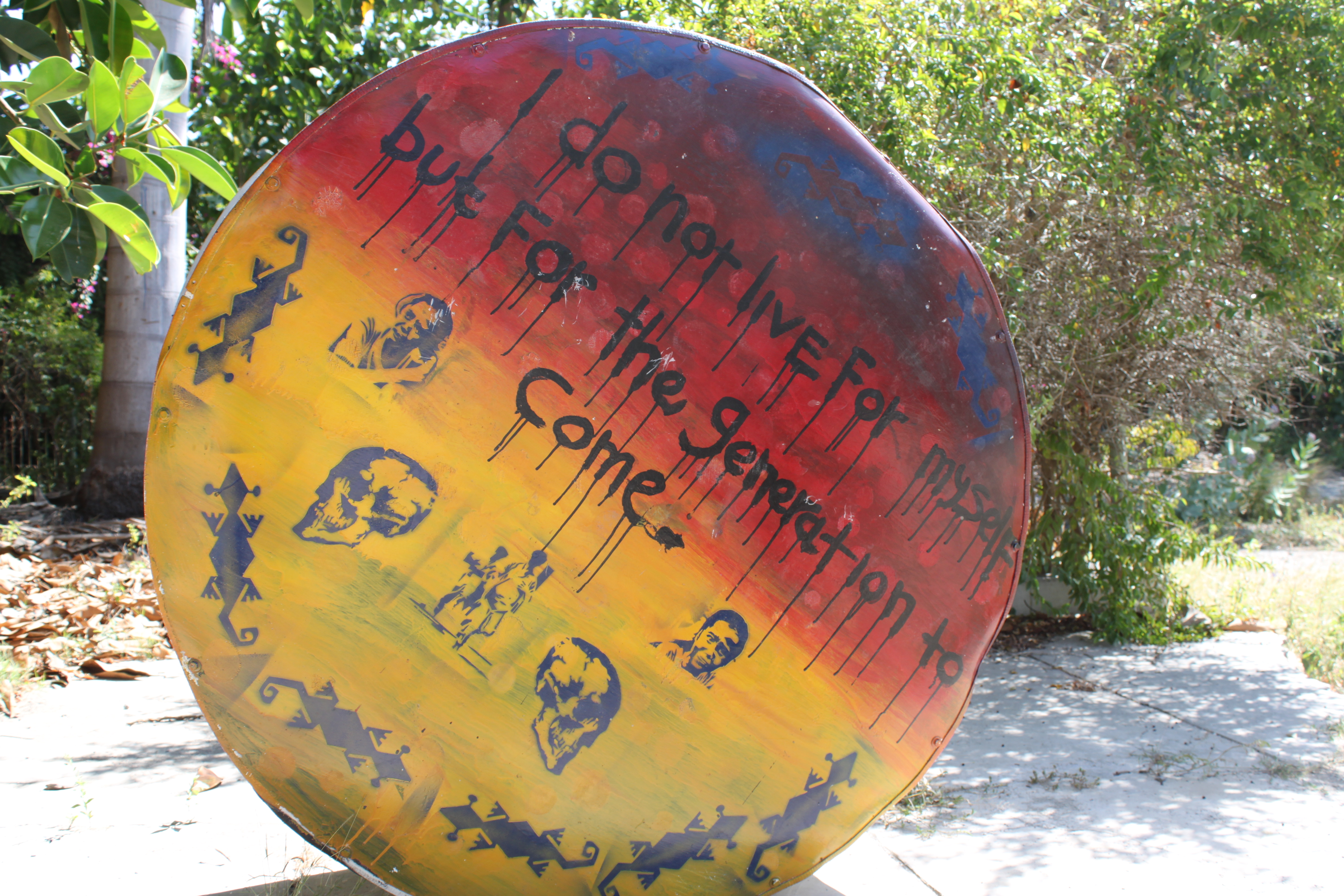
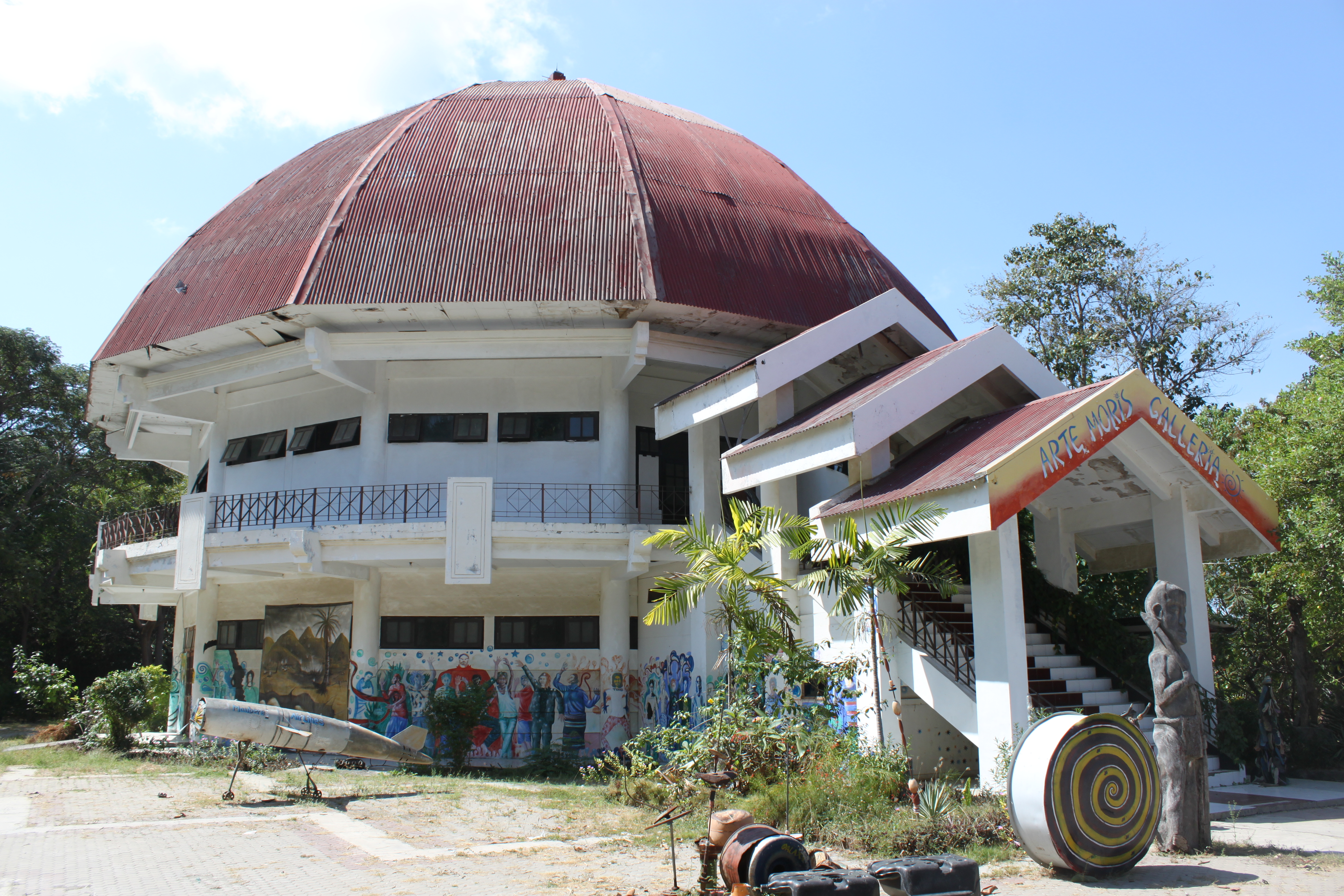
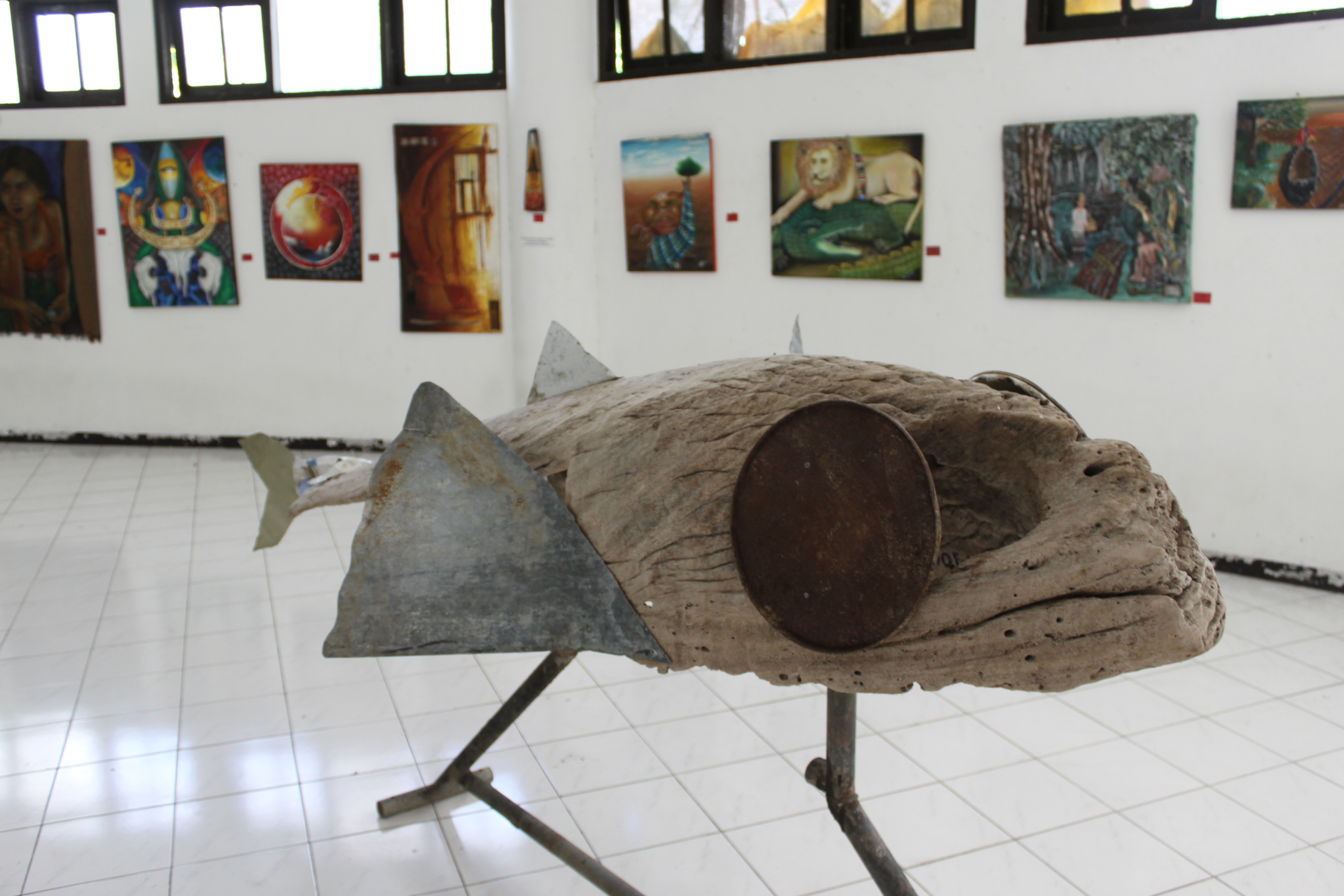
My last day in Timor Leste is spent doing more walking around town. It’s a chance to do some shopping for memorabilia and stuff. There is one more place to see though. I have read about it in Lonely Planet and my friends at the Backpackers endorsed it as a place to visit. It’s an art school. It’s called Arte Morris Galleria and it’s a free art school for East Timorese school students.
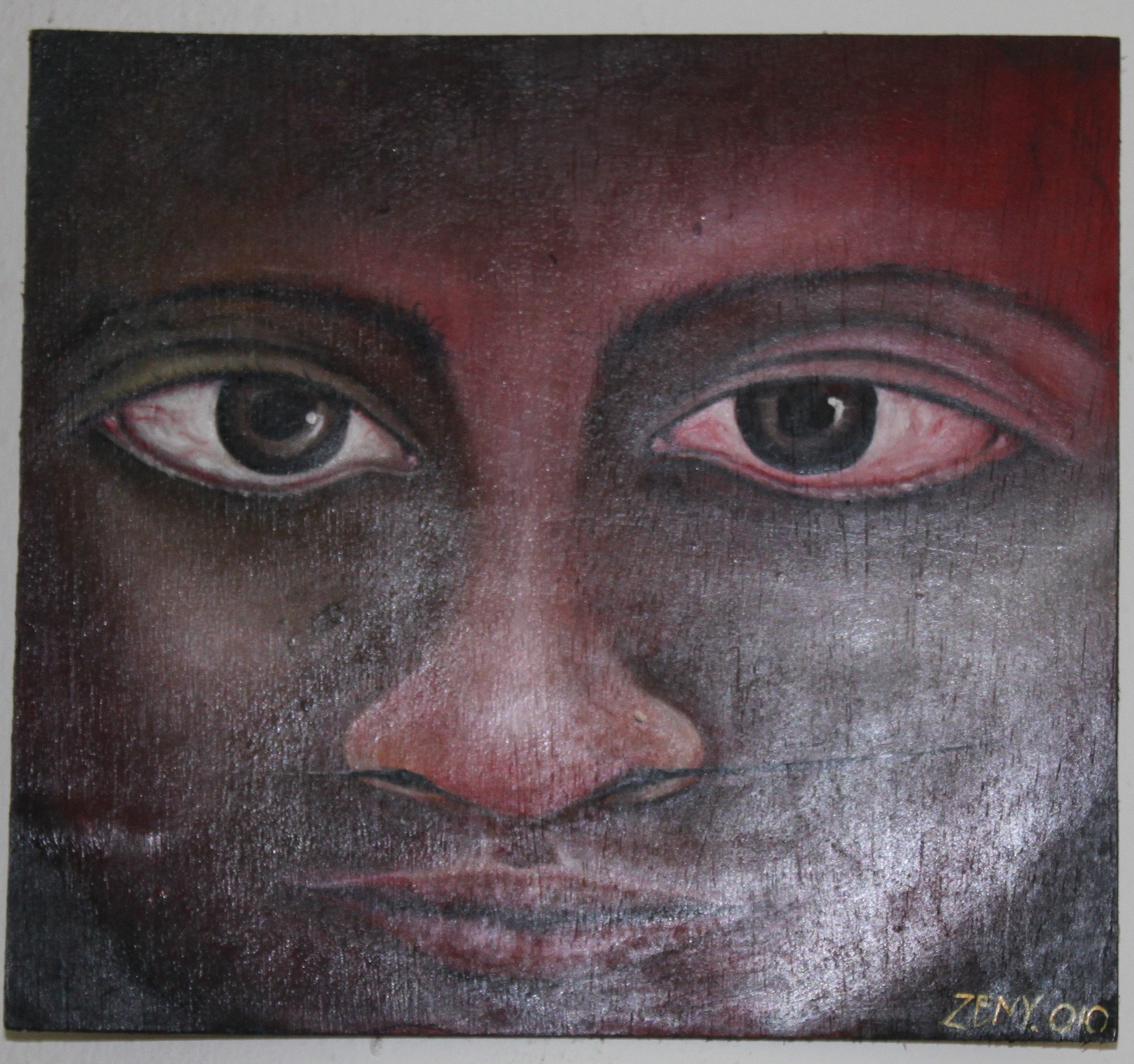
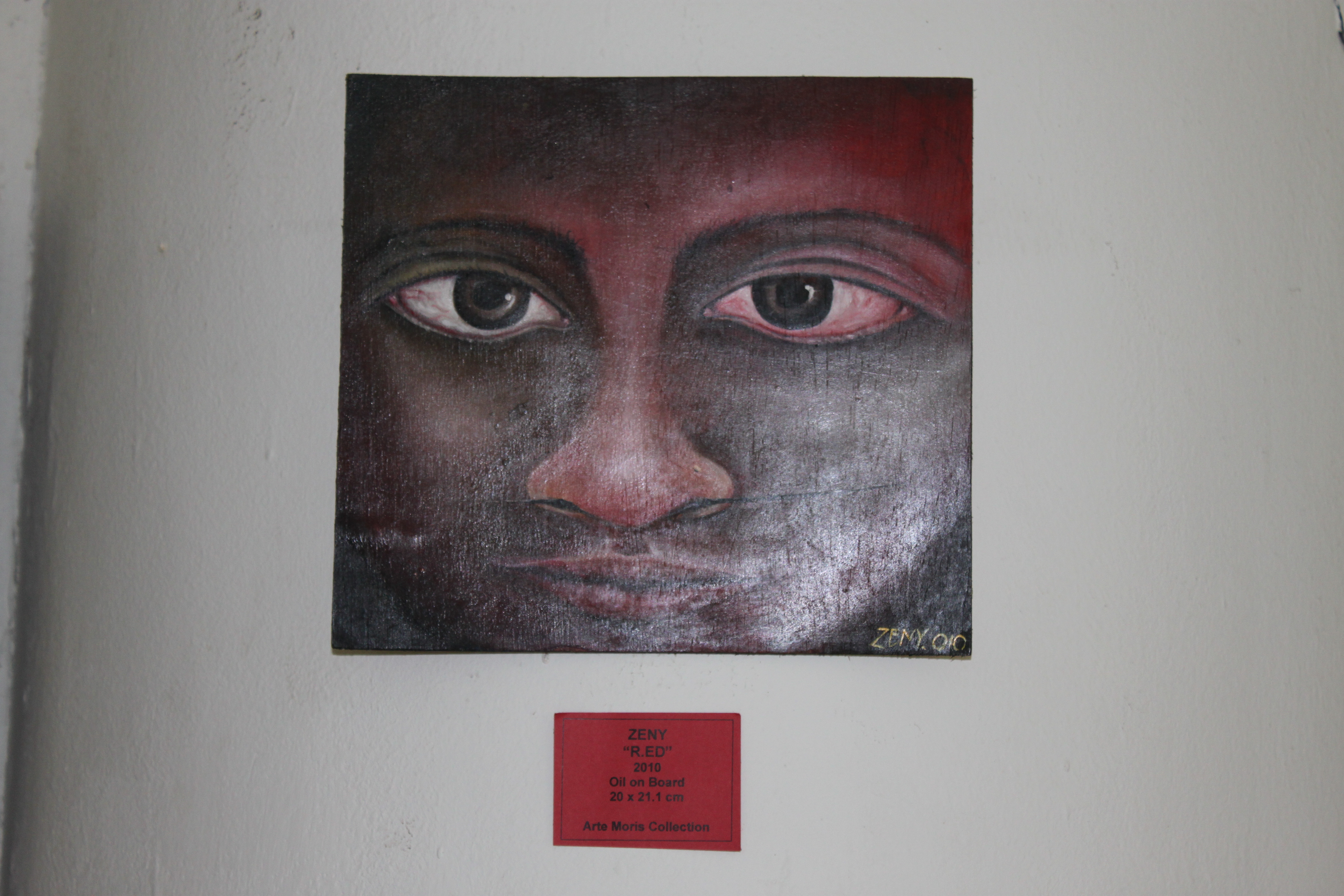
Some more of Zeny's work
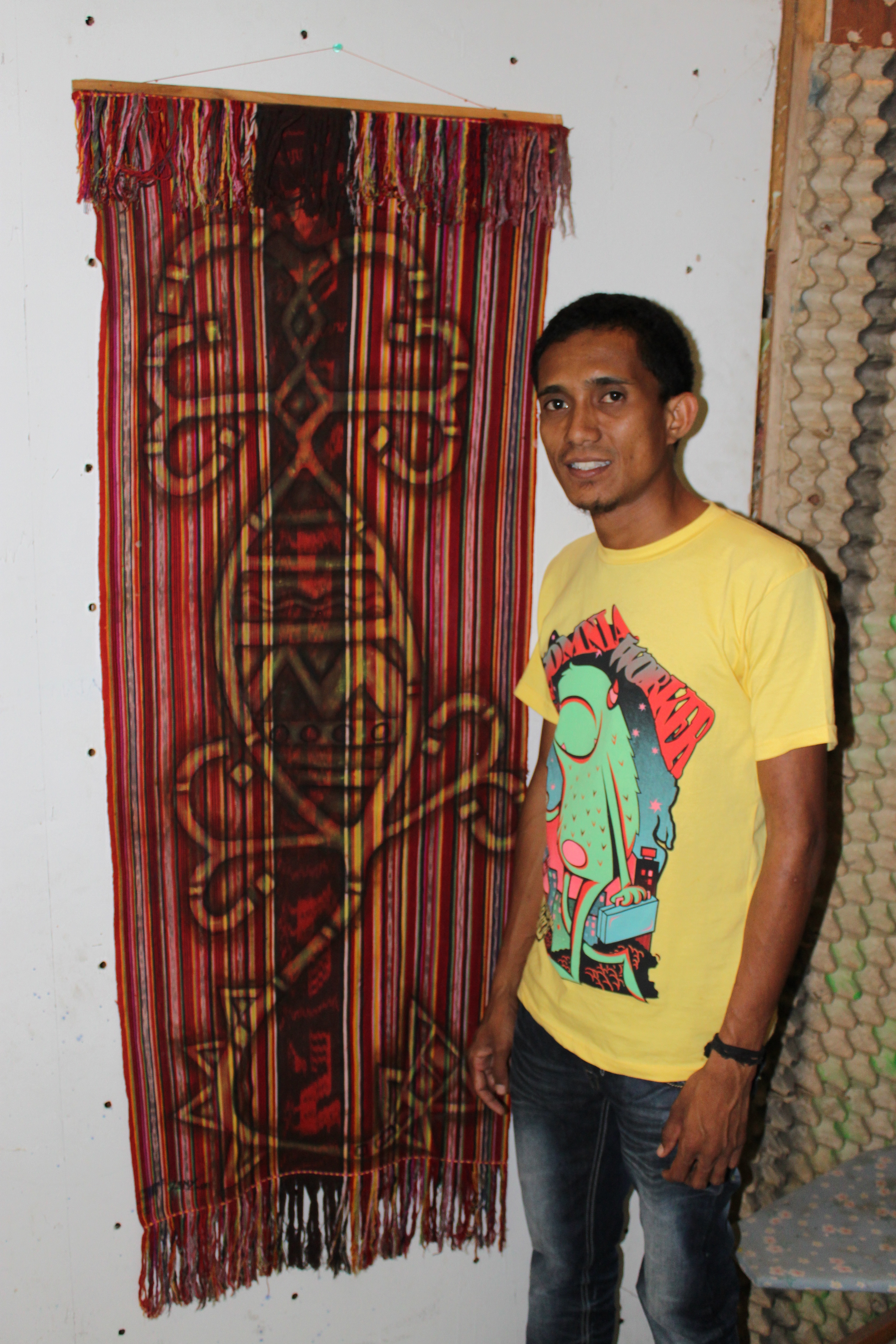
They can come here and learn various art forms from a variety of painting disciplines, wood carving, sculpture, installation art, film making, clay modeling and even grafiti! Yes they are taught how to paint from a spray can and I think I have seen plenty of their handy work around Dili. The art they are taught or encouraged here isn’t necessarily traditional art but what ever comes from their dreams. Zeny is showing me around and he explains artistic expression doesn’t come from thought but from dreams. And the results are very impressive. The grounds are full of very clever installation art and the buildings are full of very clever art if all kinds.
Zeny with some of his work
Zeny is a resident teacher. He takes me to his personal studio, his space, where he produces a variety of art.
Arte Morris Galleria, originally a museum
The buildings they occupy are interesting also. The Indonesians built them for a museum, then the UN used them as a hospital. Now it’s an art school. What a fantastic idea. It is all fairly run down but these dedicated people make the best of it. From Zeny’s explanation they bide there time there from year to year. They are there courtesy of the government and that could change.
Some artwork within the Galleria
He is confident though that they will find somewhere else if that changes. It is possible to support them by buying some of their products. I have bought a cd of short films made by the students that I plan to show in the JCU amphitheater when I get a chance.
I spend more time on the waterfront and meet more locals keen to practice their English. Three guys give me their time and we chat about all sorts if things. I get a general sense that Australians are liked here. The man on the street likes what the Australians have done and are doing here. Perhaps they don’t know that the Australian government and Woodside are trying to screw them over precious off-shore fuel resources, something I’m not proud of. Those here that do know aren’t so happy with Australians and I suspect any Australian wanting to do business in Timor would be prejudiced against. East Timorese on the street aren’t so taken with the Portuguese, their old colonialists. The Portuguese are very arrogant still treating Timorese as subservients and the Timorese sense this. The Portuguese make up part of the policing forces. Interestingly though is that the Timorese don’t hold any grudges against the Indonesians. This surprises me considering the atrocities the Indonesian Army enacted on Timor Leste during their occupation and when they were forcibly removed. East Timorese visit Indonesia to study and travel when they can afford it.
I also meet Jacob on the waterfront. He us studying Mathematics at the International University and plans to become a teacher, like his father. He has two brothers and seven sisters and comes from the village of Maliana, near Balabo, close to the western border with Indonesian West Timor.
My last night in Timor Leste is spent alone over a quite beer. I’m feeling a but sad right now. This place has got under my skin and I don’t want to leave.
I haven’t organised my time here very well. I planned to spend a good part of my time exploring Dili to start with, then visit some of the outer regions. Getting out there is difficult and only by buses that run irregularly. Going anywhere can involve several days, which is fine but not what I planned for. Apart from my visit to Balabo, all of my time has been spent in Dili. I will just have to come back to explore the rest.
Today I return the hire car. I’m nervous about driving in this crazy traffic but I get the car back unscathed and I feel a real sense of achievement about that. I move to the Hotel Dili, which is a bit upmarket. The standard room is costing me $60US per day and the rooms are very comfortable with ensuite bathroom and an outside area for smoking…or what ever. I was paying $25US per night at the backpackers for a room with double bed and share bathroom. They are a very different crowd here, much more serious and less likely to come up to you to say g’day. There seem mainly Australians working here in Timor Leste.
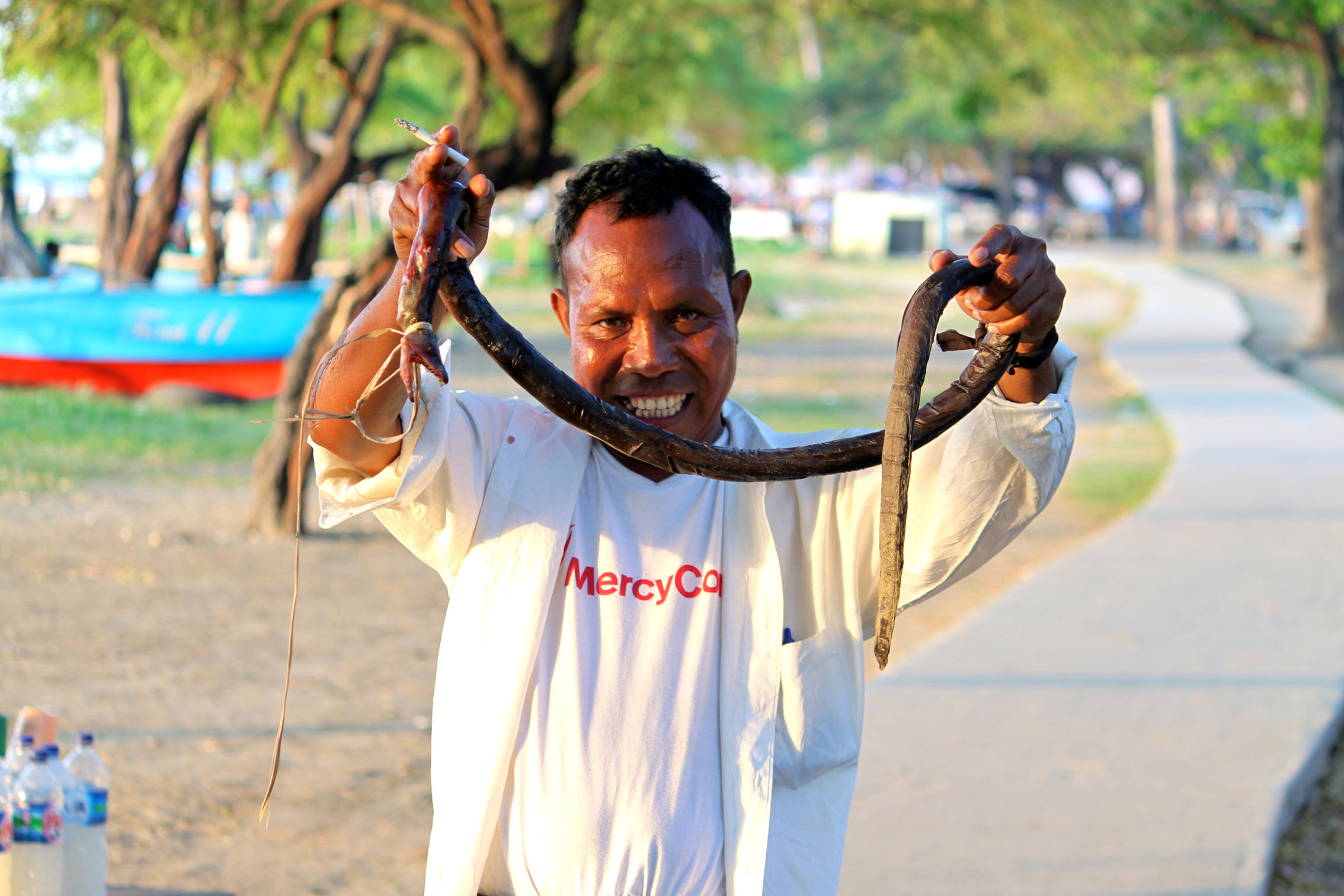
An eel for sale!
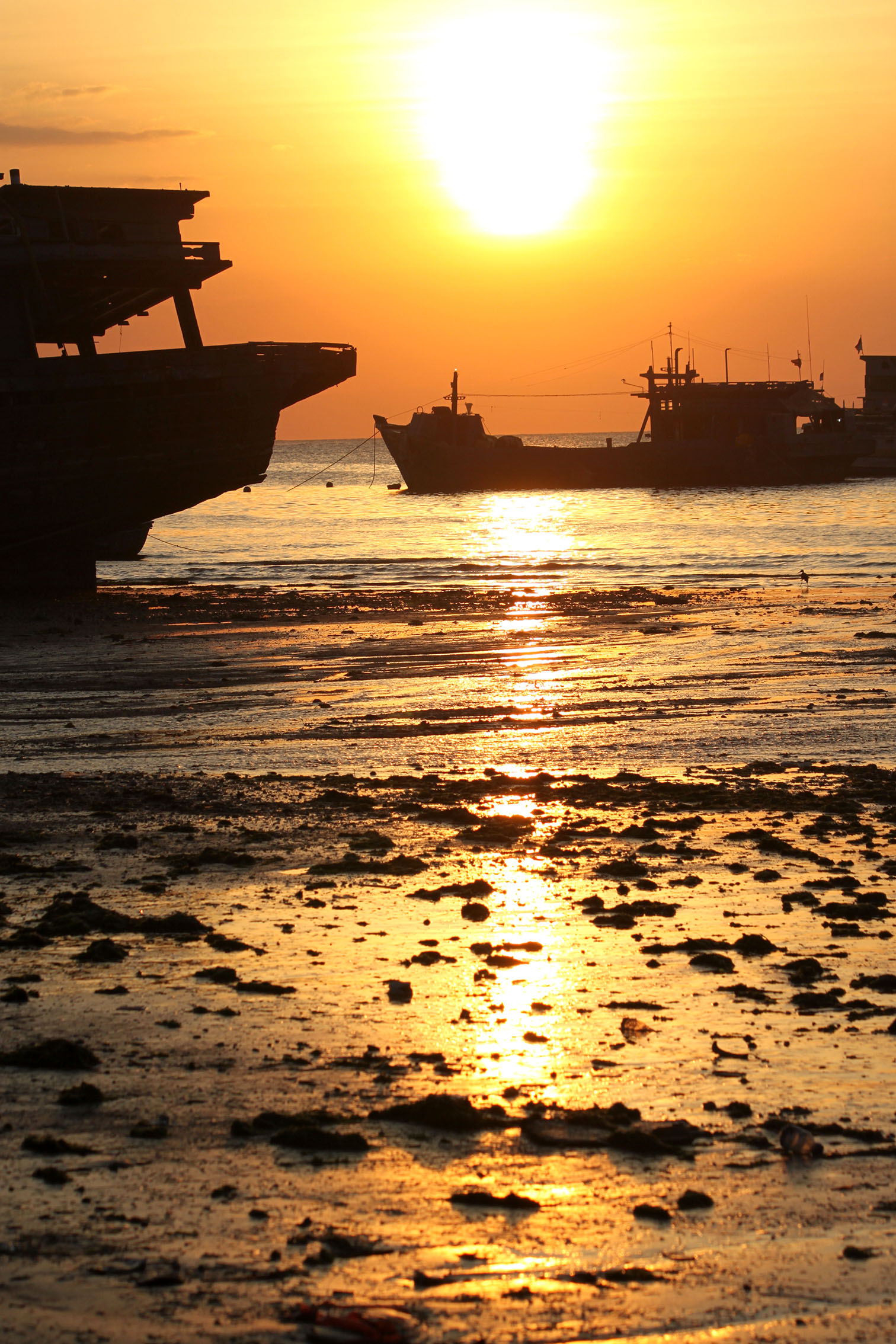
I spend the afternoon walking the waterfront and getting some more photos. The sunsets over Dili Harbour are stunning
My friends from the backpackers come around for a few beers to round off another great day.
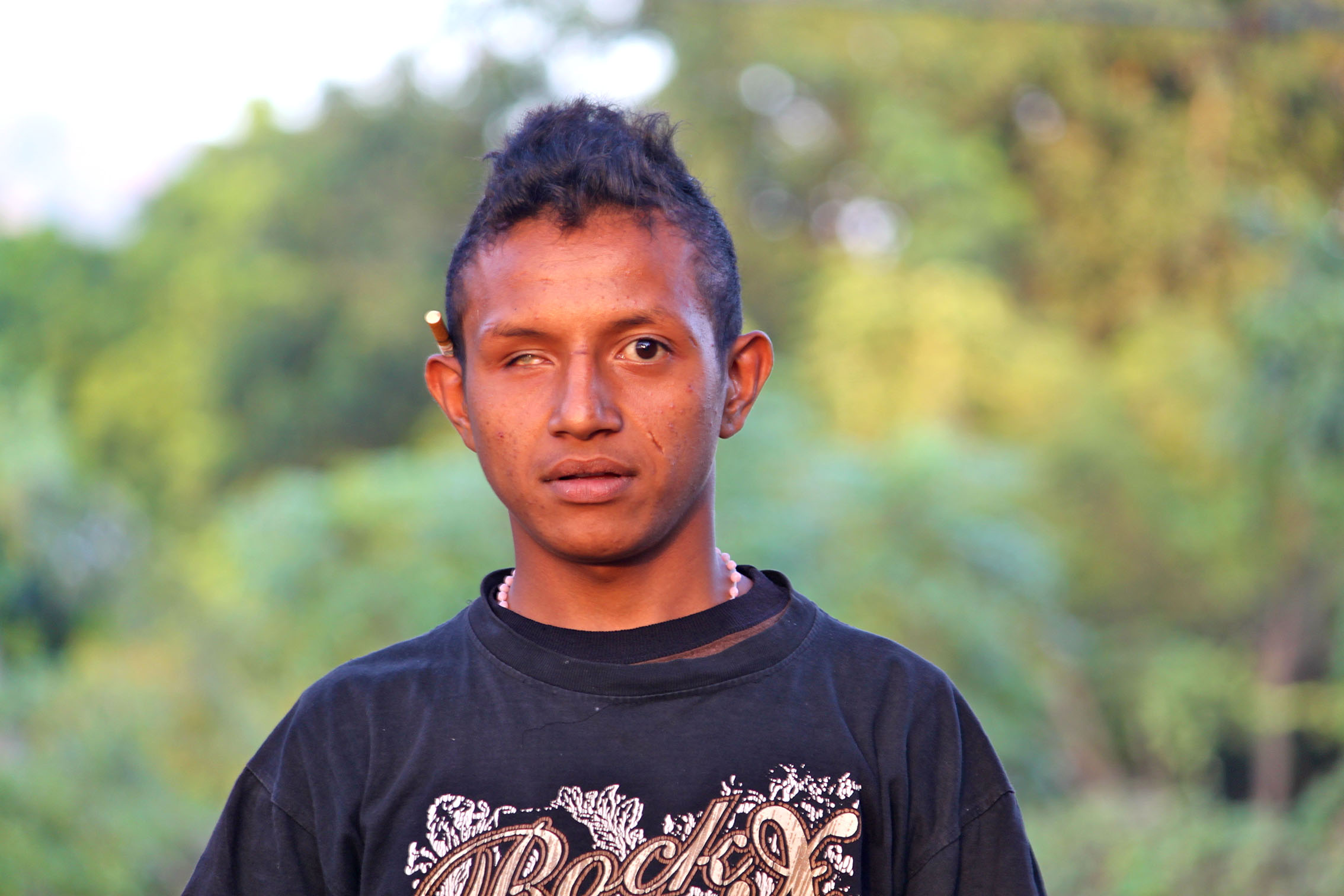
A young street vendor who has been through the wars!
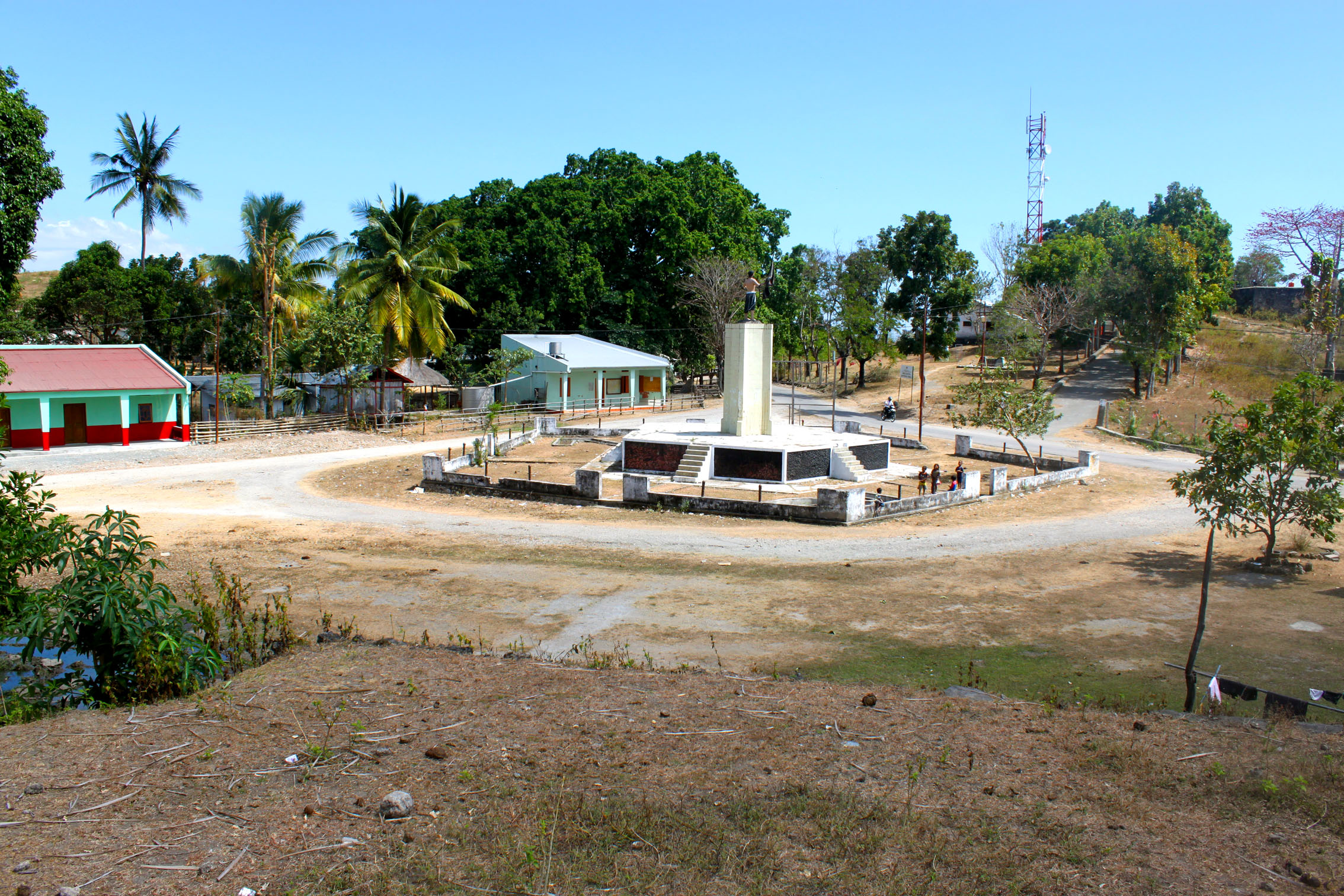
The village square. Top right is the house the journalists were staying in.
Time to start looking with my eyes and not my ears.
I hire a car and make for Balibo, the village where the five journalists from Australia TV were murdered by the Indonesian Army in 1975. Balibo is a small village up in the hills not far from the coast. I have heard all sorts of stories about how long it will take me to get there so I’m anxious to get on the road as soon as possible. Car hire paperwork is painfully slow. The road follows the coast west from Dili and is bitumen, but badly maintained. There are huge potholes everywhere and the road edges drop off severely. Passing through one village I slow behind a truck and while not watching the road I drop the front passenger wheel into a deep pothole. I lose traction. Two wheels are swinging in the breeze and I’m stuck. Embarrassingly I’m surrounded by school children who find my predicament hilarious, peels of laughter everywhere! I get out and we all analyse the situation. The conclusion is to get a push and they happily oblige. Timor kids can push and I’m on my way again. Each of the main villages have schools to primary level and some go to mid-school. For high school the have to go to Dili I think. And each village has a different colored uniform. White shorts/skirts with bright green tops, or brown bottoms with white or bright yellow tops. One village had their kids wearing brown bottoms with hot pink tops! I can’t imagine what psychological effects this will have on the boys later in life but it certainly makes them very visible on the road. (I have since heard that the school uniforms can depend on the best deal the school can get on clothing material. Hot pink must have been on special.)
The narrow road that passes through the villages is used by everyone. At certain times of the day the road is busy with these school kids, goats, dogs of course, chooks, pigs as well as cars, trucks and buses. Travel is slow but entertaining. And there are all sorts of produce on display for the passerby to purchase, including fish. I saw the biggest tuna I have ever seen, hanging from a pole for somebody to buy.
Beautiful coast line
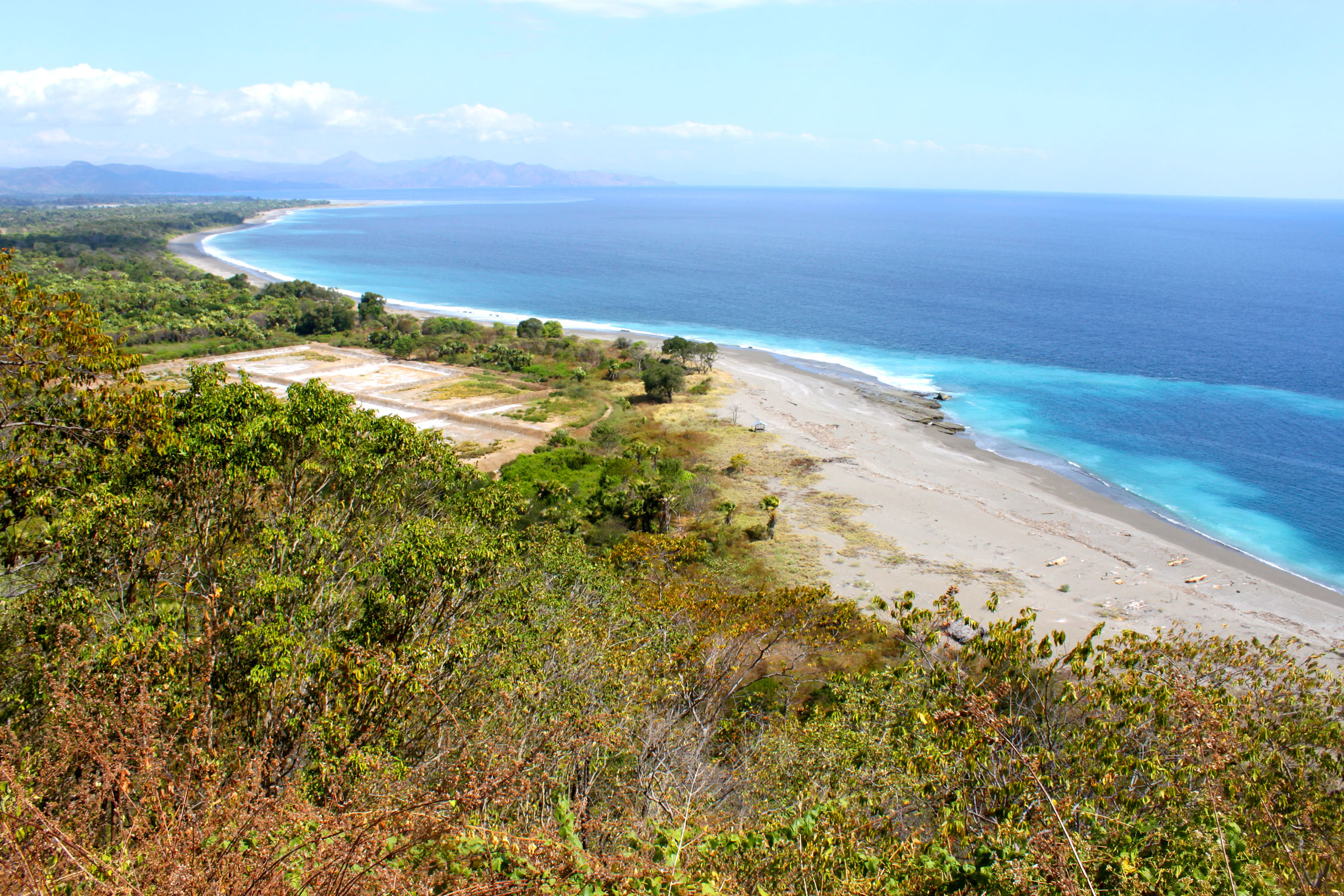
There is some beautiful coastline visible from this road and one day tourism will take advantage of this. They are working hard on the roads and rebuilding the electricity network, out this way at least.
I reach Batugade close to the West Timor border and turn south to go up the range. The hills here aren’t so dissimilar to the Cairns hinterland, except they are dry, brown and sparsely treed. Balibo is only a shirt 15 minute drive from the coast. It is hard to know what village you are in because the signage isn’t great. I park at a spot below an obvious old stone fort. This was built by the Portuguese.
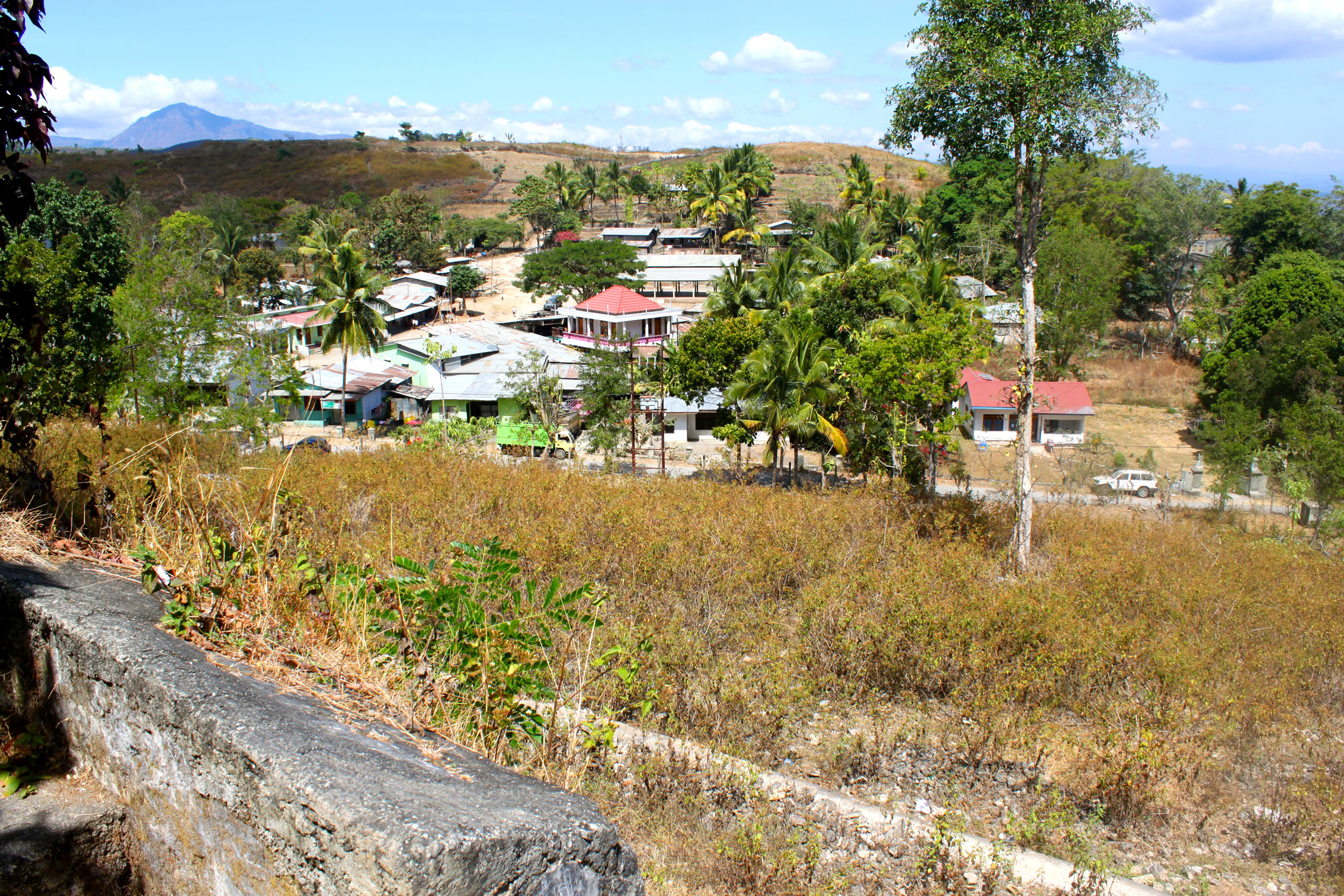
Looking down on village from old fort
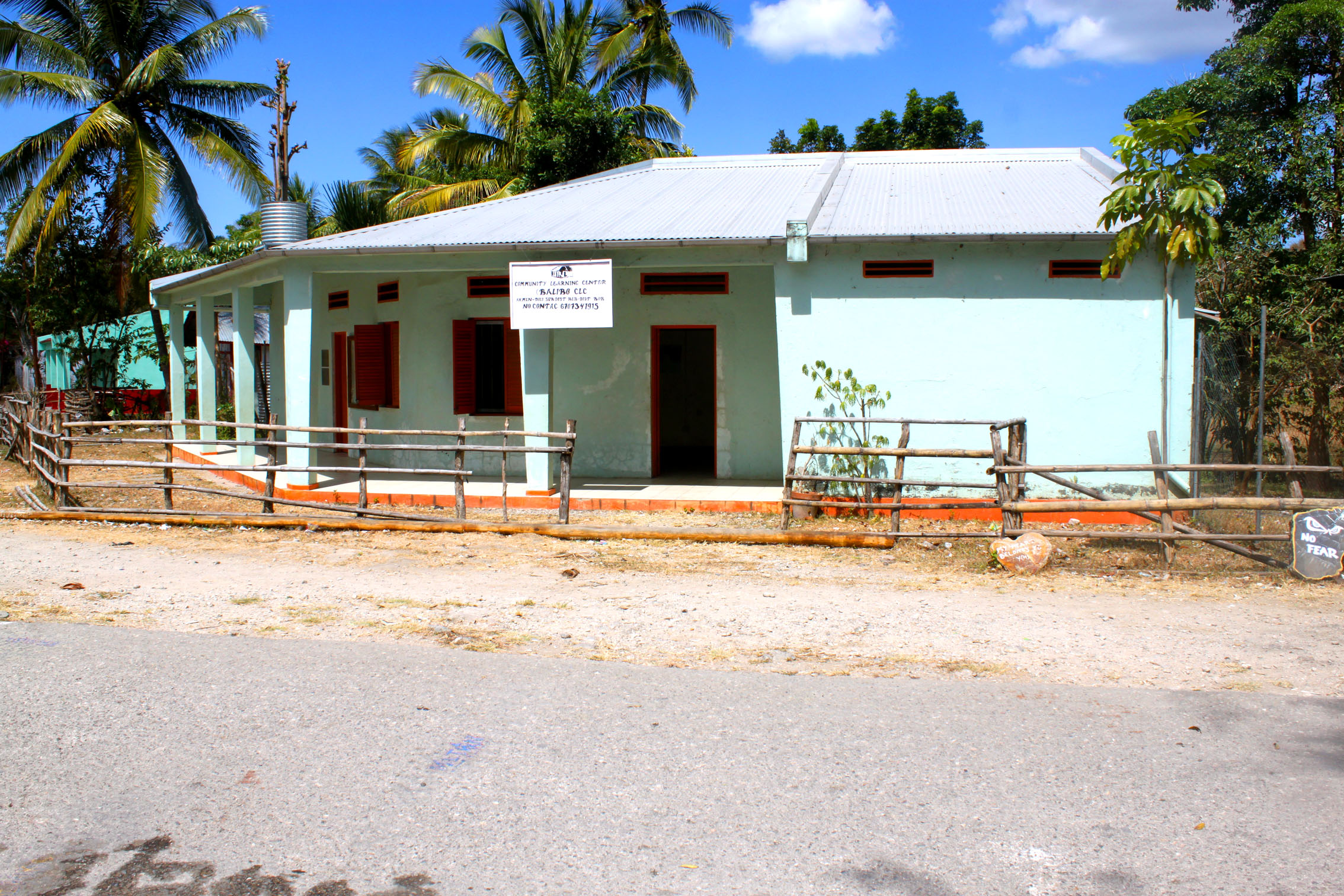
My trusty Lonely Planet explains to me where to find the building I am searching for and it isn’t long before I find it. In the village square at a tee section in the road, there is a building on the corner. This is where the five journalists working for Australian TV (two Australians, two British citizens and a New Zealander) stayed during their campaign to report on the Indonesian invasion. It is now a community centre. I understand the families of the journalists raised funding to purchase the building for this purpose and to tell the story of what happened here in Balibo.
House where the journalists stayed
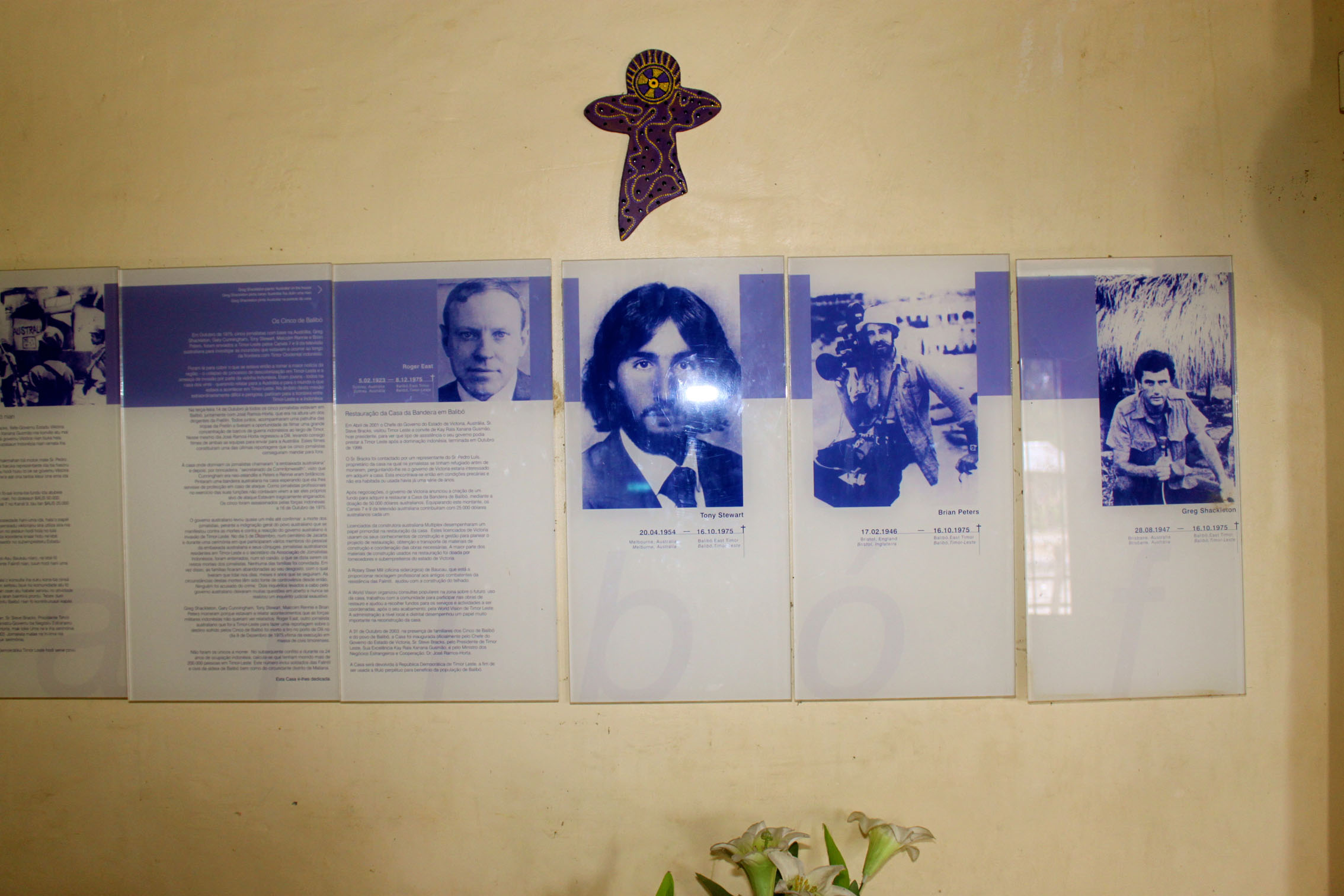
The Victorian Government played a big part. On the wall within the main room of this community centre are glass covered informational posters on each of the journalists. On another wall is some information about some heroic East Timorese who lost their lives brutally to the Indonesian army for their involvement in the fight for independence cause. I personally am not connected in anyway to any of this but I’m still effected. It’s any eerie atmosphere when you think that back in 1975 the army came streaming in here and enacting their own kind of brutal justice. I try to imagine what the very last moments must have been like for the journalist’s. I feel sick.
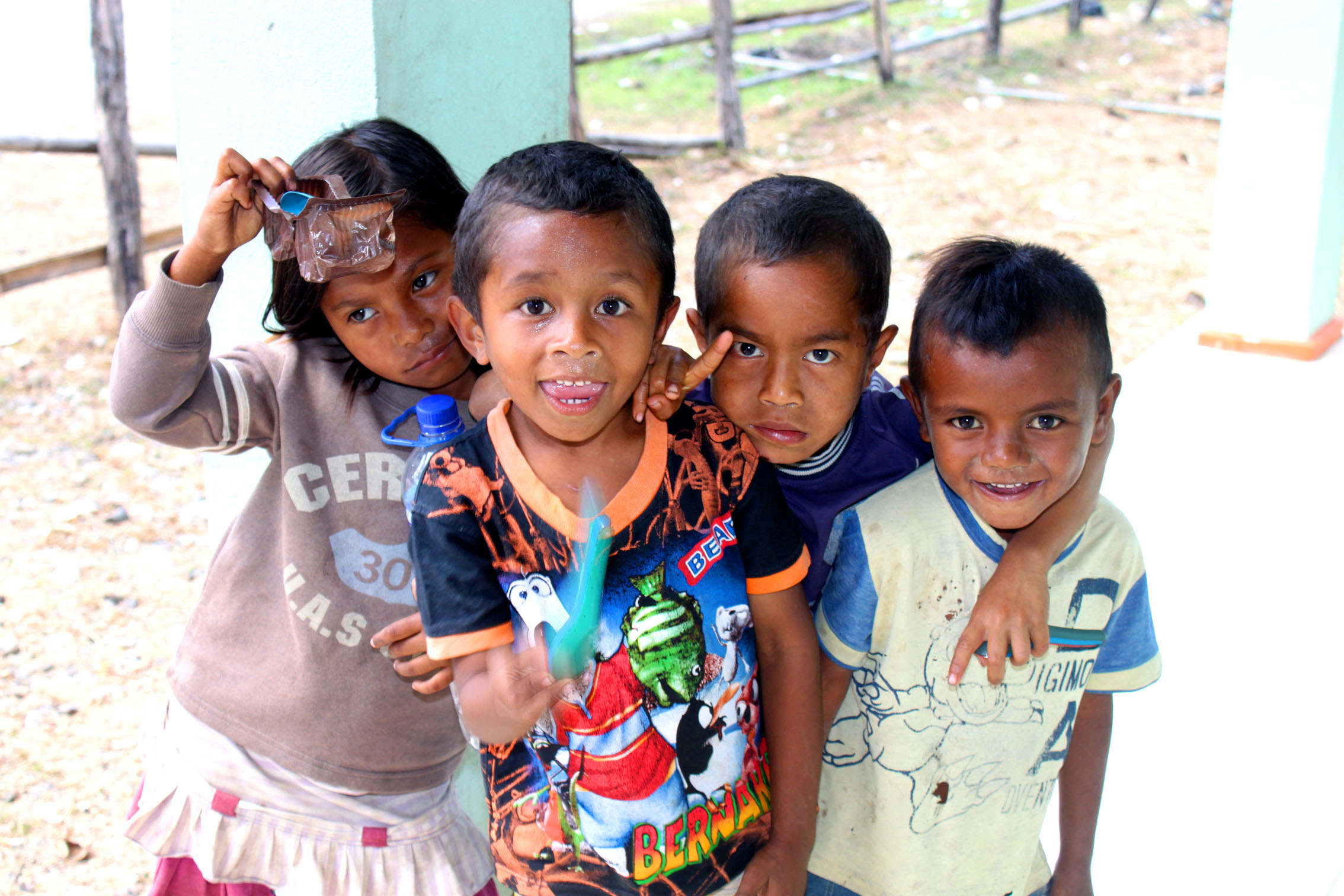
Some of the Balibo locals
A bunch of cheeky kids have joined me and distract me from getting too emotional. ‘ Photo mister?’ ‘OK, photo’. On the wall outside is a glass case covering the Australian flag one of the journalists, Greg Shakleton, painted in hope that this would give them some immunity. The now-famous flag is badly faded and hardly visible. Also on the wall is an Anti-Bali sign. What is this about? It is explained to me back at the Backpackers that there is some animosity here towards Bali because the invading Indonesian troops came from there.
Info about the five journalists
The five journalists were murdered by the Indonesian Army. There weren’t murdered in this house but it is believed to be in the house across the village square. The Indonesian commander who gave the orders is still alive but retired from the army. I think the relatives of the journalists are still working hard to bring him to trial.
I walk around the old Portuguese fort. During Australia’s role in the UN Peace Keeping forces, a regiment was initially based here in Balibo and camped in this old fort. The views from here are spectacular. In one direction you overlook this pretty village and on the other side are great views of the coast. We’re right on the border here so you can look into Indonesian West Timor from here.
 angusmccoll
You must be logged in to post a comment.