Dili, Timor Leste (Monday 25 July)

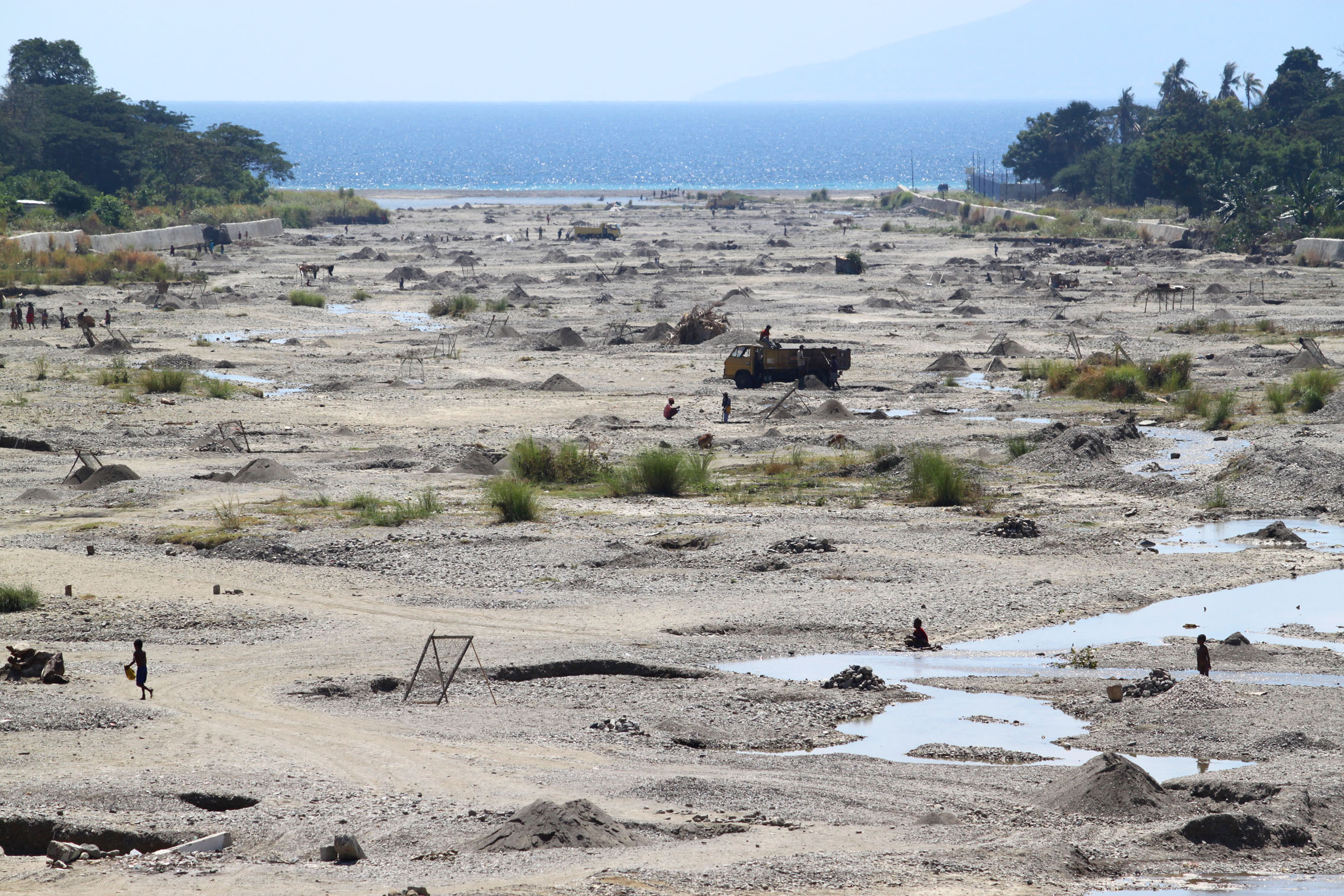
The Comoro River has got a lot to give, even in the dry

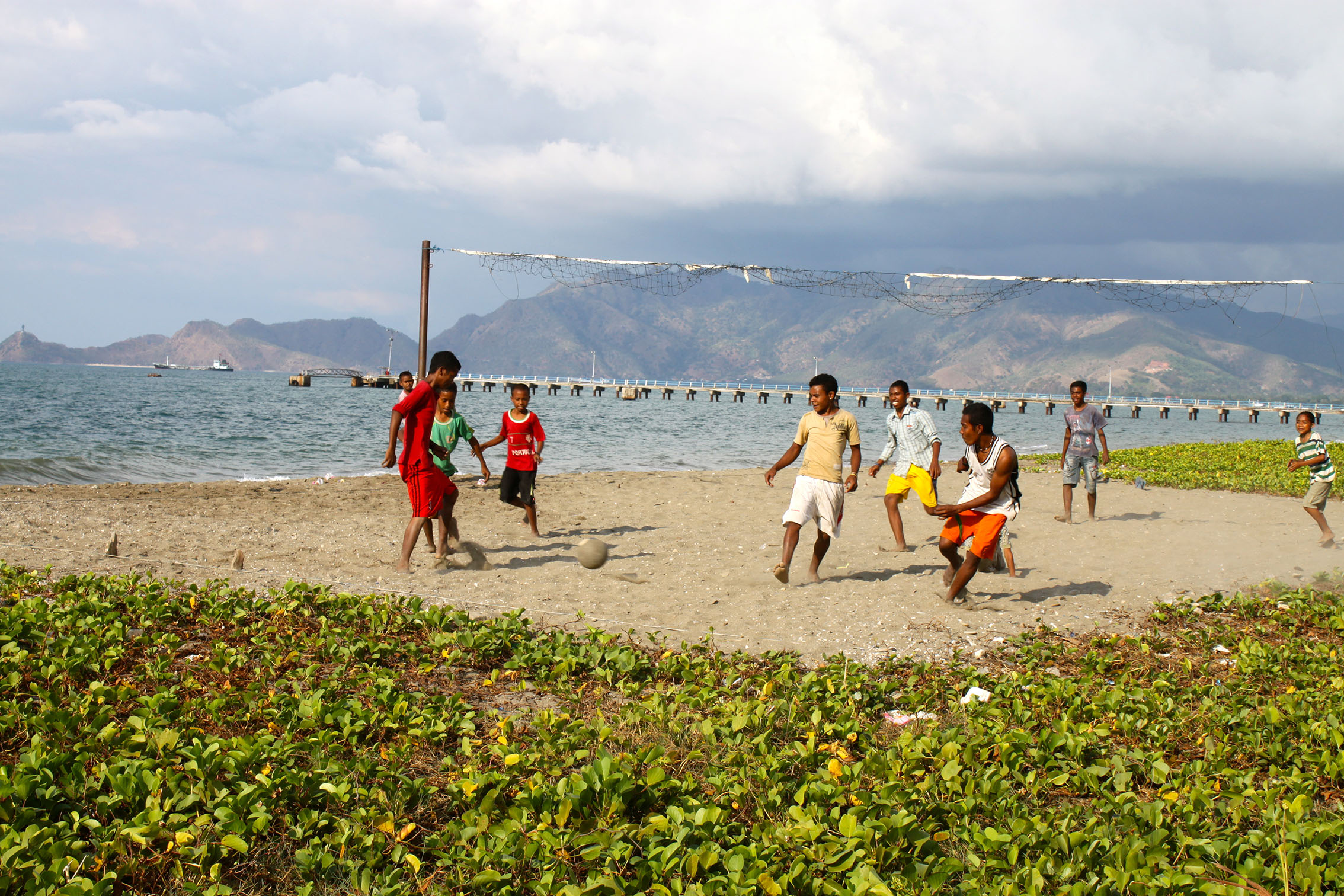
A lazy day today, looking around Dili. Justin has classes today so I am on my own. Comoro River is the biggest of the rivers passing through Dili. During the dry season it is dry except for a trickle as are many of the rivers that drain from the highlands to the coast on the northern side of Tinor Leste. From the plane you can see them as grey fingers snaking down from the hills to the ocean. During the wet they become raging torrents and I’ve seen photos. But during the dry times the Comoro River empties out and becomes soccer fields for the kids and roadways but more importantly there is industry in it’s dry river bed. The gravel and sand is harvested for all sorts of uses, whether for building or road construction.
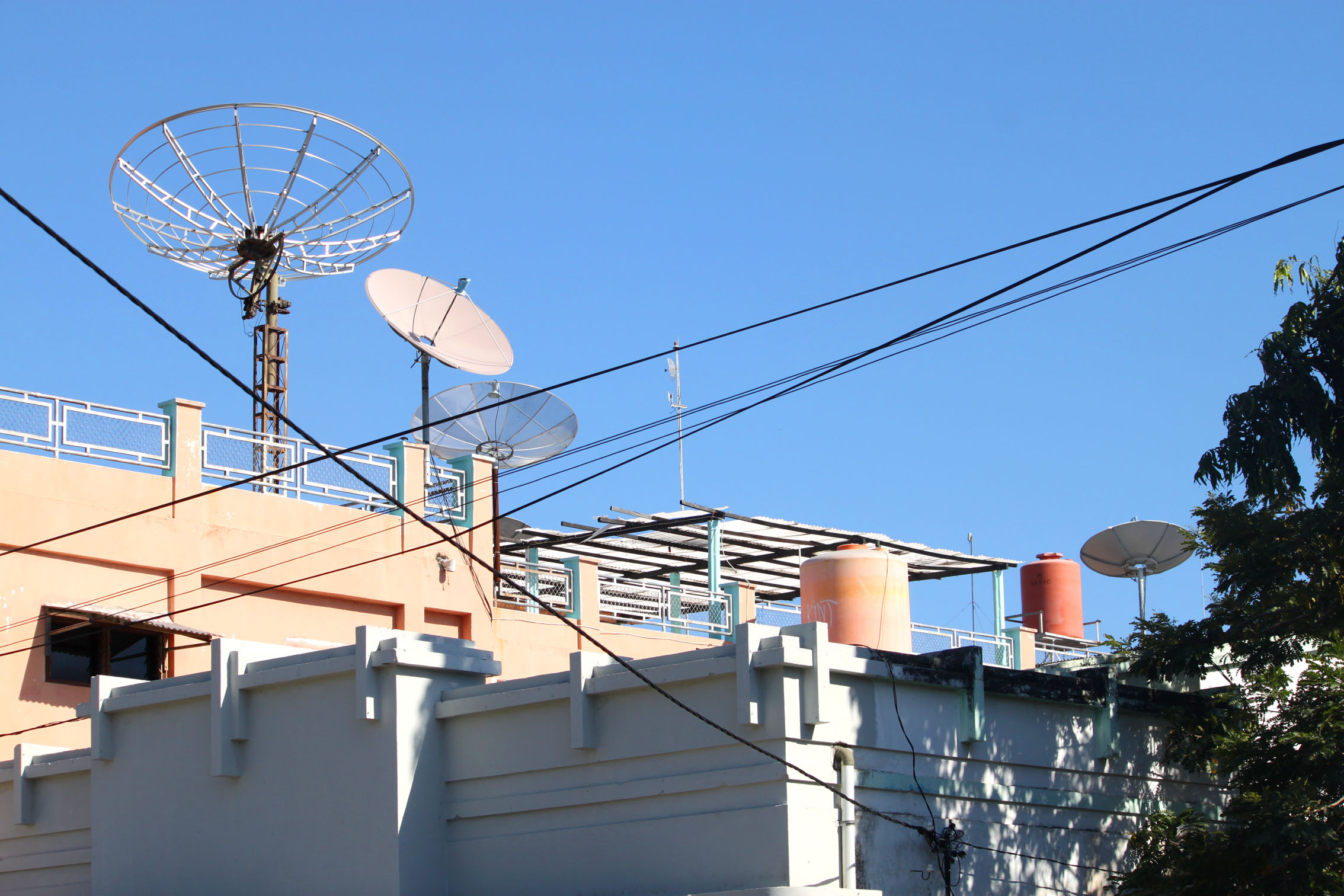
Satellite dishes everywhere

I lunch at a little cafe I come across on my walk around. The elderly lady there can’t speak a word of English and there isn’t a menu I can point to. All I wanted was a cup of tea but that seem to translate into two cokes, chicken satay, packet of popcorn, and a bread roll! The food just kept coming! I really should learn the language. You can do short courses in Tetun, which is a common dialect here. The courses run over two weeks and it is just 4 hours per day so time to do your own thing in the afternoon. This seems to be a popular thing for visitors to do and is something I will do when I come back.

I call into the European Commission building where the is a photographic display. Wendy Ricardo is an Australian photographer and she has a fantastic collection of traditional Timor Leste. This collection will be a cultural archive of East Timorese life as it use to be and can be seen in the outer villages. As Timor Leste progresses, I guess much of this imagery will be lost. Wendy and her partner also support some causes over here. Computers are one thing they provide for the schools when they can. If ever there was a place for all those prematurely retired computers in Australia, this would be it. Wenday plans to take her exhibition to Australia. I have asked for them to include Cairns on their itinerary and have suggested The Tanks would be a great venue. They will look into it.
Dili, Timor Leste (Sunday 24 July)

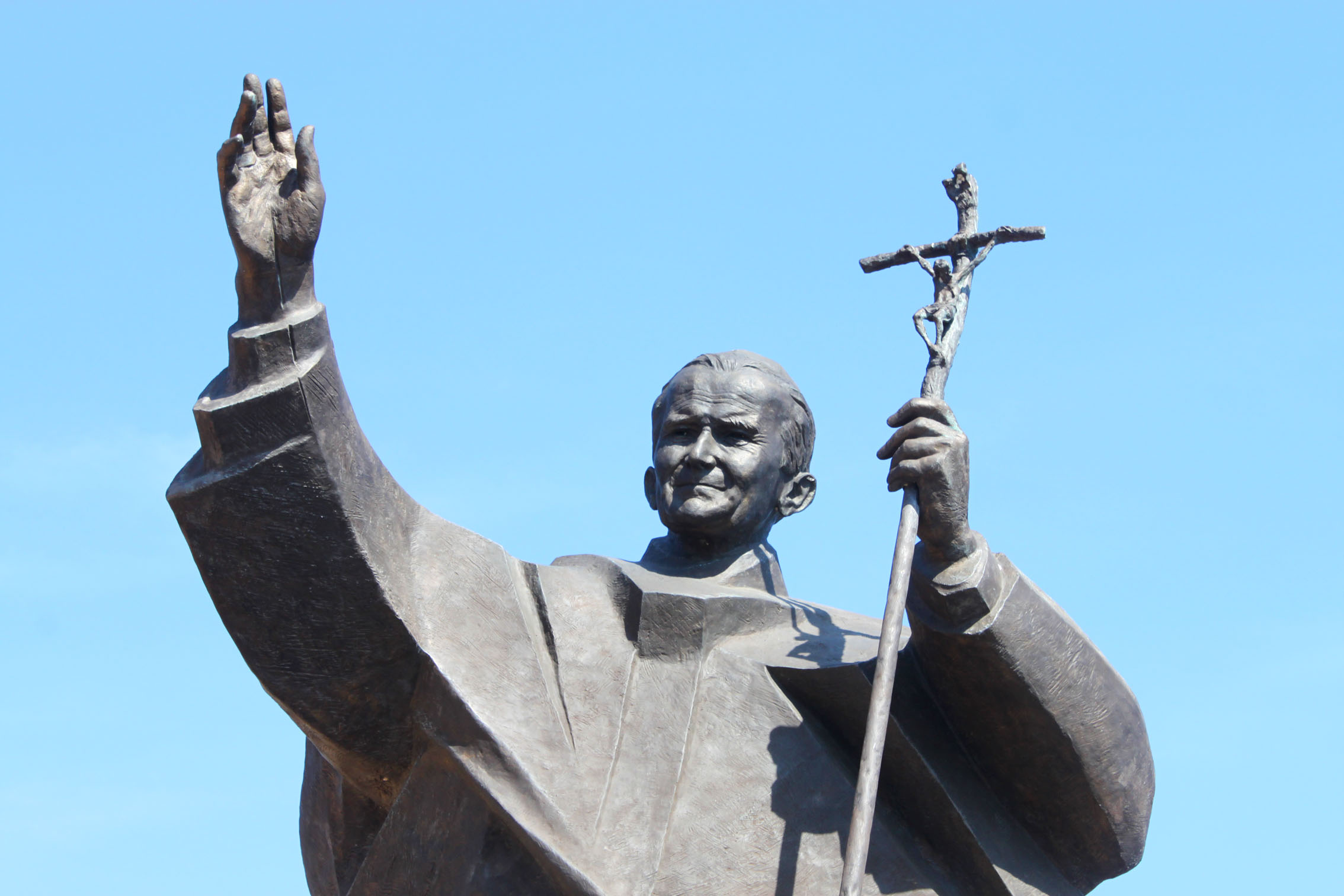
Statue of the Pope

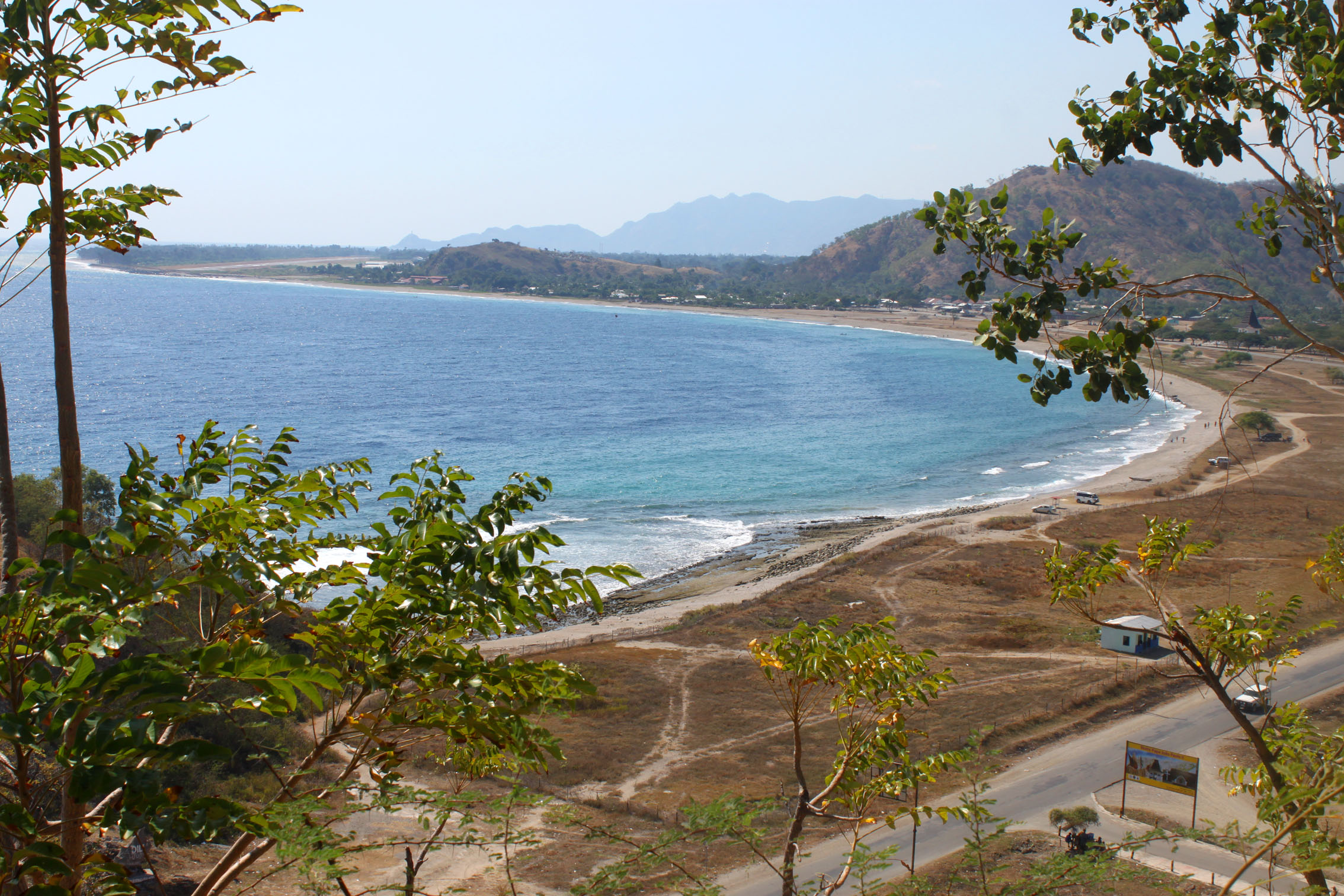
I meet with Justin at 10am down on the harbour. We catch a taxi to a church on a hill just west of the town. On the way we pass the Comoro markets. ‘I don’t go there’ explains Justin. ‘Oh? Why?’ I ask. ‘There are drugs and they kill people’ he replies. ‘Oh…that is a very good reason not to go there’!
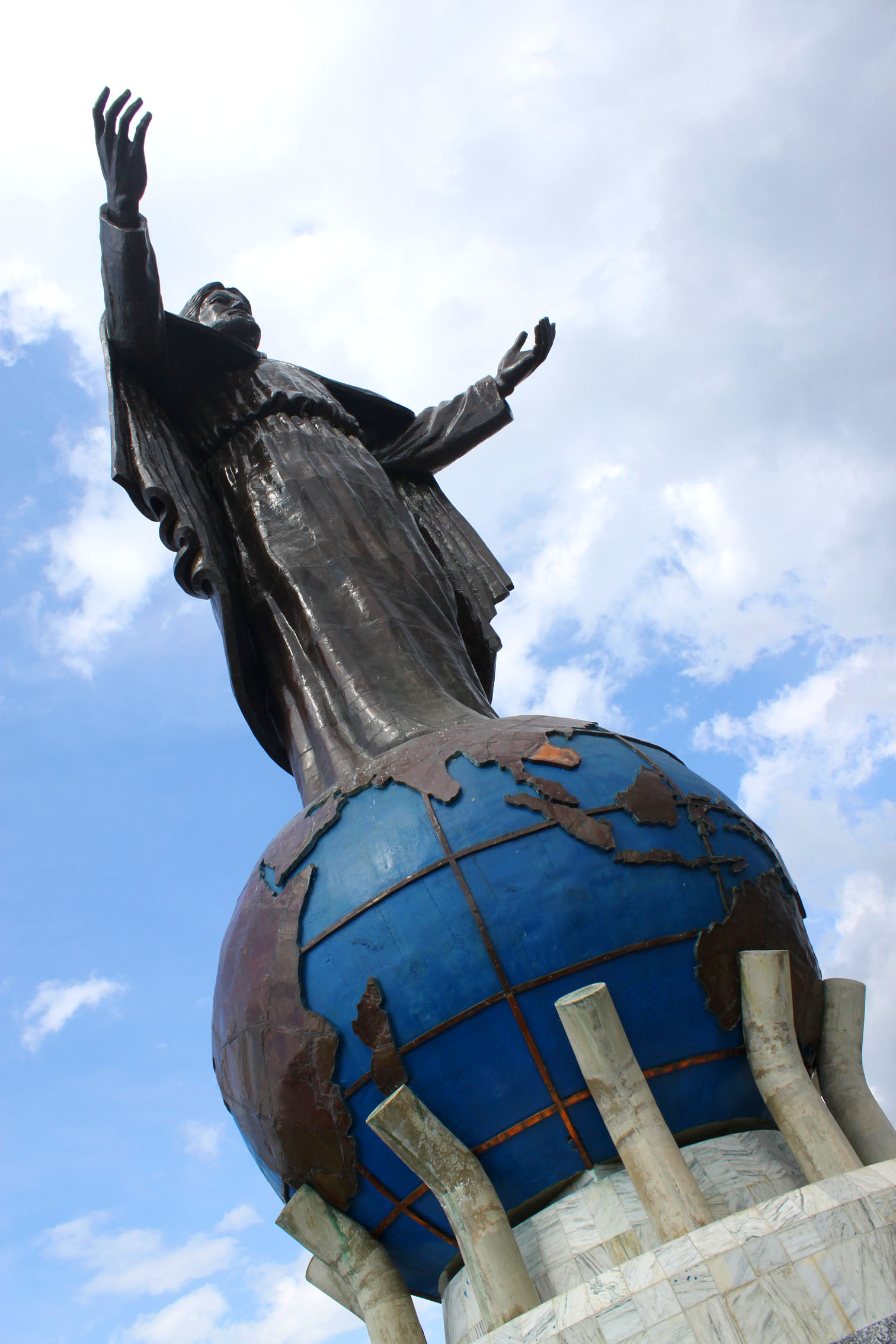
The church is in a great location, up high with nice views all around. There is a large impressive statue of the pope, one arm outstretched and the other holding a cross. We are not alone with locals and visitors also there. We meet two Australian nurses there who are in Dili on assignment to look after Australian soldiers based in Dili.
From here we walk along the beach and across to the ‘Three Seas’, a series of saltwater lakes that do little more than breed mosquitoes according to the Australian nurses. Dengue and malaria are a problem with the Australian troups stationed here. Not far from here is a UN vehicle graveyard where there are hundreds of broken UN vehicles stacked up. UN personal come from all parts of the world with various levels of driving backgrounds and abilities. This graveyard is testament to their bad driving. It’s an amazing sight and provides another measure of the extraordinary waste at the hands of the UN! If ever they change car brands, Toyota will go broke! The UN is timed to pack up and move out in another 12 months after the next presidential elections but the word is they will extend their departure date indefinitely as things are still unstable in Timor Leste.
We catch a taxi to the famous Aituri Markets. These markets are located on the southern edge of Dili at the foot of the hills. They are impressive just for the volume and variety of produce available and if you come to Dili, you should come here. It is impossible to capture the atmosphere in photos. There is nothing you can’t buy here. Everything is artfully displayed, tomatoes stacked in pyramid piles, green vegetables hanging or stacked in order, tobacco broken up into manageable piles all in rows, bean seeds of all colours displayed beautifully. Even the fish are organised artfully. Walking through i give Justin the English names and he gives me the Timorese equivalent. The markets are a labyrinth of alleys solid with product and I would get completely lost if it wasn’t for Justin. These markets are active every day.
We visit another market at Taibessi. The government wants to move them to use the land so they built a complex of sheds for the vendors to move to. There are more vendors than sheds so they refuse to move. The new sheds remain unused.
Justin and I part ways for today and on the way home I grab some dinner at a hole-in-the-wall at an Indian eatery across the road from the backpackers. An Asian looking guy (not Timorese) waiting for his order comes up to me and says ‘G’day mate’ in perfect Australian! He is a Jehova’s Witness missionary from Japan. He has been here 5 years and has no plans to leave.

Dili, Timor Leste (Saturday 23 July)

My friend Justin Oakey who showed me around town. Thanks Justin.

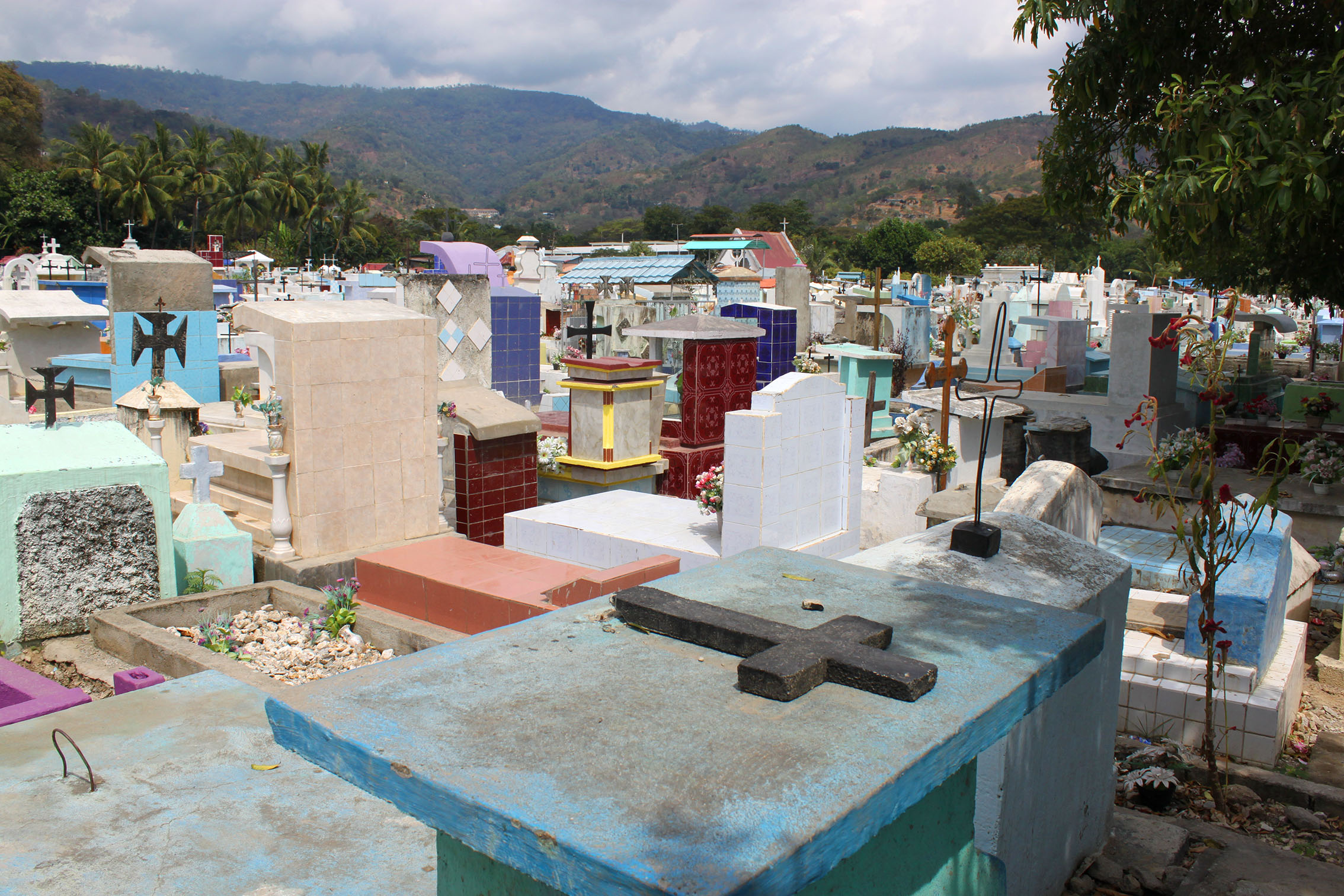
Another day around Dili. I visit the Santa Cruz Cemetery this morning. It plays a significant role in Timor Leste’s struggle for independence. In 1991 a peaceful protest at this cemetery was managed ‘Indonesian army style’ and over 100 people were killed including a young New Zealand national and two American journalists were badly beaten. This splattered the occasion on the world stage and was seen as a turning point in the the struggle for independence. A large majority of the population in Timor Leste are Catholic and the graves, packed so tightly it is difficult to walk between them, are grand and extravagant in design. Catholisism is obviously a powerful influence here.

The very busy Santa Cruz cemetery

Across the road from the cemetery is anther newer cemetery including a memorial to the people killed by the Indonesian Army during the protest.
I met Justin Oakey yesterday. He came jogging up beside me and started to chat. He is 21 years old and studying international relations at a private university here. The are many universities in Dili. Justine says 19 but I can’t be reading his broken Englis very well! The University of Dili doesn’t look much though, more like an unkept high school but there are others that look substantial. Justin speaks English quite well and wants to be better so he practices when he can. He is the oldest of five in the family and he comes from the Ocouesi region.

Christ statue

I meet with Justin again today. He is taking me to see the huge Christ statue that is a feature on the skyline around Dili harbor. It is a huge statue made from some coppery looking metal and is positioned on the eastern tip of the harbour. This is a very popular place for the locals and tourists to visit, particularly on the weekends.

The Christ statue dominates the skyline

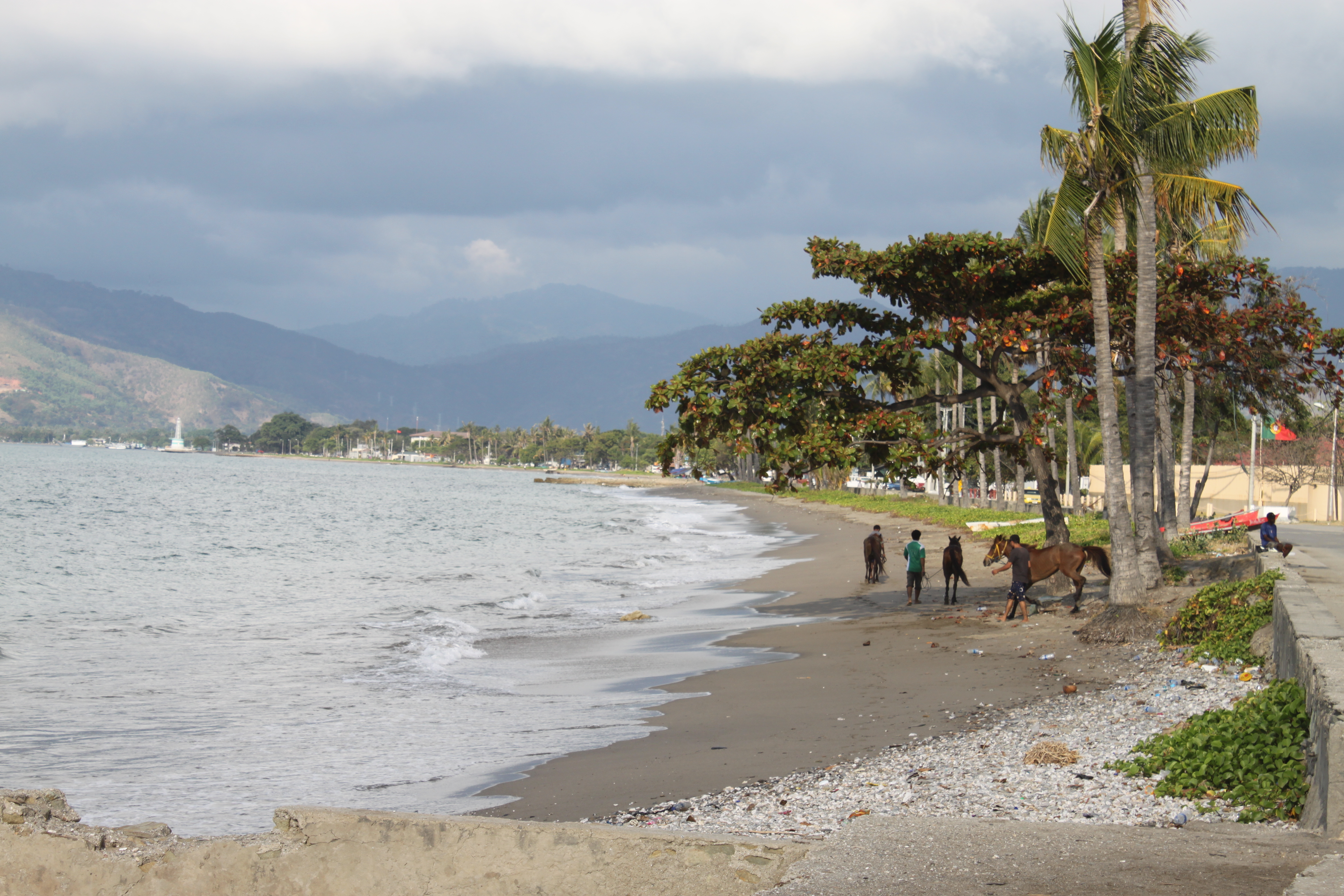
The very good road takes you past some pretty beaches with cafes and bars. The president’s house can be seen up in the hills. It is easily spotted being a garish bright green and yellow in colour. Ramos Horta was shot in 2009 (I think) on the driveway up to his house.
Back to the Backpackers and another great chat session with the other residents. There is a great transfer of information here as we pool different experiences, right down to where to find good food. Very valuable advice!

Dili, Timor Leste (Friday 22 July)

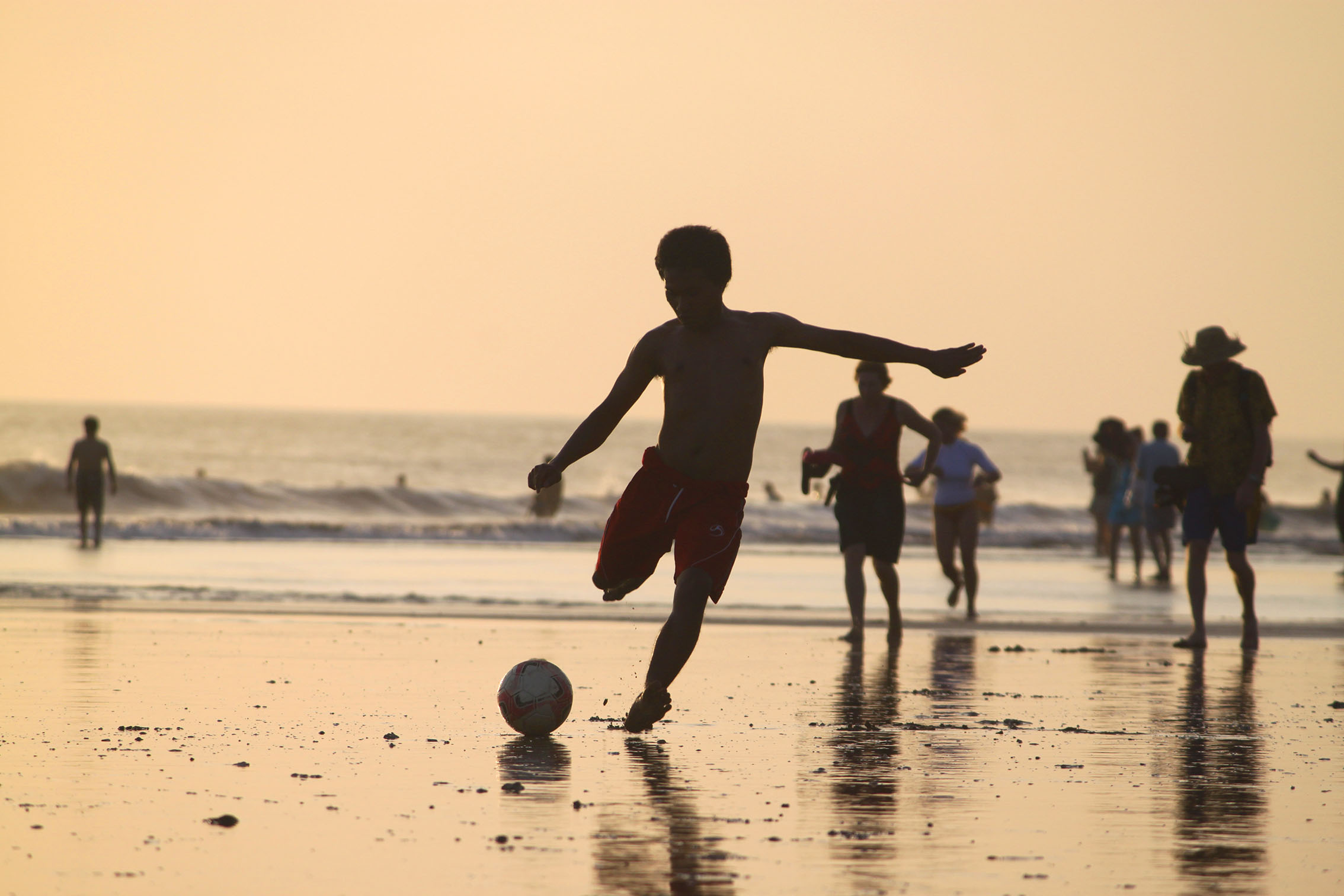
Playing soccer anywhere

I move to Timor Backpakers today. Large Bintang is $4US – that’s better!

I spend another day in the city. Lunched at a Turkish cafe and the owner used to have a Turkish restaurant in Cairns. I knew it well having dined there. He has had the cafe here for five years and his home-made breads are the talk of the town apparently.

There are police everywhere in Dili and security fences are a feature of the hotels and many other businesses around town. Crime must be a problem and you can see the potential for naughtiness in the eyes of some of the young bucks around town. There is a lot of youth unemployment in Dili and across Timor Leste. So far I have had no problems. I am surprised at the lack of development happening in Dili. We hear of billions of dollars flowing into the country for it’s natural resources but I don’t see much evidence if it being spent in Dili. There is some construction going on but that seems to be via efforts of private companies and foreign embassys.

There is a great crew of people staying at the backpackers. While having a quite beer I am joined by Klas who is a freelance journalist from Sweden. He has a week more in Timor Leste after several months here writing for publications back home. He is with his Uraguayian girlfriend, Andrea, who is studying to become a social worker. Charlie is an elderly kiwi and came here to study the indigenous Tetun language over a two-week course while having a look around. He has travelled extensively. Robert is Australian and is also a journalist and he has just taken on the role of media person for a lady who will be running for president in the election due next year. Lawrence is a young guy from Germany who has been studying creative arts in Sydney for the past year. He is on his way home via Timor Leste and Indonesia. He is still waiting for his precious luggage to arrive, lost by Virgin Blue and again by Air North! Rob is from Holland and he is traveling the world overland – no flying! He threw in his job to go around the globe. From here he gets onto a boat from Australia that has arrived as competitors in the annual Darwin to Dili yacht race. These boats are often looking fro crew for the return trip and Rob has been lucky enough to score a ride.

After talking with these guys I’ve learned some disturbing home truths about East Timor. All is not well in the shiny and bright upper administration of the country. It seems the reason for the lack of visible development is because the money is disappearing. Corruption is rife. I couldn’t believe what I was hearing. ‘But these guys fought so hard for the independence of this country’ is my response. Apparently this doesn’t mean much.

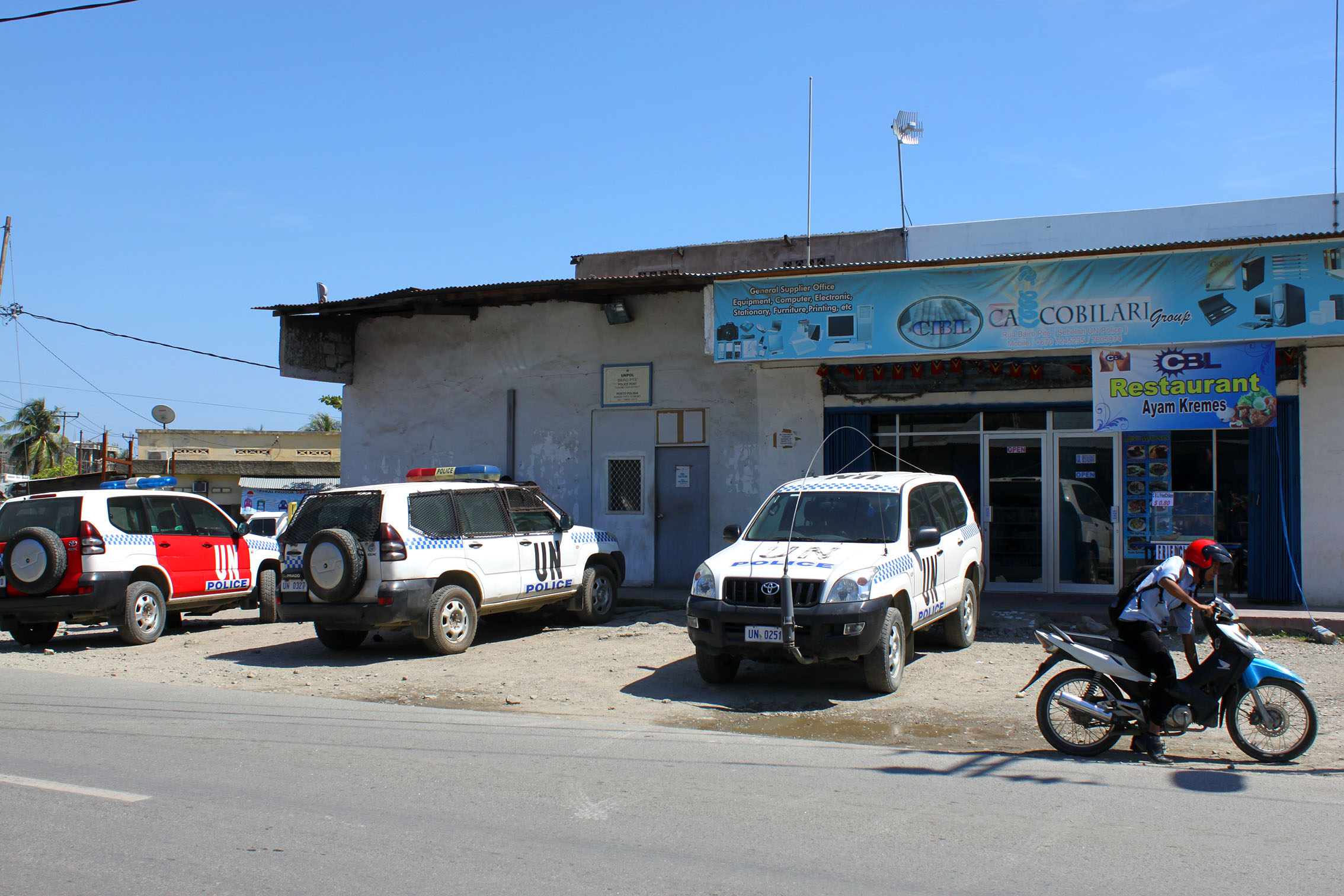
UN vehicles everywhere

Charlie, Lawrence and I go for an after-dinner ale at one of the quieter local nightclubs frequented by the expats here. There is an East Timorese two-man band performing BGee’s covers. They are very good. On the way there we pass some very rowdy clubs, also full of expats. Outside one of the rowdiest are a huge line up of UN vehicles. You can easily spot a classy restaurante or night club around town from a distance by the number of UN cars parked outside. And you find them parked at the beeches as well. They are big Toyota Landcruisers and Parados and they are here in the hundreds, constantly throughout the city. Mostly they have only a single occupant. It is the most extravagant use of the company car I have seen and does noting to dispell my negative attitude towards the behaviour of the UN. Sorry, just had to have a bit of a rant! Anyway, we enjoy our few beers and walk home down some unlit roads, not something we would do alone.

Dili, Timor Leste (Thursday 21 July)

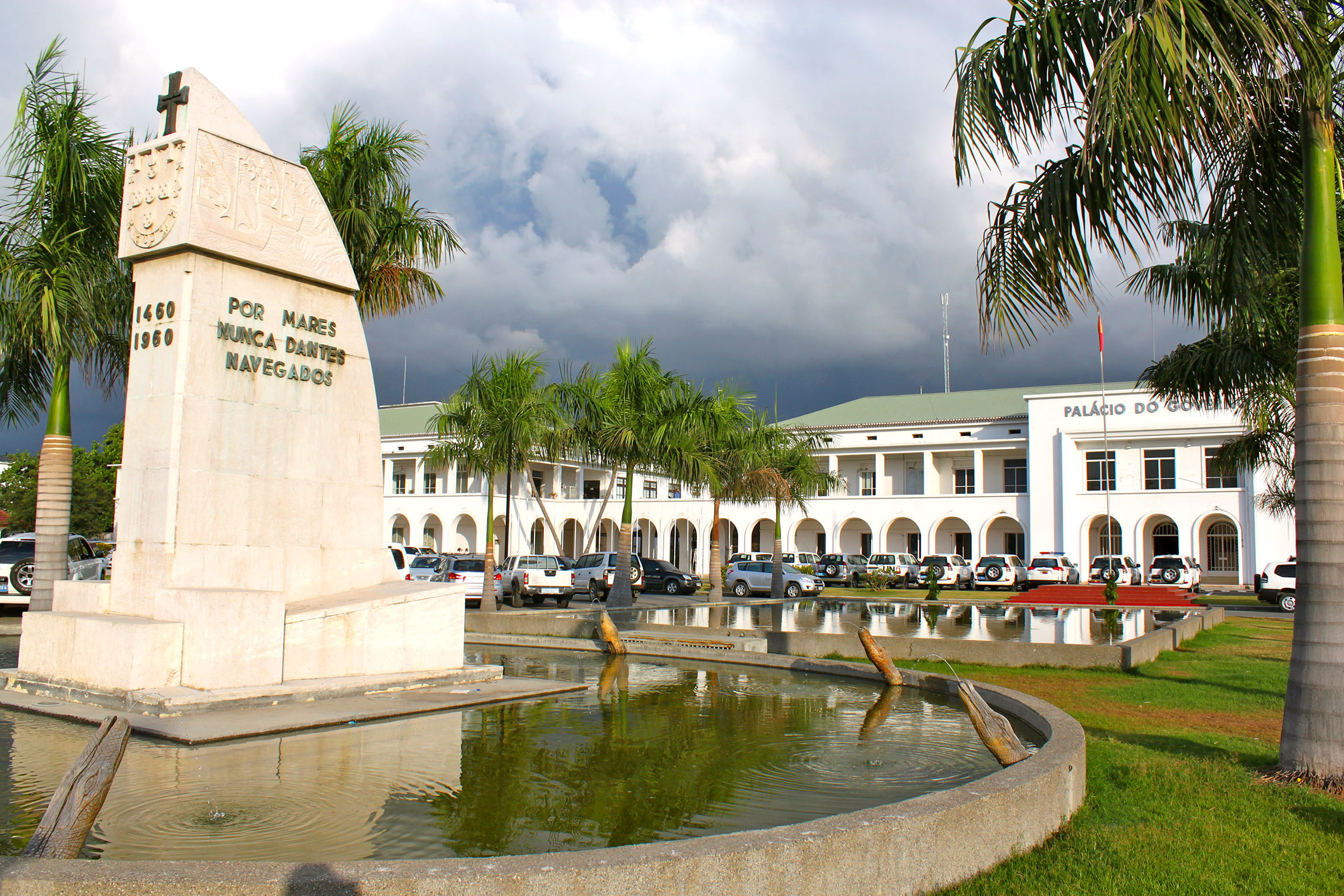
The centre of government

Timor Leste is the Portuguese name for East Timor and is the name being adopted everywhere. Portuguese is spoken mostly throughout as Timor Leste was a Portuguese colony. They colonised the region for hundreds of years while the Dutch controlled the western end of Timor. I’m not sure what the Portuguese did here apart from impose their language. There isn’t any great evidence of Portugues architecture around Dili. Non-the-less the language is still strong but a local language, Tetun, is also spoken widely. Indonesian may be understood.

Cock fighting is popular here and you can buy a rooster anywhere!

I spent the day walking around Dili, getting my bearings and seeing how things work here. One of the main reasons for coming to Timor Leste was to visit the township of Balibo on the border with west Timor. If you can remember, and as I understand it, the Portuguese power in East Timor quickly withdrew in 1974 after economic problems back home softened the peoples interest in supporting their colonies. A power vacuum instantly sparked new political players and two Timorese-born socialist political parties emerged. The Timor Social Democrats (later known as Fretilin) won full power and declared East Timor independent. Indonesia, uncomfortable with having a communist power (as they considered Fretilin to be) in their region, invaded (it is now understood the USA and Australian governments knew of Indonesia’s intentions and chose to allow the invasion to go ahead unchallenged).

To broadcast the invasion to the world, five journalist working for Australian television were stationed at Balibo, which was determined as a point of entry into East Timor by the Indonesian Army. Those five journalists were killed, supposedly by crossfire but it is now known they were murdered in cold blood by the Indonesian Army. The house where they sheltered is still there. Sadly the Australian Government did nothing at the time and this is a black spot on any proud Australian. Today when I walk around Dili people come up for a chat and ask where I am from. I say Australia and they say in broken English ‘Oh, Australia good’ in reference to recent Australian help with their new independence I suspect. Well I say ‘Thanks but we could have been much more helpful’. I hope Australia continues to have a strong relationship with Timor Leste. This is a special place. I have hired a car for Tuesday to drive to Balibo.

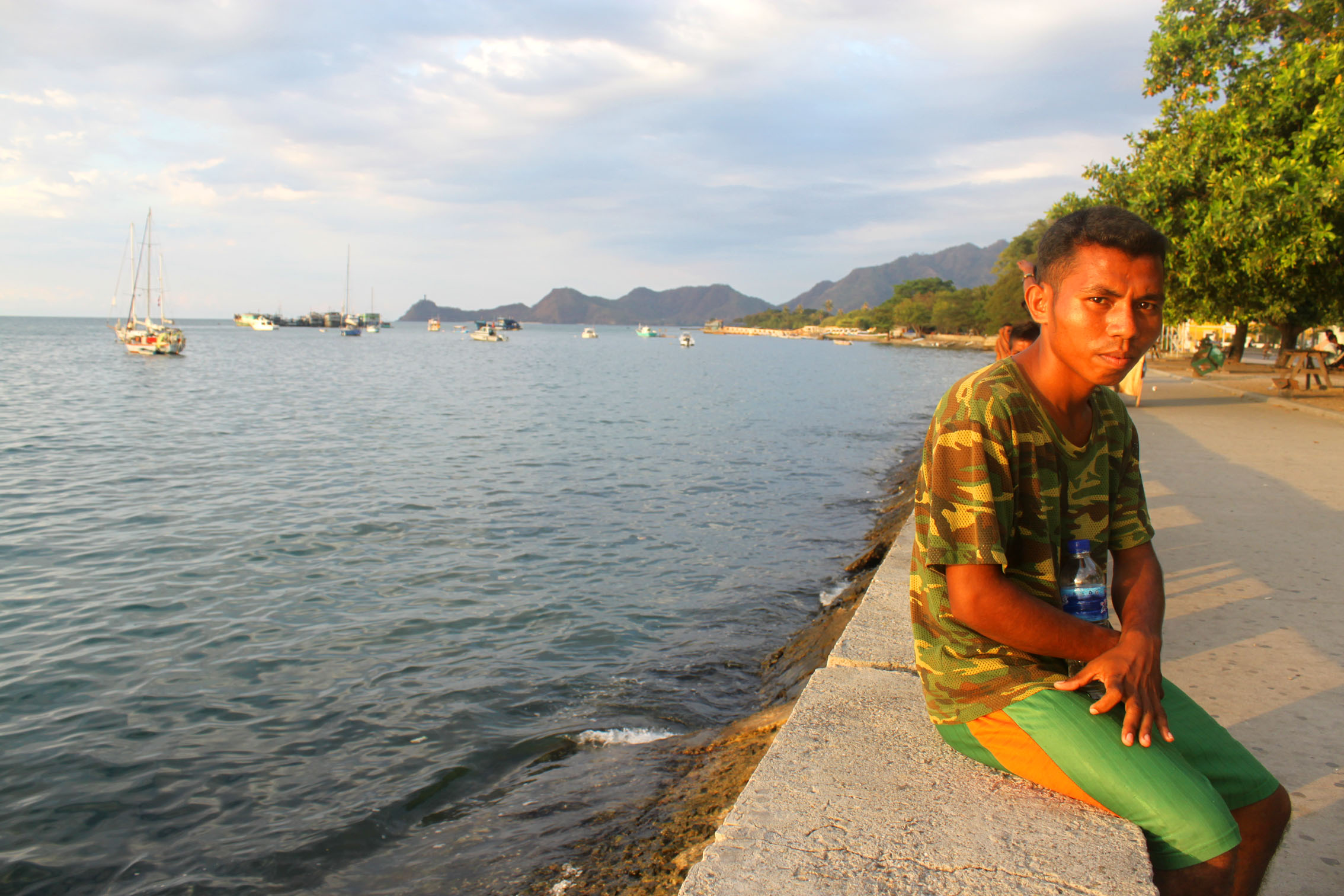
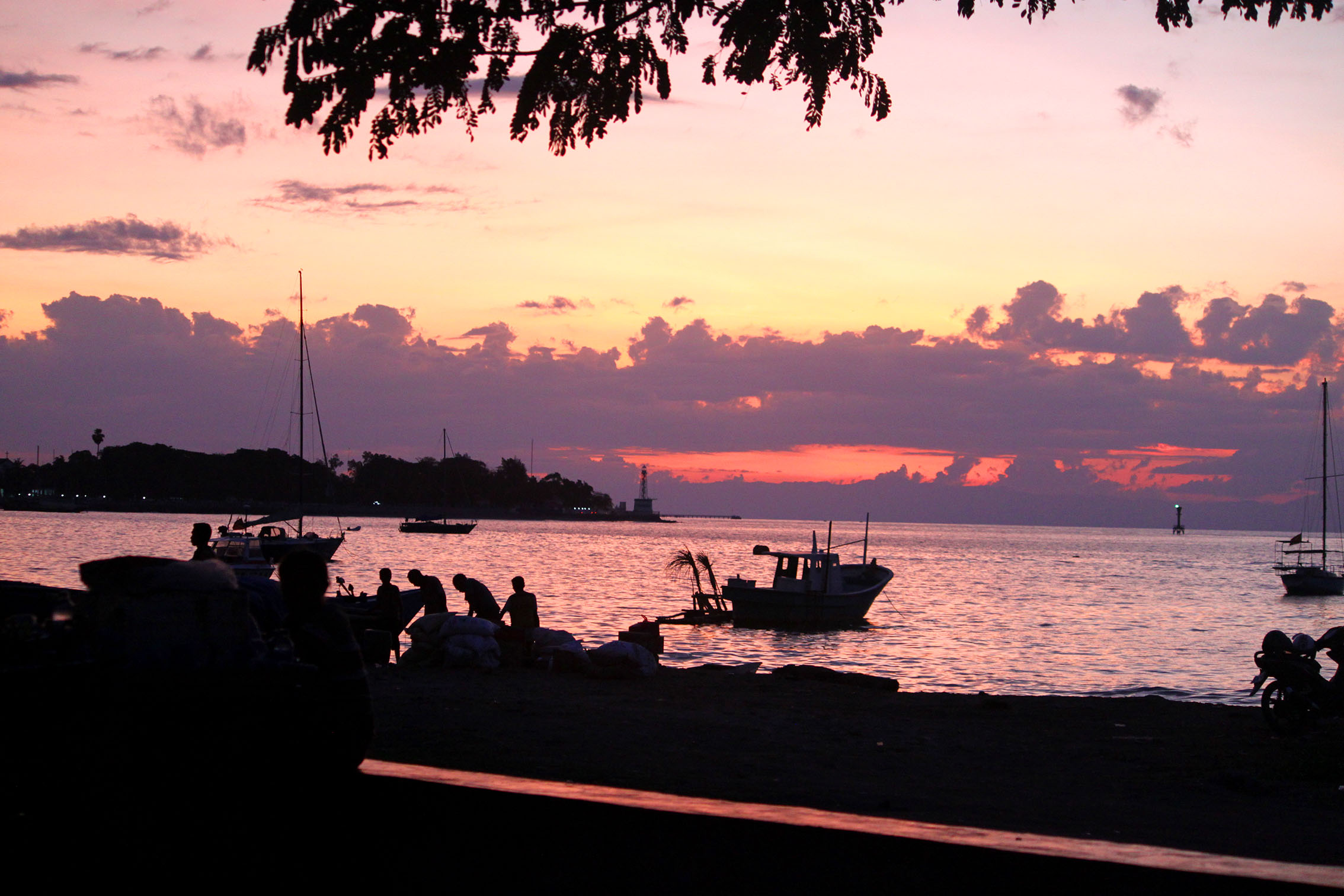
Dusk on the waterfront

People will come up to you for a chat. Walking into town this morning a boy ran up beside me with his school notes. Zinito is 16 years old and studying for an exam on Friday. The notes are in Portuguese but it looks like a business subject of some kind. He speaks good English and is keen to practise on me. High-school graduates can apply for Australian scholarships to short courses in Australia. These scholarships are promoted in the schools and are popular as several young people I have spoken to know about and want to access these scholarships. Zinito and I have a good chat and a laugh. He has a great sense of humour. While sitting on Dili harbour, Tony comes up for a chat. She is a missionary from Papua New Guinea. She is here for 12 months but she wants to stay another year. There are challenges here she says but that is what makes her job interesting. Londrau (excuse the spelling of these names, I’m only guessing) is 21 and lives in the township of Baucau. He is in Dili for a few days before going home. He’s English is not so good! Niko is also 21. He is studying English at the University here. He’s family is from East Timor Oecussi, which was a Portugues enclave within Dutch West Timor. It is now a Timor Leste enclave. You can get there by boat from Dili. His father died of throat cancer and alcohol. He is the oldest of one sister and five brothers. Niko’s English is great. He is a beautiful looking young man full of ideas and plans for the future. He wants to come to Australia to set up a business.

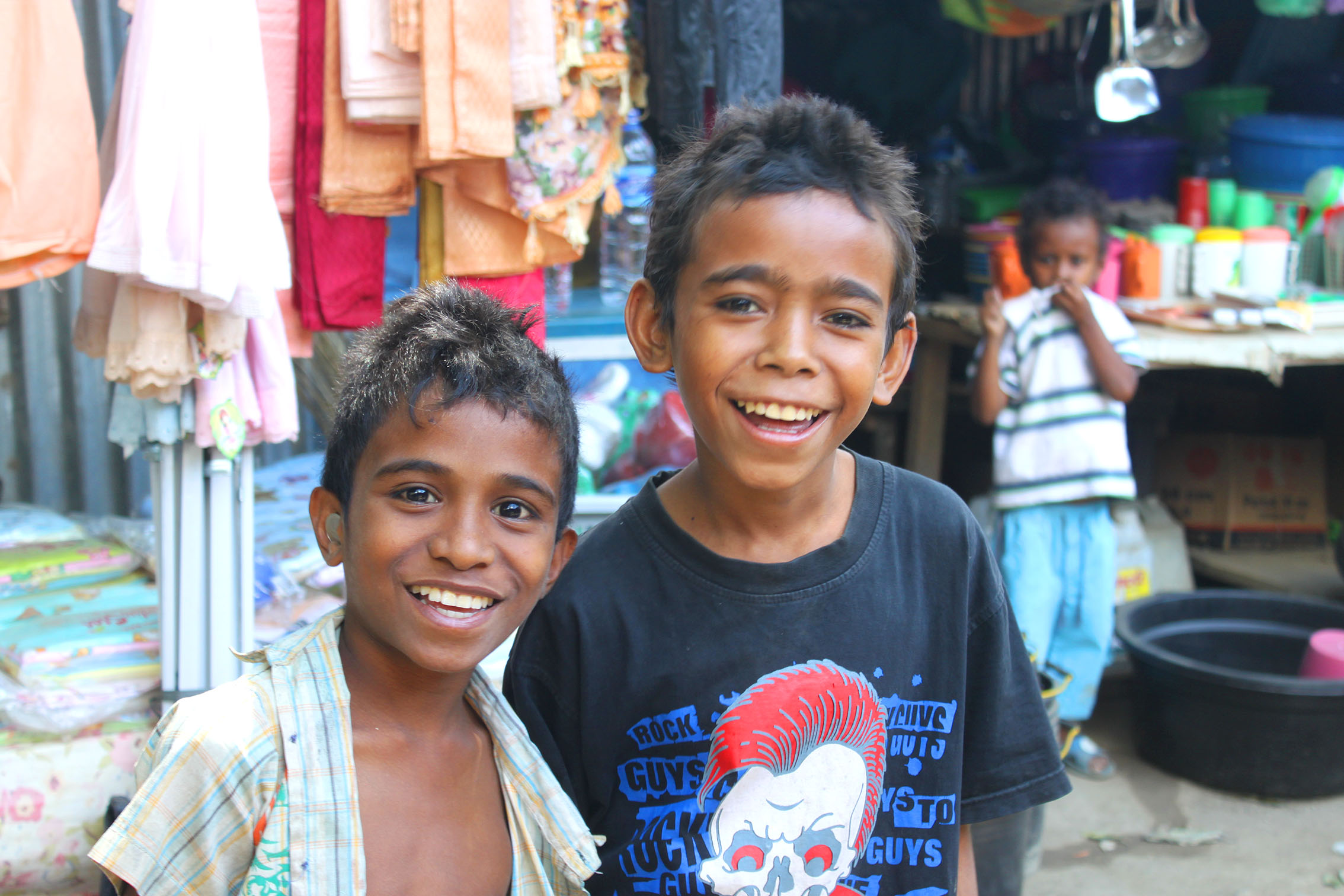
Dili kids

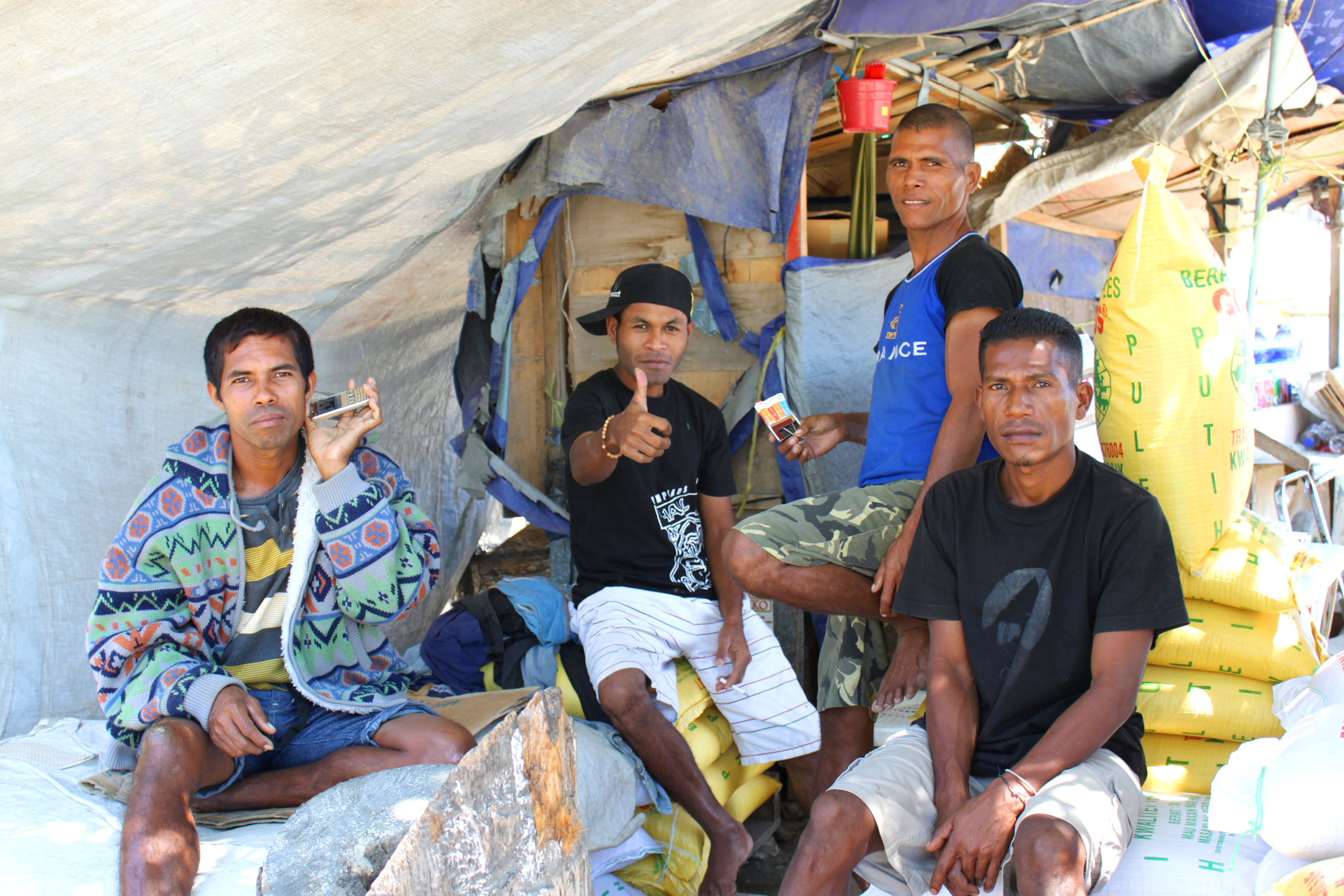
The people are strikingly beautiful here. Their appearance is markedly different to the Indonesians I have been with for the past weeks. They are slightly smaller in stature (if that’s possible) and have a much darker skin. I have not seen a fat one yet! A large proportion of the people I see around the streets of Dili are young and most of them are men.

Men of Dili

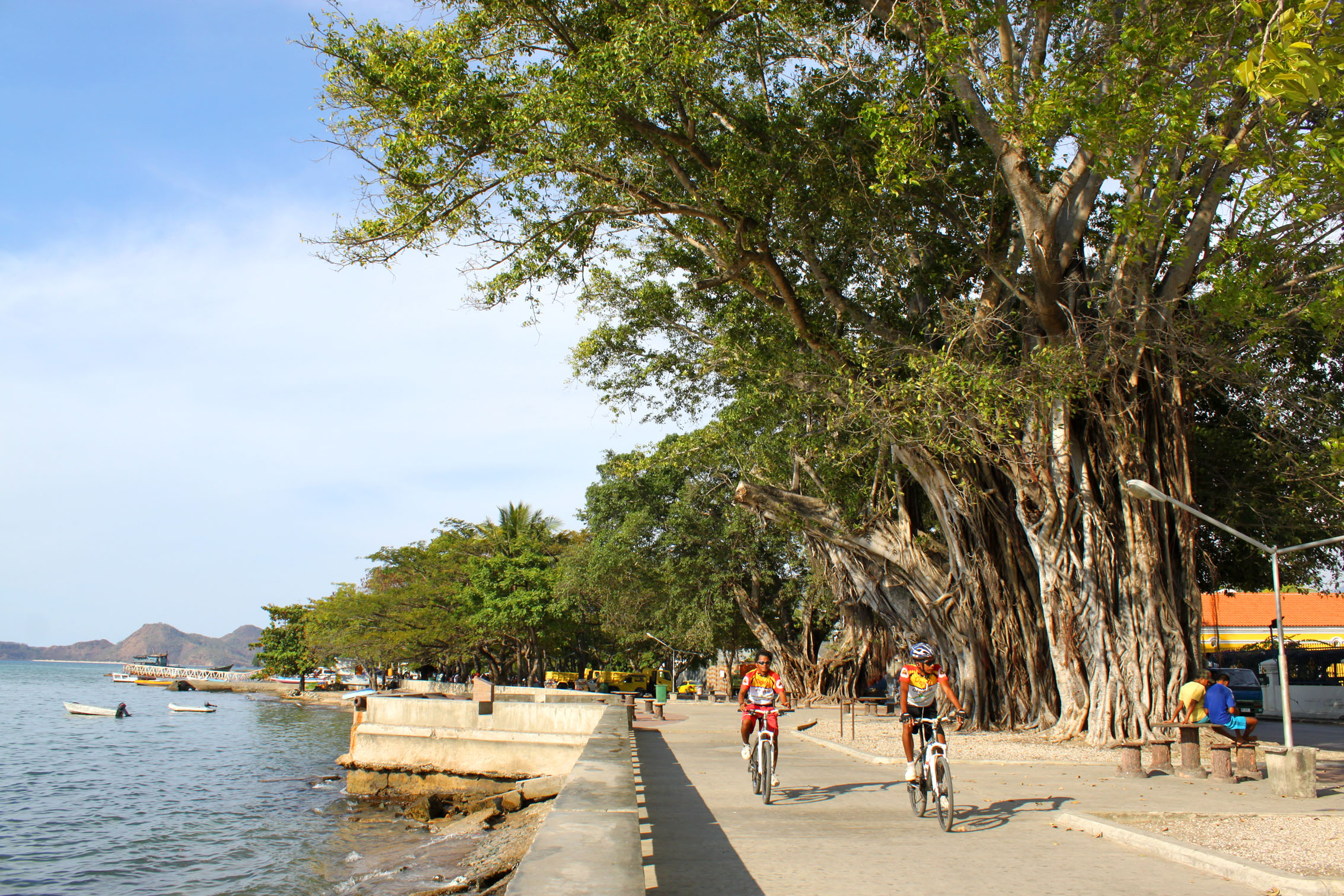
They women are very shy. The ‘Tour de East Timor’ is a bike race that is now on the international calendar and there is plenty of evidence here that they would prefer a local person won the race. This race is coming to Timor soon, August, and it is common to see locals training around the streets here. The annual Dili marathon has just been run and in it’s second year of running. It also attracts participation from around the world. And they have just recently had the Darwin to Dilli yacht race that happens each year as well and is a popular feature on the Dili calendar.

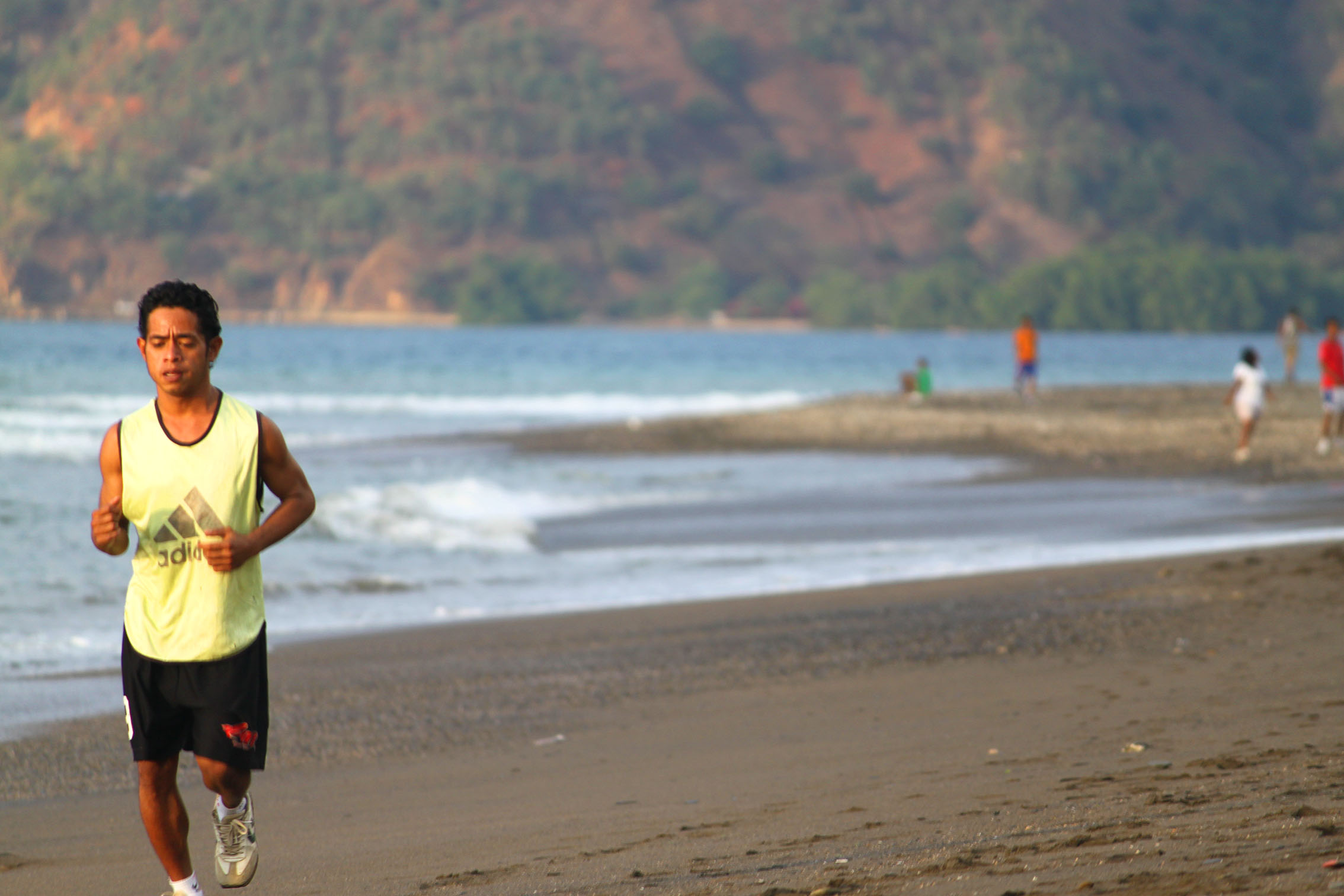
Jogging is popular and you frequently see young Dili men and the fitter UN workers running the streets and beaches.

Dilli, Timor Leste (Wednesday 20 July)

 Flying to Dili from Bali is easy. There are two airlines that service this route daily, indicating a busy interchange of people between the two locations. I fly with Batavia Air and the 140 seats available were full. From the air, Timor Leste has some beautiful looking beaches.

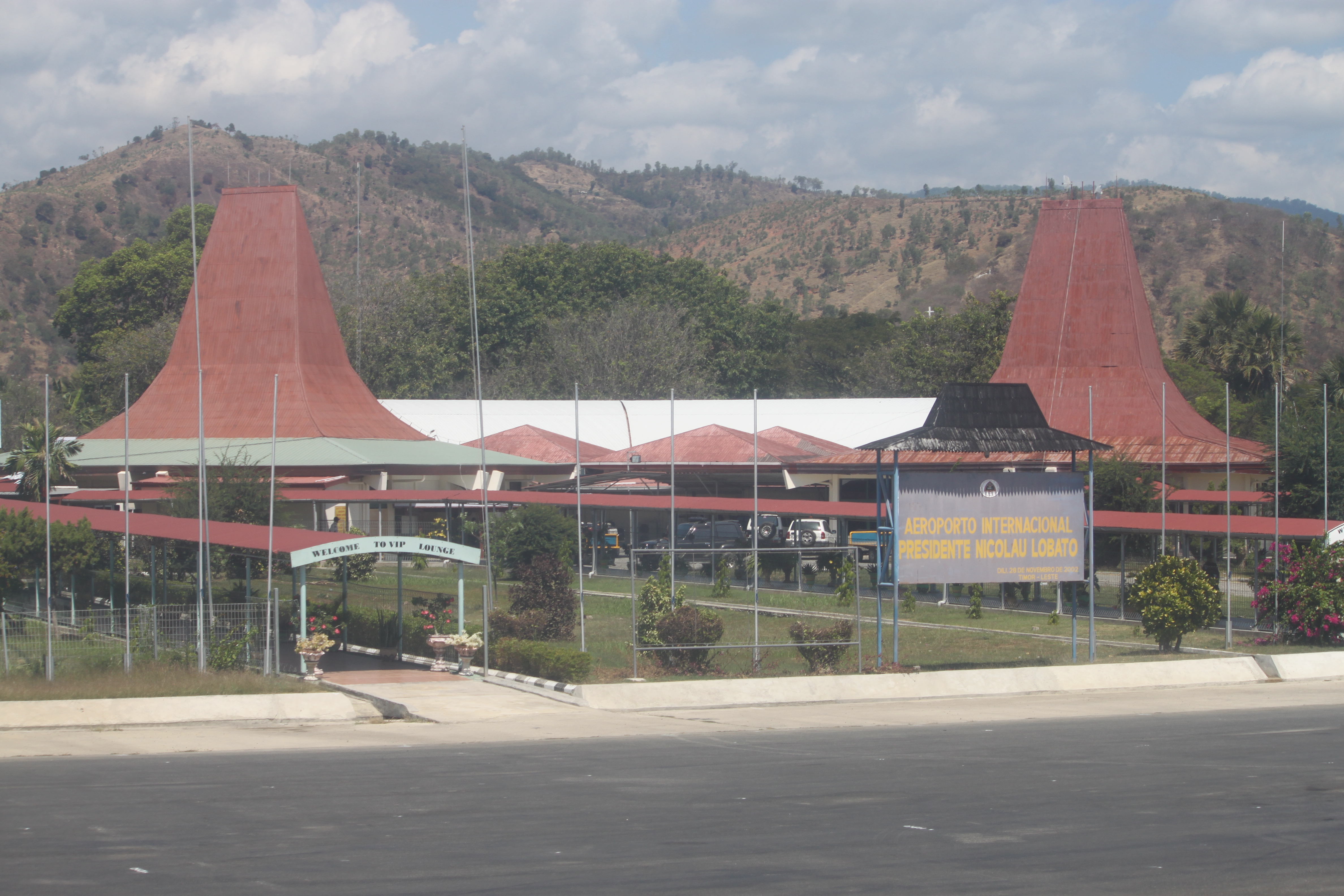
Dili Airport

The airport is simple but that’s fine, I don’t have any expectations here. Getting through the international entry process went well and there was a comical moment when I went to get my luggage. The small luggage travellator here goes very fast. Luggage flashes past and bags are thrown off at the ‘u’ turn corner! Passengers try hard to latch on to their stuff but in the end, an official ends up throwing everything on the floor. We then sort through until we find what we are after.

Everything is in US dollars so the scale of the economy for me is completely different to Indonesia. Basic facilities here are expensive in comparison to what I could get in Bali. My current accommodation is close to the airport but about 5km out of town. My room is simply part of a shipping container with a window, rattly airconditioning and no room for swinging cats!. And this is $25US per night. This is low-end accommodation in Dili. There are some flash hotels where you would pay similar prices to hotels in Australia. There are many foreign workers in Dili so the humble traveller is competing with them for resources, hence the high prices. I guess as Dili develops this will change.

I can’t say I have been smacked in the face with over friendliness in the 15 minutes I have been here. That’s fine. I don’t expect it to be like Bali. I suspect the people here probably tolerate, rather than welcome, visitors. There is a saying here for visitors, ‘Two days is too long, three days is too short’. So it will be interesting to check my opinion at the end of my stay.

Looking down towards Dili Esplanade

I went for a walk into town after lunch. I go via a map in the ‘Lonely Planet’ and take the first street that will get me to the beach. It takes me through a very poor part of town where even the dogs look sad, then onto the esplanade where, in stark contrast, all of the Foreign Embassy’s hang out. The US and Chinese have the grandest of course! Markets are just opening up and there is an atmosphere here similar to Indonesia. Locals must choose to come to the markets to eat rather than cook at home. There is food of all variety everywhere.

Along the Esplanade

The air is much cleaner here than Indonesia and there are people out jogging, riding bikes and there is some serious volleyball being played in a sports area on the beach. Under the golden glow of the setting sun it is a beautiful and relaxing sight.

I catch a taxi home. The taxis are beat up old cars of all makes, and the drivers seem just as unhealthy, coughing and spluttering. I hope it’s from cigarettes and not tuberculosis! Traffic has the same character as in Indonesia – free for all! Perhaps it is an Asian way of driving. A large Bintang here is $6US compared to $3.50AUS in Indonesia! Bugger!

Legian, Bali (Tuesday 19 July)

Comfortable Bali

I’ve just been violated! For the first time on this entire trip I have been robbed! I’ve been to some dodgy places in my time here and walked up some dark alleys at night and have not felt threatened – until today. It happened in broad daylight in busy Kuta. I know the culprit quite well and I will be having a ‘word’ when I get back home. It’s a f**king CBA atm! The most threatening thing here is a bloody Australian bank! It took my card. Fortunately I have another card or I would be up the creek. A warning for travelers, use the local banks.

Bali people are nice. I’ve heard it said many times but of course they would be nice, it’s a tourist place and they want your money. But surprisingly much of the friendliness seems genuine and sincere (compared to Cairns where insincerity is the trademark of the tourism industry there). Returned visitors here have a nice rep ore with staff and stall vendors. There is always a smile and hello. I think tourists are a source of entertainment for them, as well as being important to their income. Of course there are the exceptions on both sides. I haven’t seen anything but have heard stories.

Life can be so easy on the main tourist strip of Bali. Just sit at a roadside cafe or restaurant and get waited on, newspaper men walk past with a variety of papers (I didn’t come to Bali to read newspapers!) and taxis constantly circle past. Stick your finger out an they will be there in an instance. I walked past a newspaper man this morning and he pulled me aside and tried to sell me Viagra from a packet in his pocket! I felt insulted! I must be looking more tired and incapable than I feel!

Off to Dili, East Timor tomorrow. I have little idea of what to expect, except that Internet access will be limited. I’m not sure when I will get my next posting up.

Legian, Bali (Monday 18 July)

Having fun on Bali beaches

We hit the nightclubs again! I leave early but Freddy and Agung rage on to end up in some lightless underground club and decide to amplify their night with some ecstasy! A variety of drugs are easily available here but what makes this instance interesting is that it was going on in the presence of two policemen! Freddy and Agung shared an ecstasy tablet. On half a pill, Freddy literally falls through the hotel door at 4.30am and proceeds to sing a repotoire of songs from the ’70s and ’80s for 2 hours. Impressively he knows all the words but he is not a good singer!

Security is present everywhere in this popular part of Bali. All of the motels seem to have several security men on call 24 hours – great job opportunities for ex-military I expect. Some even check underneath every vehicle that comes through the entrance with a mirror. They obviously treat this seriously.

Freddy leaves for Cairns on the 11pm flight.

Legian, Bali (Sunday 17 July)

Surprisingly up and about at 9am, considering the previous nights shenanigans! Over breakfast I decide to spend a couple more days here which means changing my flight to Dili in East Timor from tomorrow to Wednesday. This means a trip to the airport and throwing caution to the wind, I take a bike taxi! It does provide a different view of the traffic!! Flight is sorted and so is my accommodation on arrival to Dili.

The afternoon is spent trying to trap a few sunset shots. The beech in this part of Bali is expansive. It’s wide and goes for as far as the eye can see (which is limited by the smog). Every inch of this beach is packed and busy with people and Bali dogs. Thousands of people! Hotels and restaurants border the beach. Everyone seems content and having fun. It is a fantastic and infectious atmosphere here. It encouraged me to stay a couple more days! It’s going to be tuff going to East Timor after this.

Bali (Saturday 16 July)

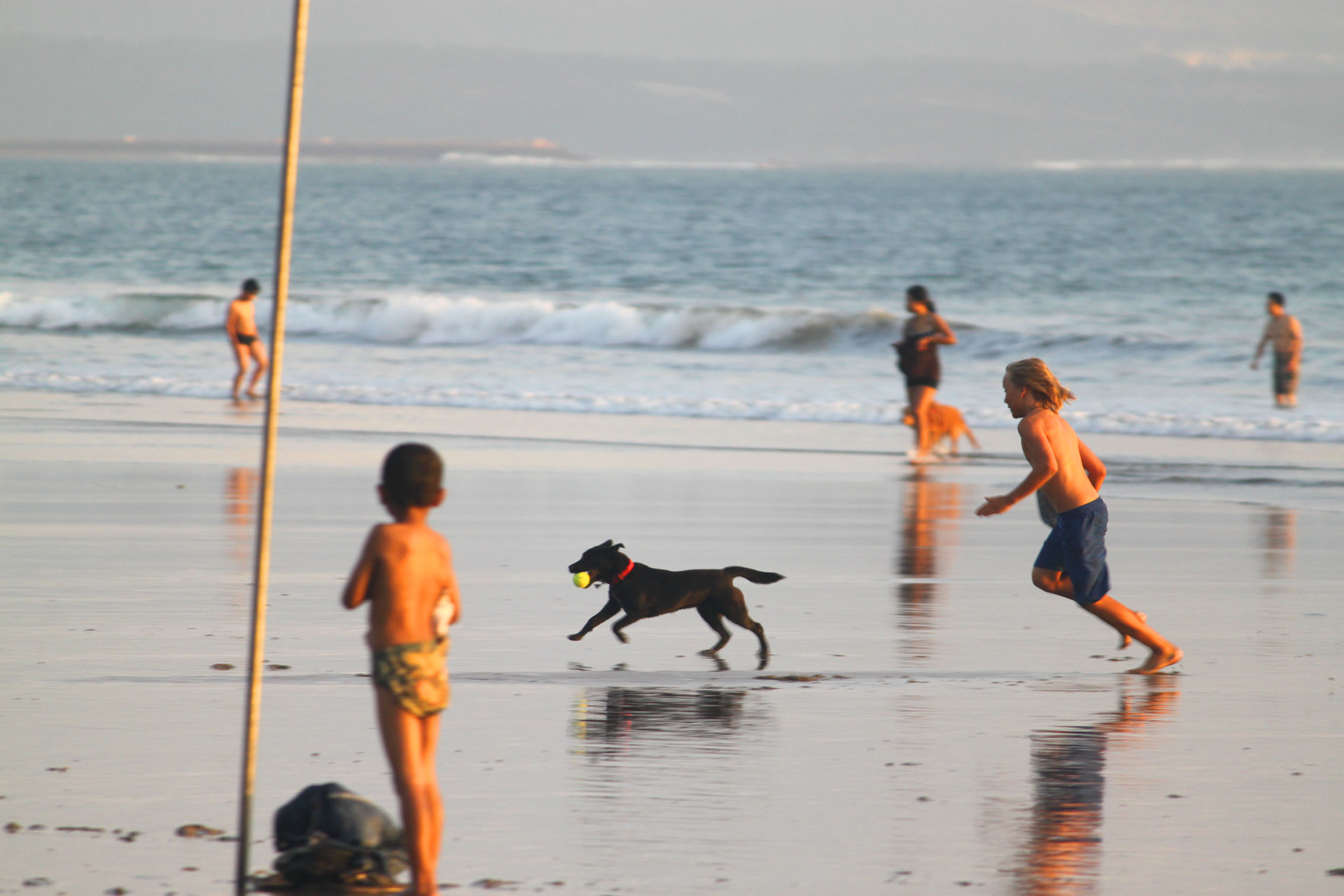
Mischievous Bali dogs giving tourists the run-around. Red collar signifies vaccinated for rabies.

It’s kite season in Bali. The skyline is splatered with kites of all different sizes, shapes and colours. The dry season throws up perfect consistent winds and of course no rain so the kites fly – and so high.I’m hopeless at judging height but the rolls of string attached to these flashes of art in the sky must be huge. It is their time and they do it with style. And there us something nice about kites, I love them. The kites aren’t just a feature of the Bali sky’s. They were everywhere in Java as well.

Penjors line the streets

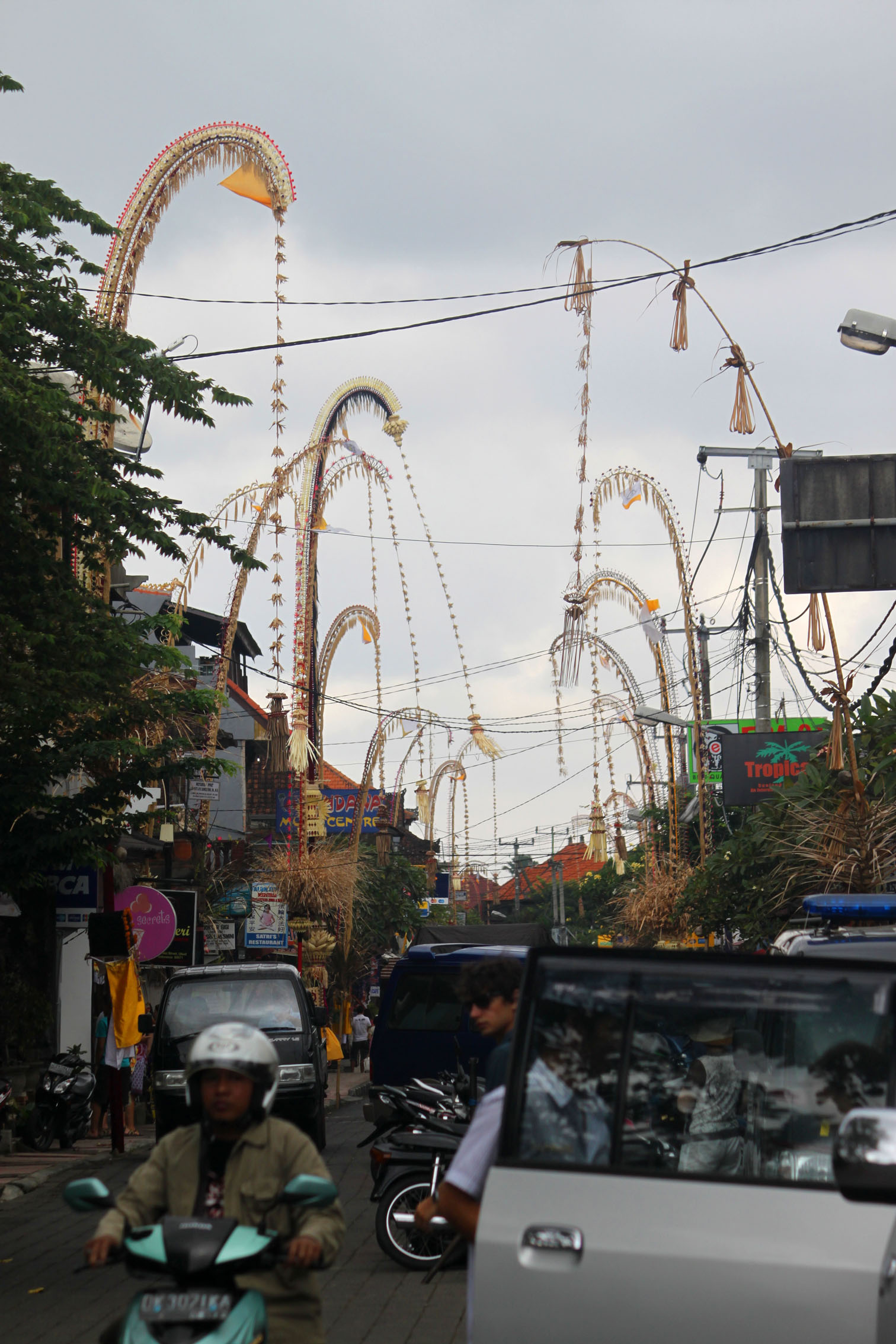
I have switched location from Ubud to Legian on the popular beach strip that includes Kuta Beach. It’s slightly quiter at Legian and less ‘feral’ than Kuta. The taxi ride down from Ubud was great. My driver could speak English easily and I found answers to many questions. It is a special day on the Hindu calendar today and there are many locals around in traditional dress, visiting Hindu temples and having their special moment with their god (or gods). On such a day it is legal for them when they are riding their bikes in traditional dress to not wear helmets. The streets are lined with penjors. These are tall whispy flag like structures that are made only from products of the land. They are an offering to the Dragon God to ensure successful harvests. They are displayed for a month around this special day.

There are many dogs in Bali. Bali dogs are an intriguing lot. Most have homes to go to but many live on the streets and beaches and do their own thing. Rabies is an issue in this part of the world but the authorities are working hard to manage the problem. Rabies inoculation is free and dogs that have had their injection are easily identified by a red collar around their neck. No red collars signifies no rabies inoculation.

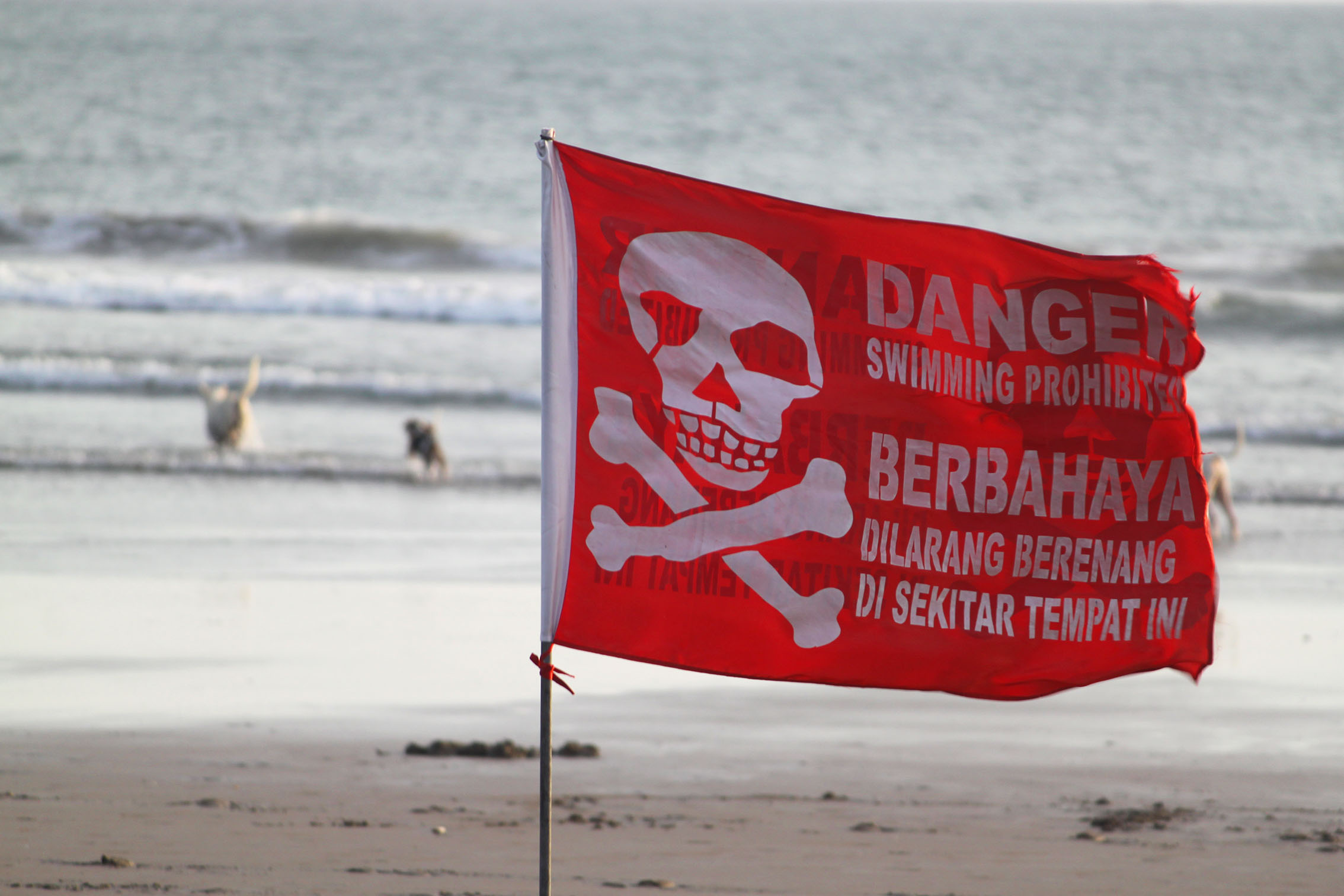
Bali dogs choosing to ignore the warning signs!

The street dogs here are characters. They roam their territory with a confidence, even arrogance, and seem completely at ease and content in their own space. They simply dismiss any attempt to attract their attention with the typical mindless doggy talk that we do. They just don’t give a shit!

We’re on the beach and the sunsets from here are stunning of course. The persistent hazy skies makes for spectacular sunsets, particularly over the ocean as it does on this side of Bali. Walking back along the beach in the soft darkness of a new night is pretty. The beach is lined with coloured lights and busy with people having fun, unlike Australian beaches where the day ends once the sun goes down. Music blares from the various hotel locations lining the beach but under the influence of a couple of Bintangs, it isn’t unpleasant. Huge spot lights are trained on the waves to add effect. I can appreciate the attraction of this side of Bali.

After tea we hit the nightclubs! Yep, that’s right – the night clubs! Was I the oldest person in the night club? Possibly. It was dark though and lots of flashing lights – there could have been somebody older. Got home at 4.30am.