It’s raining in Ubud. I head off on foot for a look around but my new-found love of the clove impregnated Indonesian cigarette is taking its toll on my hill walking abilities! I will have to get that sorted before the American/Europe trip!
The constant battle with the language difference and difficulty in getting around is tiring. And I’m about to go to East Timor where it will be even harder.
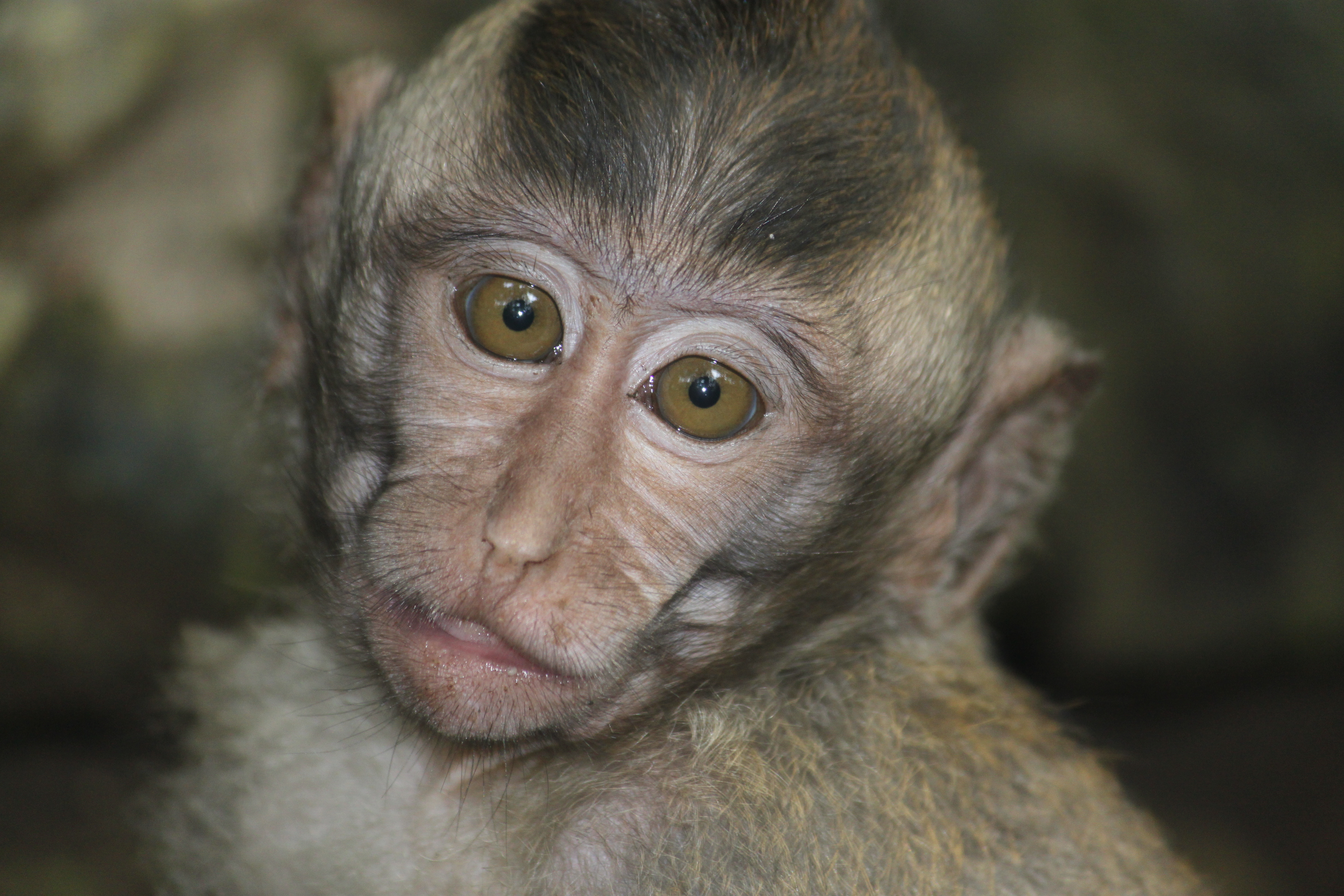
A young resident of the Monkey Garden
In the afternoon I visit the Monkey Garden/Temple. It is an easy walk from where I am staying and is a beautiful piece if rainforest infused with many very old Hindu structures. It’s a special place for those of the Hindu faith and is home to many cute but cheeky monkeys!
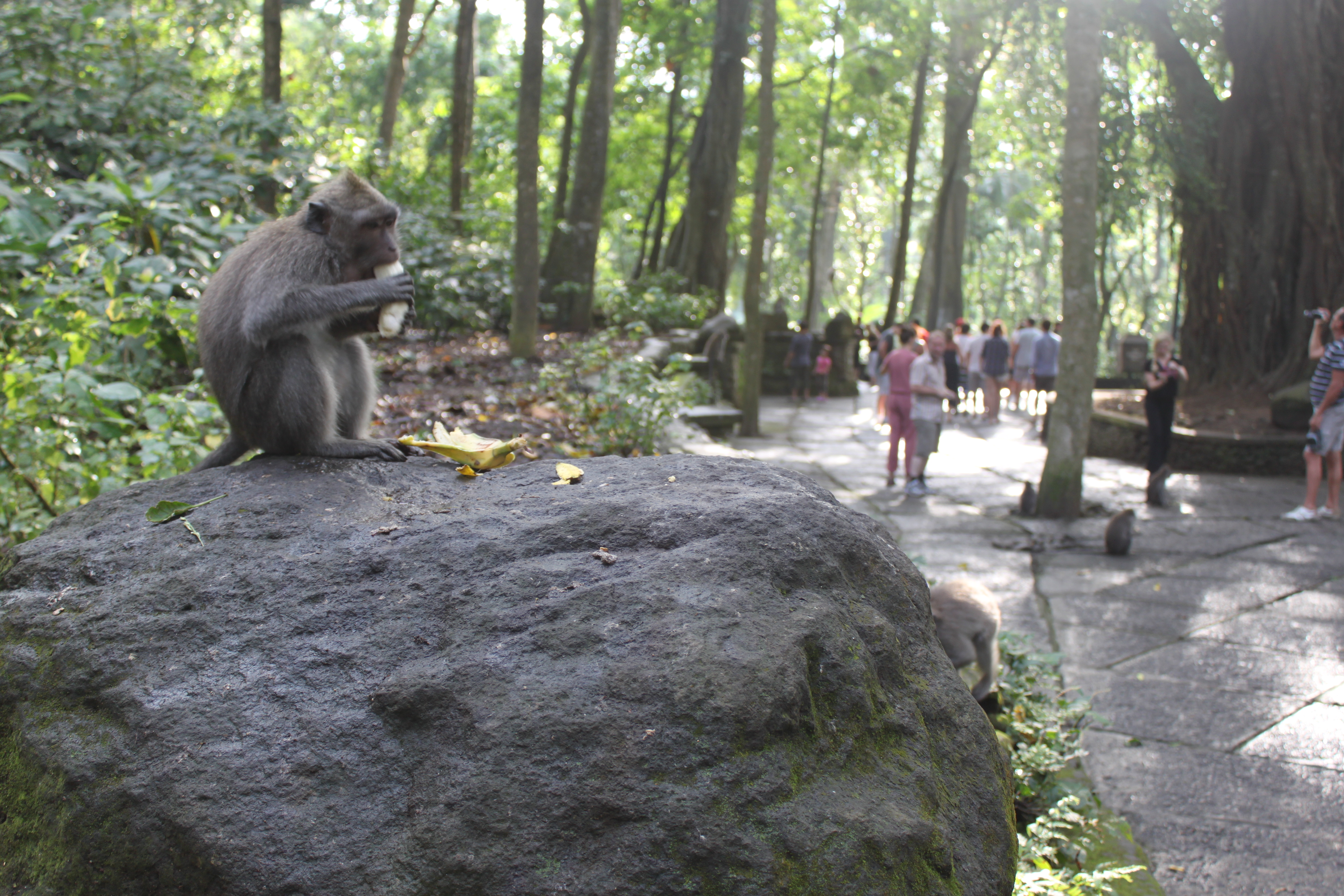
Sharing their sacred space with humans
They think nothing of crawling up your cloths or jumping on you from trees to grab anything they may find of interest. One took a fancy to my water bottle, easily screwing the lid off and taking offense. I took my water bottle back, it gave me an evil glare and snarled much to the amusement of many other tourists there, and I retreated! Cheeky monkeys – but oh so cute, even when they are cranky!
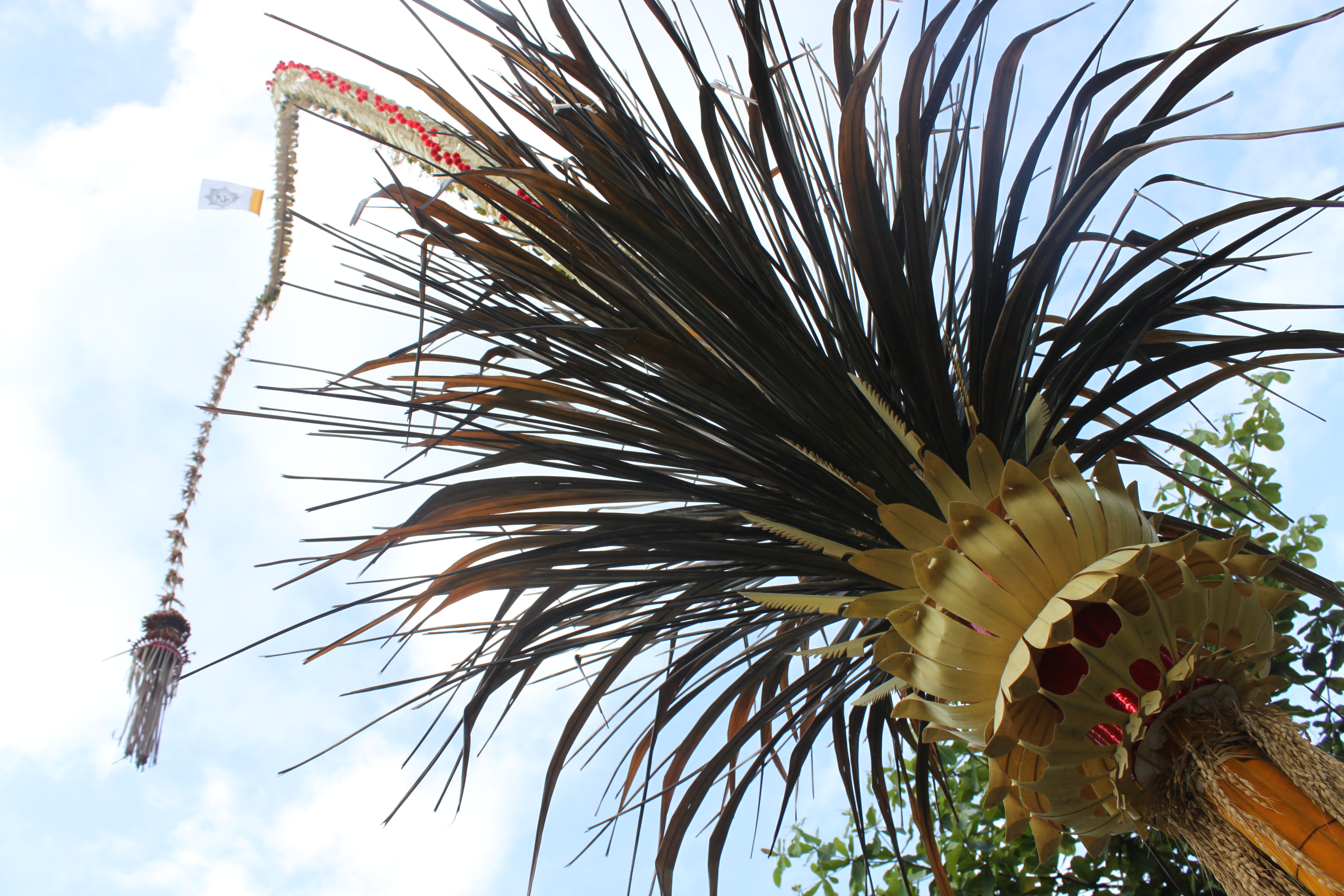
A penjor, a plea to the Dragon Gods for a successful harvest.
It is a special day on the Hindu calendar tomorrow and it is a holiday. Initially the inconvenience of not being able to catch a bus back down to the coast was annoying but of course the opportunity to witness some serious Hindu celebrating is a huge benefit. It is a good time to be here.
Tomorrow I make my way down to Legian on the coast to meet up with Freddy and Agung.
PS, any spelling mistakes in these blogs is the fault of the overactive predictive text mode on my iPhone and me being a lazy writer!
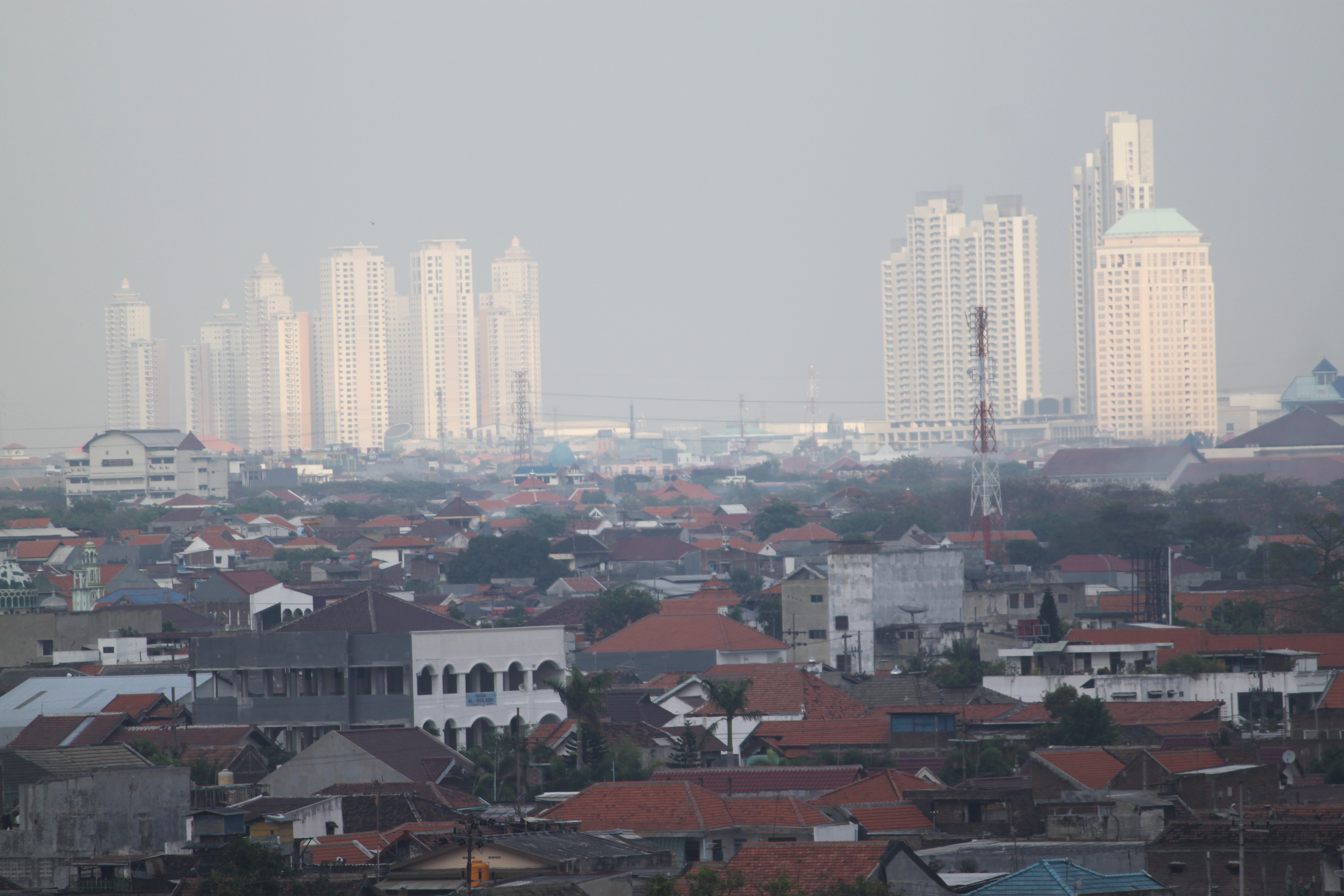
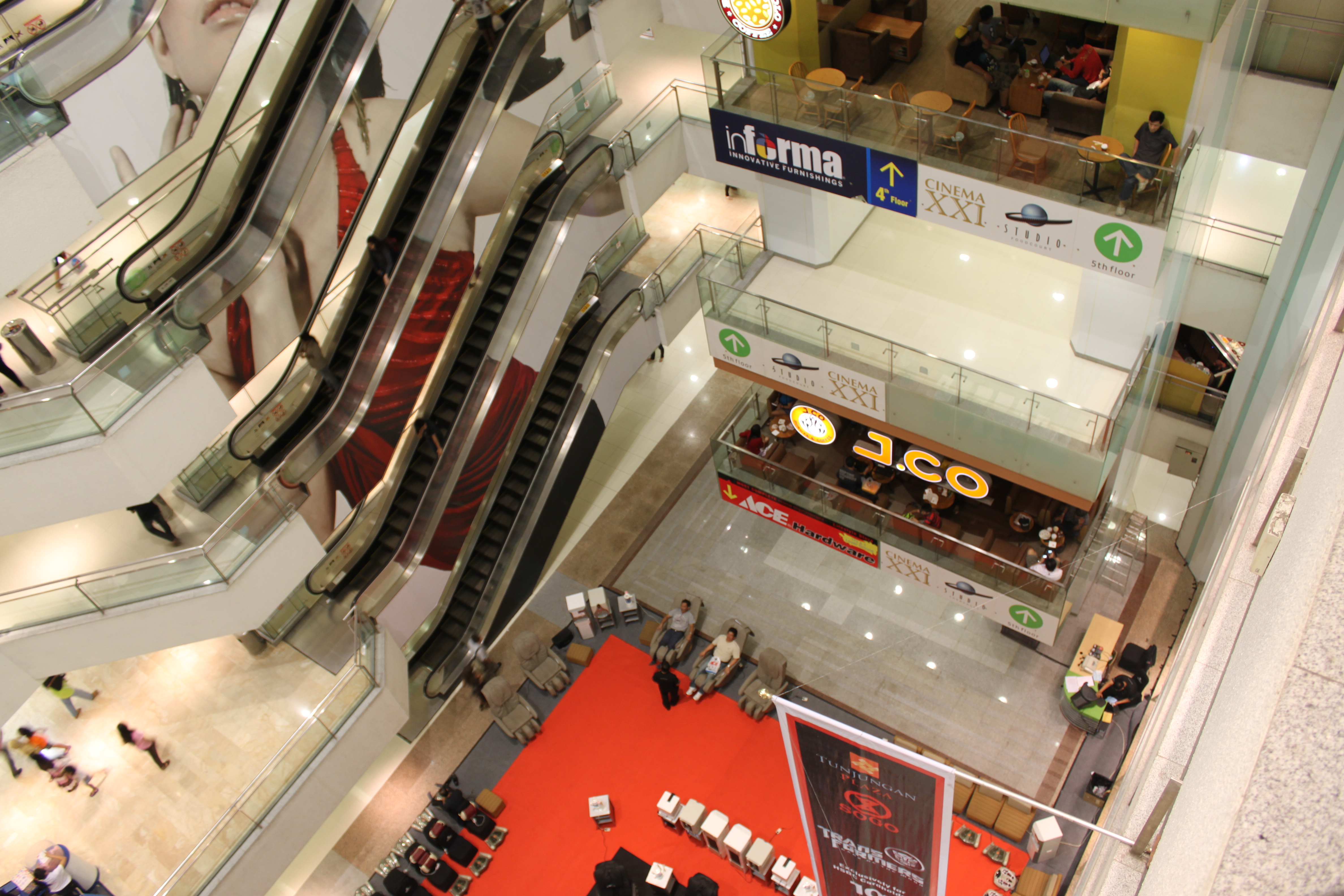
A quick dash back to the flash shopping centre to place photos onto the blog. Surabaya as previously explained is a busy industrial city of 2.6 million people. The shopping here ranges from very modern huge shopping centers to the busiest of street markets. All levels of income are accommodated here. An interesting statistic I think is that labour costs per hour are the lowest in Indonesia than any of the Asian countries including China, Indochina, India and even the Phillipines, according to a slick marketing brochure I found on a Garuda flight. That may sound fantastic to some corporation thinking of setting up shop here but I guess not good news for the people receiving the pay. Anyway back to this shopping centre.
Floors of shopping
It prides itself in being the largest in the Asian world, which is no easy feat. It caters to the high end of the income spectrum and is the biggest shopping centre I’ve ever seen. All the big western brands are here as well the indigenous ones. I get lost every time I enter the place! Despite all of its sophistication it has only one Internet cafe and is fairly slow. After two hours I only get part of what I wanted to achieve with the blog.
After another crazy traffic experience I meet up with Freddy and Agung at the airport. The flight is delayed because of administrative delays so we get to Bali in the dark. I’ve chosen to spend two nights in Ubud, up in the hills and away from the mayhem on the popular coast. There is a price to pay though, a two-hour taxi ride to get there from the airport. Freddy’s friend Arday has organised one for me and after another frantic session on the roads I get to Ubud around 9pm. I will never get used to these roads. The taxi driver asked me in broken English if I drive. ‘Yes I do but not Indonesian driving’. He laughed – I was serious. We came across motorbikes with multi-passengers but no lights at all, just shadows flashing past! Just crazy.
Today was an easy day after a very full yesterday. The highlight was visiting some genuine Surabayian markets and sampling some genuine Surabayian food. It was obvious from the stares coming my way that tourists don’t often come to these parts! Finally got the photos backed up on to a memory stick and I will try and get some up on the blog tomorrow.
Another early start, 4.30 for breakfast and on our way at 5am. Nick is very I’ll, vomiting all through the night. Nick and Annette did a guided jungle walk a week ago near Jakarta. Food they ate on the walk made them both very ill and requiring hospital treatment. By the time I met them they were on the mend but Nick has had a relapse. They won’t go onto the crater walk but go directly to Bali as always intended but not quite yet. Hopefully they will find a doctor. I will miss them.
On the path to Ijen crater
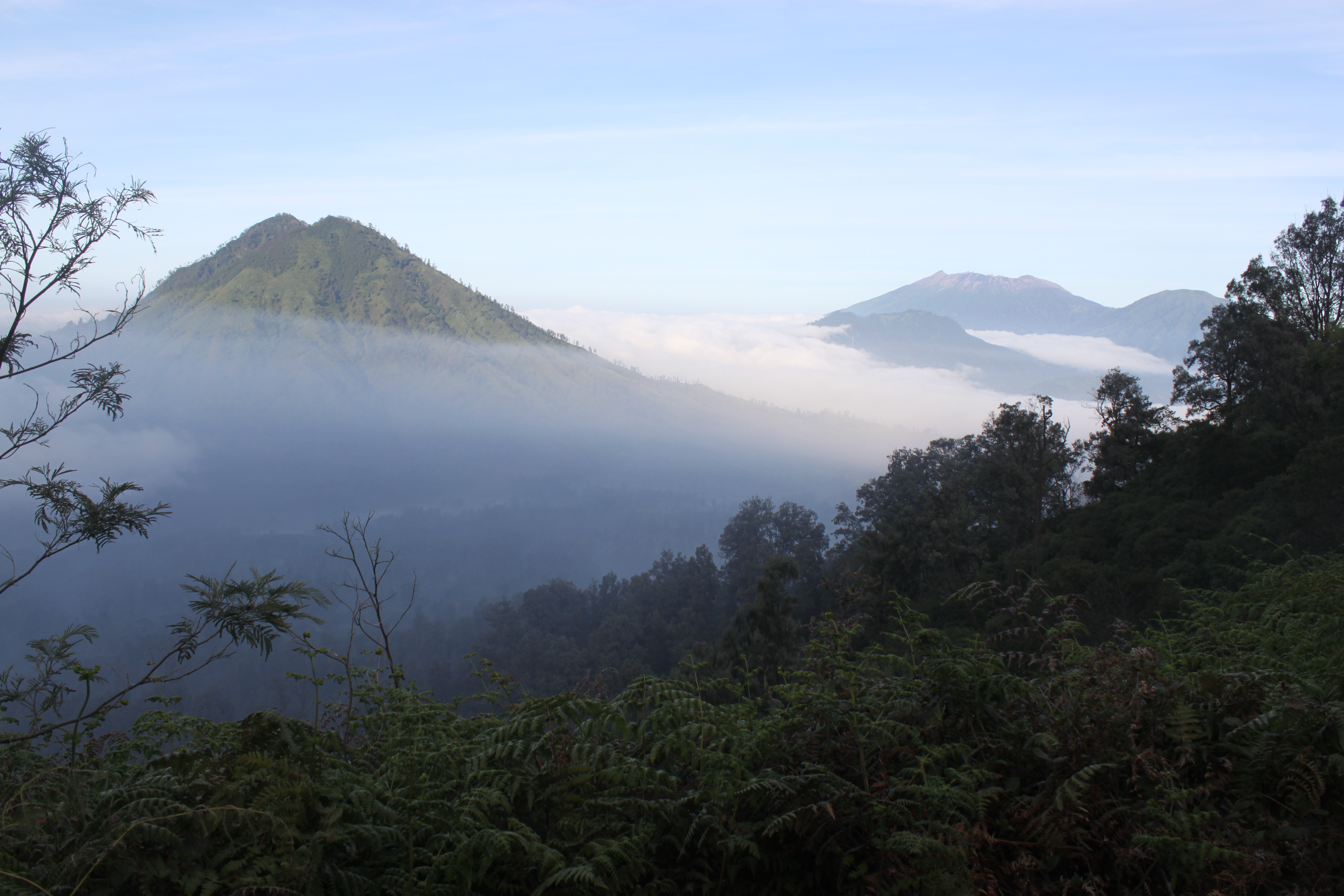
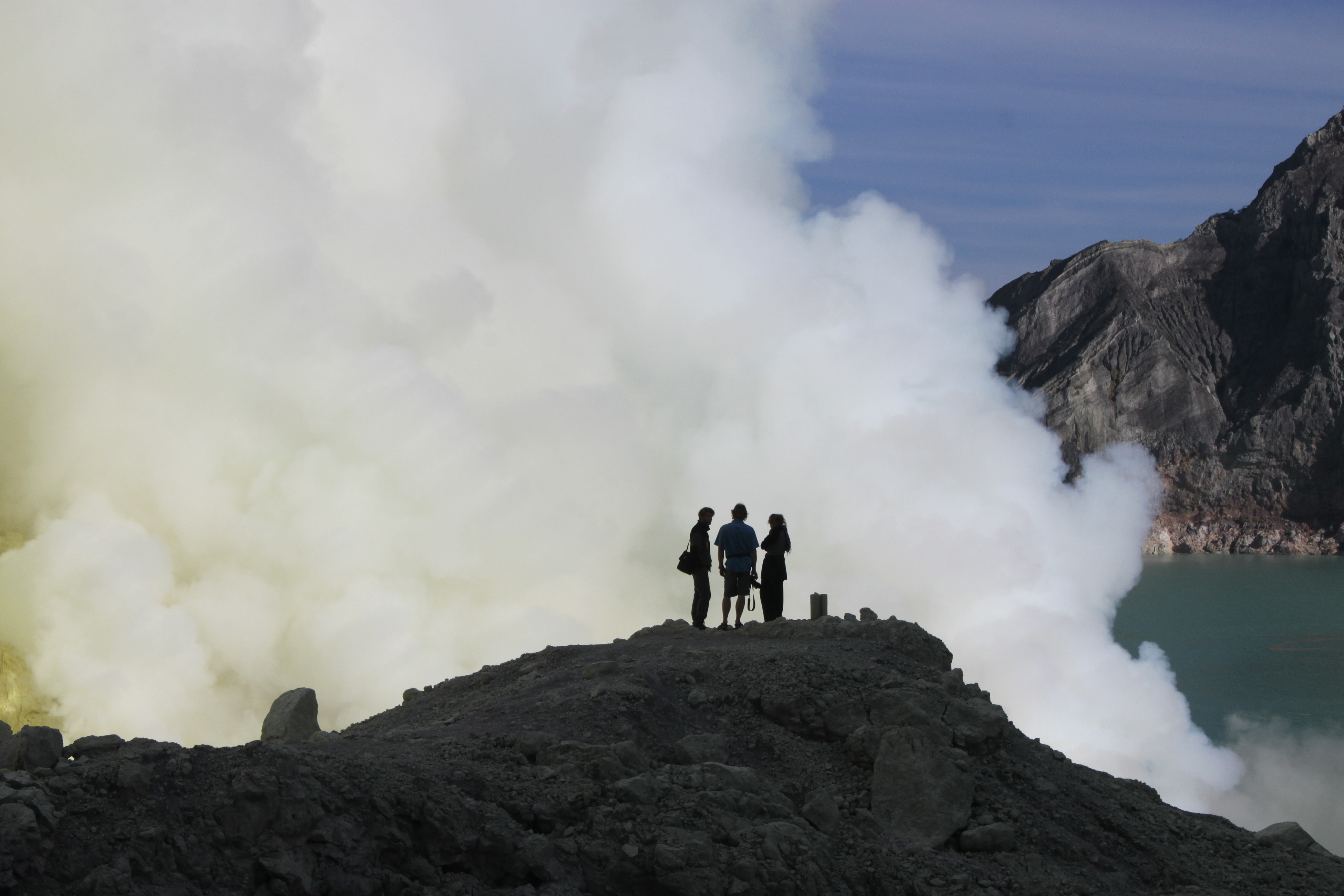
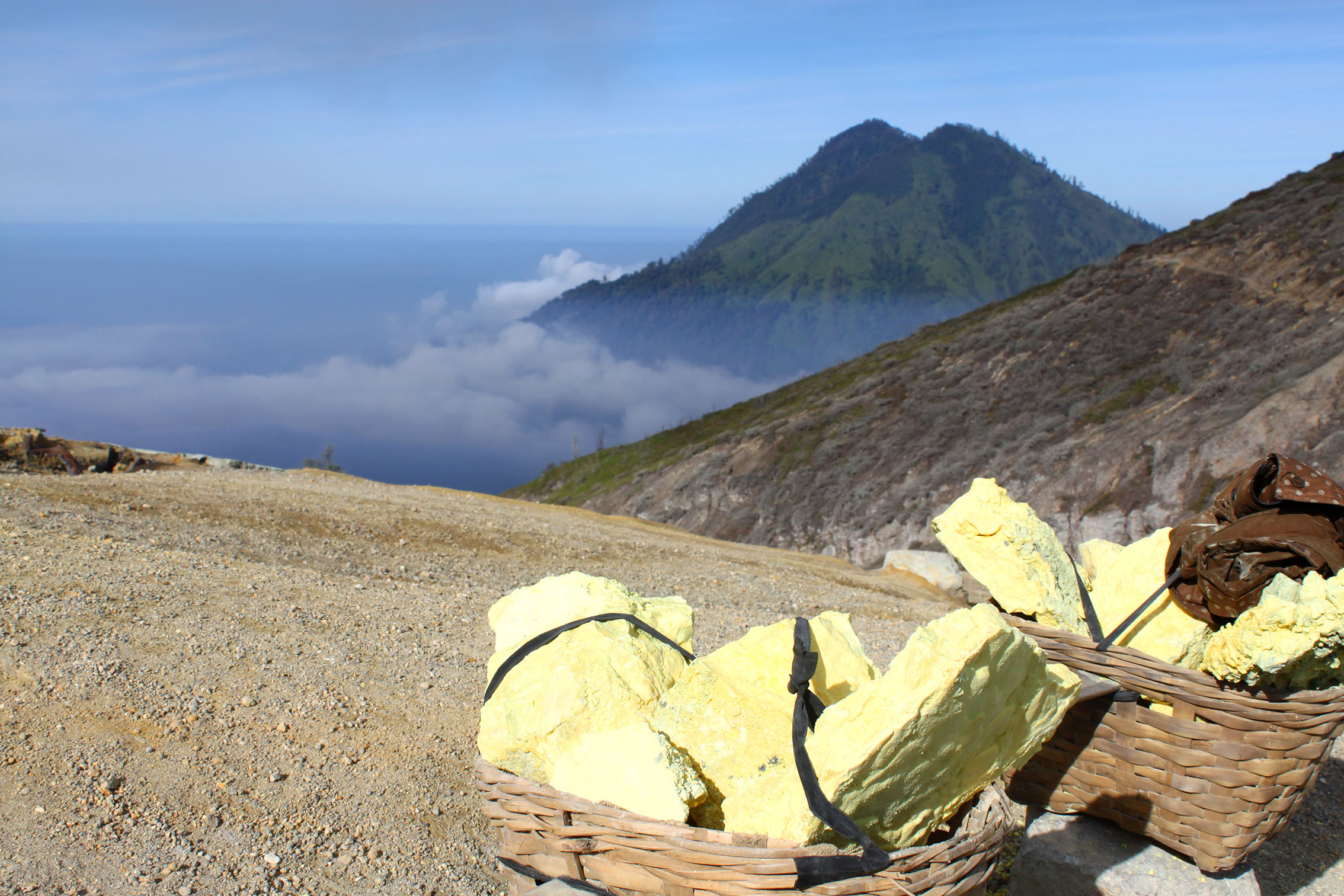
There is about a 40 minute walk up a steepish mountain trail to get to the crater edge. The early morning views across the mountains and misty valleys are just stunning, moody, and beyond my ability to describe. Photos only give half the story. We come across some gibbons in the trees, my first monkey sighting. The track eventually comes out at the edge of a crater lake and the view is extraordinary. The crater wall from this side is steep and scared by water erosion. Smoke billows from one side. On closer inspection the smoke is coming from pipes and dribbling out of these pipes with the smoke is a yellow liquid. This is near-pure sulphur.
How to harvest sulphur, Indonesian style
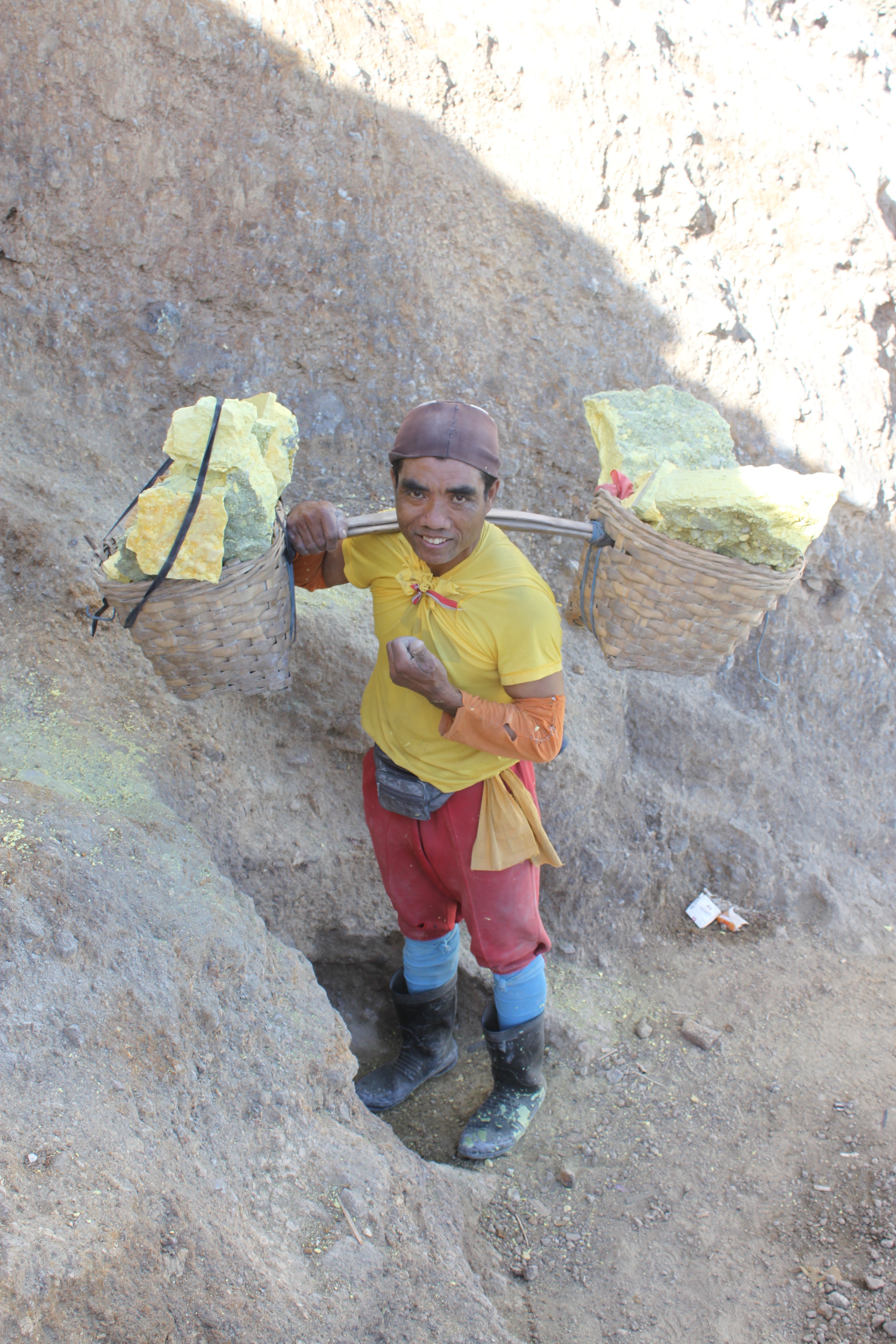
And it is harvested. It hardens and can be chissled off the ground with a crowbar. Human porters then literally carry the chunks of sulphur in baskets suspended over their shoulders. These baskets can total up to 80kg in weight and amazingly these porters of all ages take them from the bottom of the crater up a steep, uneven and slippery path and then down the mountain to a base. It’s an extraordinary effort. They start at 1am and finish around 9am, in the cool of the day and before the afternoon mist rolls in. In that time they will get two trips to the crater. Payment is about 1,500 rupiah per kilogram.
Tourists up close to the action
Now add to this busy trail a mob of tourists. Tour groups from all over Java descend on this place to witness the spectacle of the extraordinary landscape as well as the very human method of harvesting the sulphur. So now the narrow steep trail down to the lakes edge is extra busy, even comical – or would be if it wasn’t so serious. Workplace Health and Safety would have this place shut down in an instant! A French tourist fell to her death here in recent years. To the porters it must be frustrating to have all these foreigners on their path and in the way. Some of them do manage to wangle cigarettes out of the visitors, or for a fee they will take you extra close to the action. I did this and got some great shots. If I was to do this again and for anyone thinking of traveling to here, take some cigarettes with you whether you smoke or not and just hand them out to these men. They do appreciate it.
A porter
Now for the trip back to Surabaya. Back into the cramped van we head off at 9.30 onto roads fit only for serious 4-wheel drives. We’re in a tired old Toyota van. Some will go to Bali via the ferry while I go to Surabaya. It’s another long slow trip and I reach town around 7pm and bed at 1.30am after a catchup over food and beers with Freddy and Agung. That is an 18 hour day. Not a bad effort for an old fella!
Sulphur baskets ready for the trip to the processing depot
PS. Just an update on my research into how aware the average Indonesian on the street is of the live cattle trade drama. My data may be slightly flawed! The Indonesian word ‘kadal’ means lizard. So when I asked if they knew about Australia stopping all live cattle exporting to Indonesia, all three participants looked confused and responded ‘no’. They hadn’t heard that the live lizard trade had been stopped! I have since found out the drama has been secondary news here but apparently beef isn’t an important part of the average Indonesian’s diet. It is a status thing to have beef on the menu so it may have only effected the well-to-do, who weren’t part of my survey.
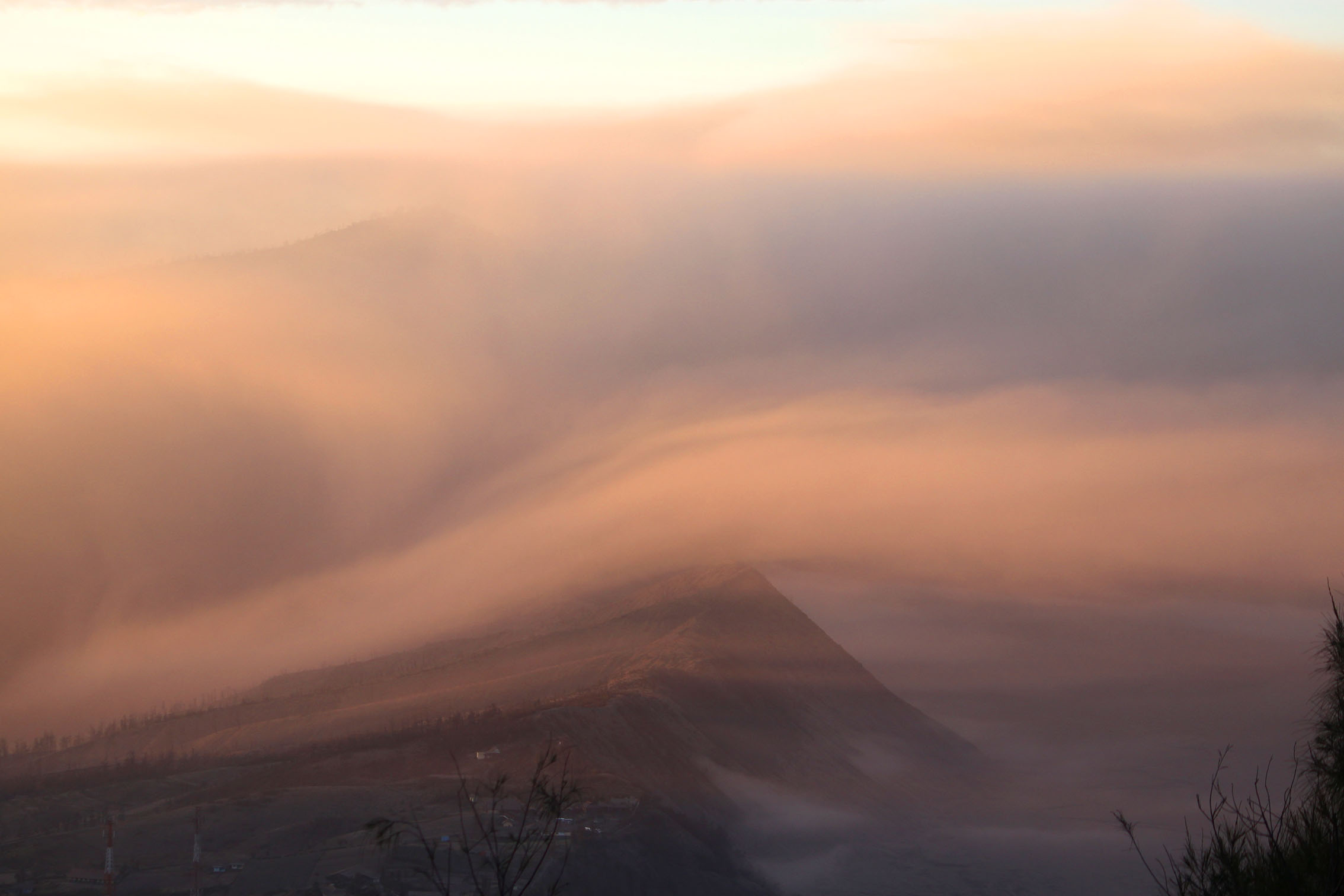
Strange cloud and dust effect over the outer crater. Note the villages, so close to the volcano!
It’s a 4.00 am start! We head up to Bromo in jeeps (short wheel-based Toyota landcruisers). We climb as far as we can go and then start walking – in pitch darkness. The aim is to get a view of Bromo under the half-light of a sunrise. There are many other tourists here doing the same. Locals are there in force with horses on hand for anyone who might want to do the last stretch to the lookout on horseback. A few take up the offer. My relationship with horses goes way back and memories of those experiences are rarely positive so i have no problems declining the offer! The horses here are small are more pony like than horses. It is a novelty though for some of the tourists. I stumble my way in the dark to the viewing spot.
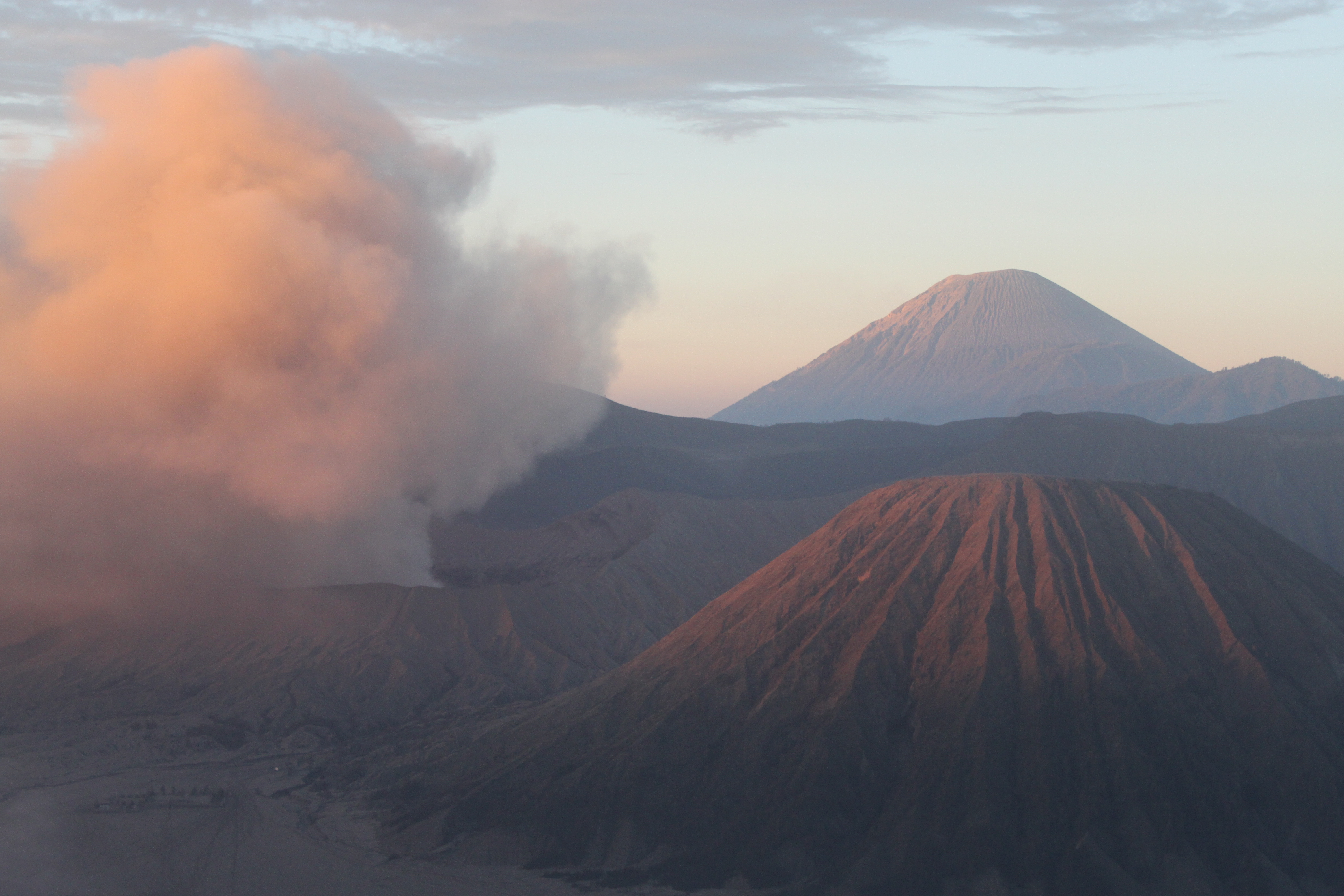
Smoking Bromo
Now we wait. There are visitors from all over the world including some annoying young poms. I think I’m the only Australian and apparently Aussies are rare here. I have no idea why. They get as far as Bali and that’s it! Nick was told to be wary of young Australians on Bali. They are some long-tern feral Aussies that cheat and steal from tourists there to fund their bohemian lifestyles – not a great reputation to have!
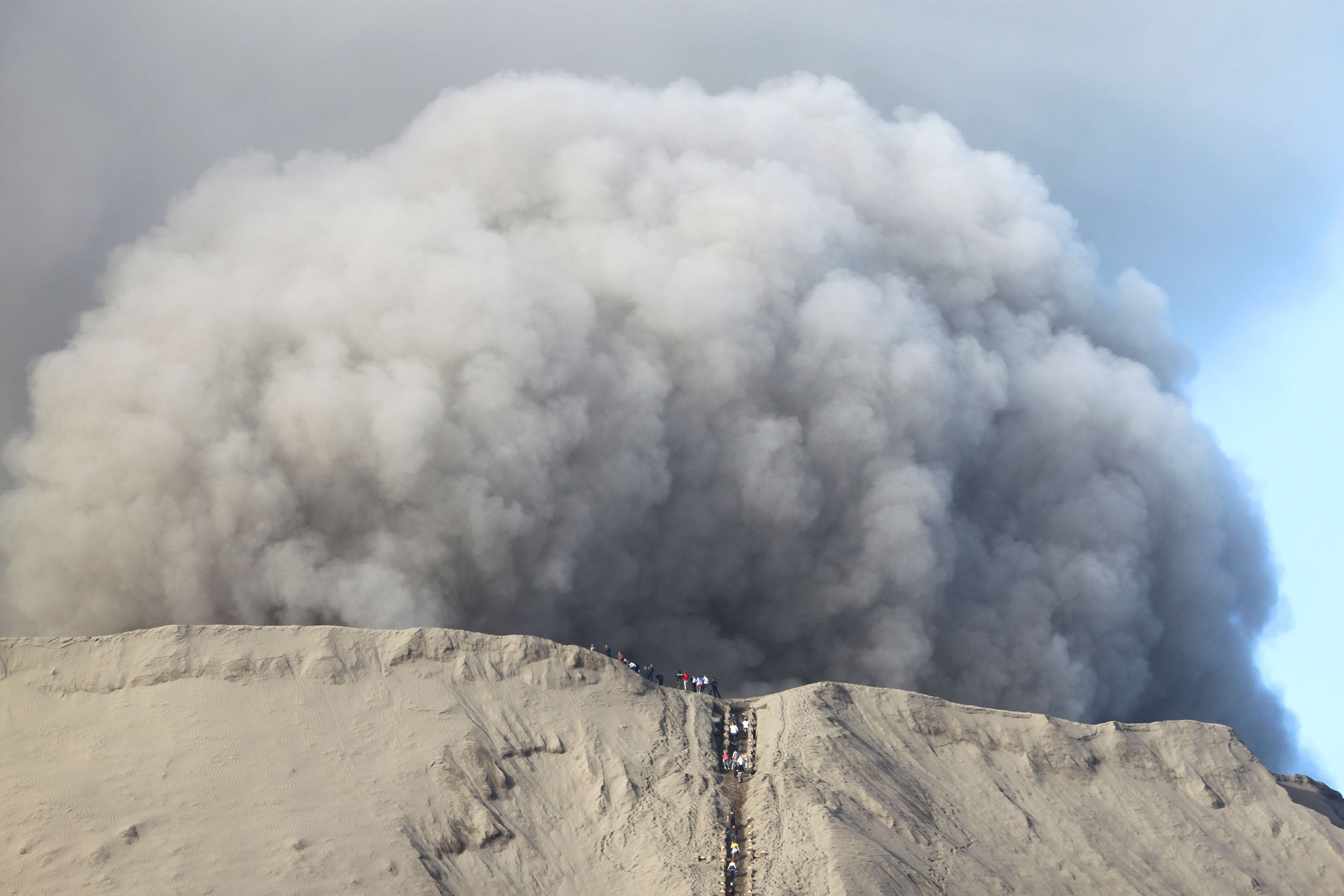
Sunrise is spectacular. Bromo is in the background spewing out clouds of dust. The fine dust covers everything, even where we are, miles away. The views are truly stunning and can only be explained through photos.
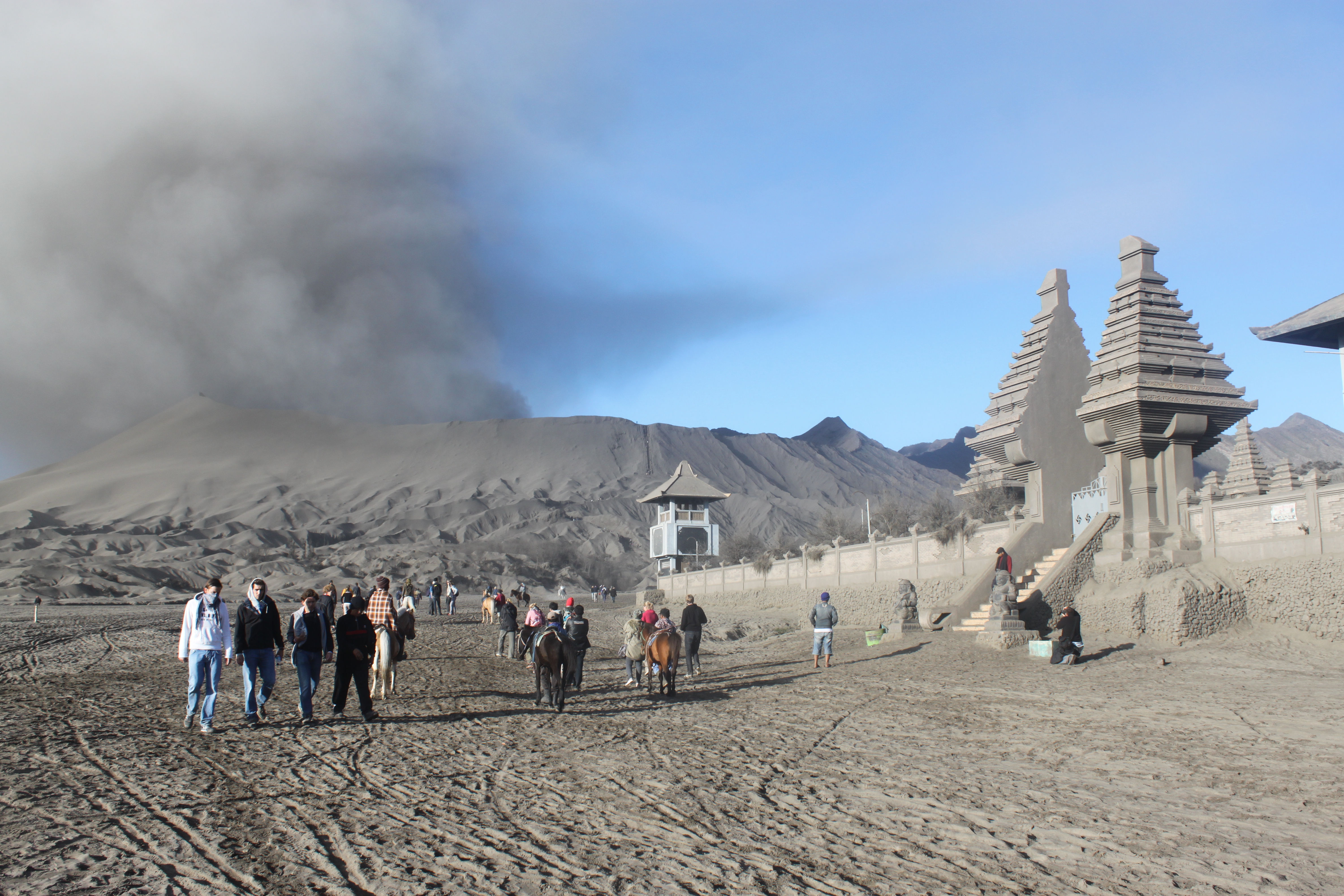
The Hindu Temple on the way to the Mount Bromo crater
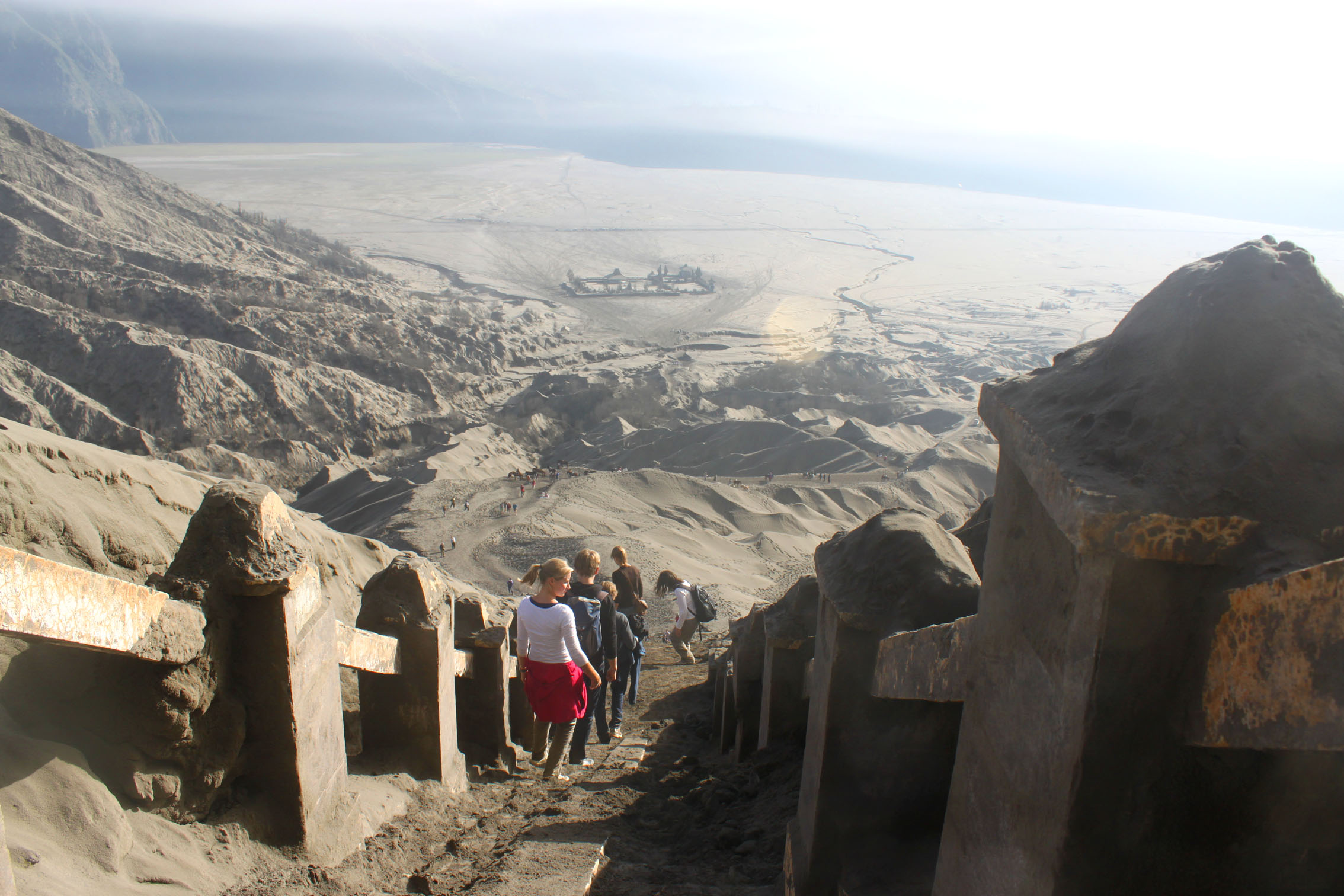
We then pile back into our jeep an aim for Mount Bromos active crater, across a bare plantless dusty landscape. Again we park and start walking and again the horses are on offer. It’s quite a comical scene. We pass a Hindu temple before walking up the stairs to the crater edge. There are people already up there and from where we stand, are silhouetted against the grey ash and smoke. Suddenly a huge bubble of smoke rises spectacularly. It looks like it will engulf the closest spectators but doesn’t.
Bromo belches (or is that a fart) in our faces
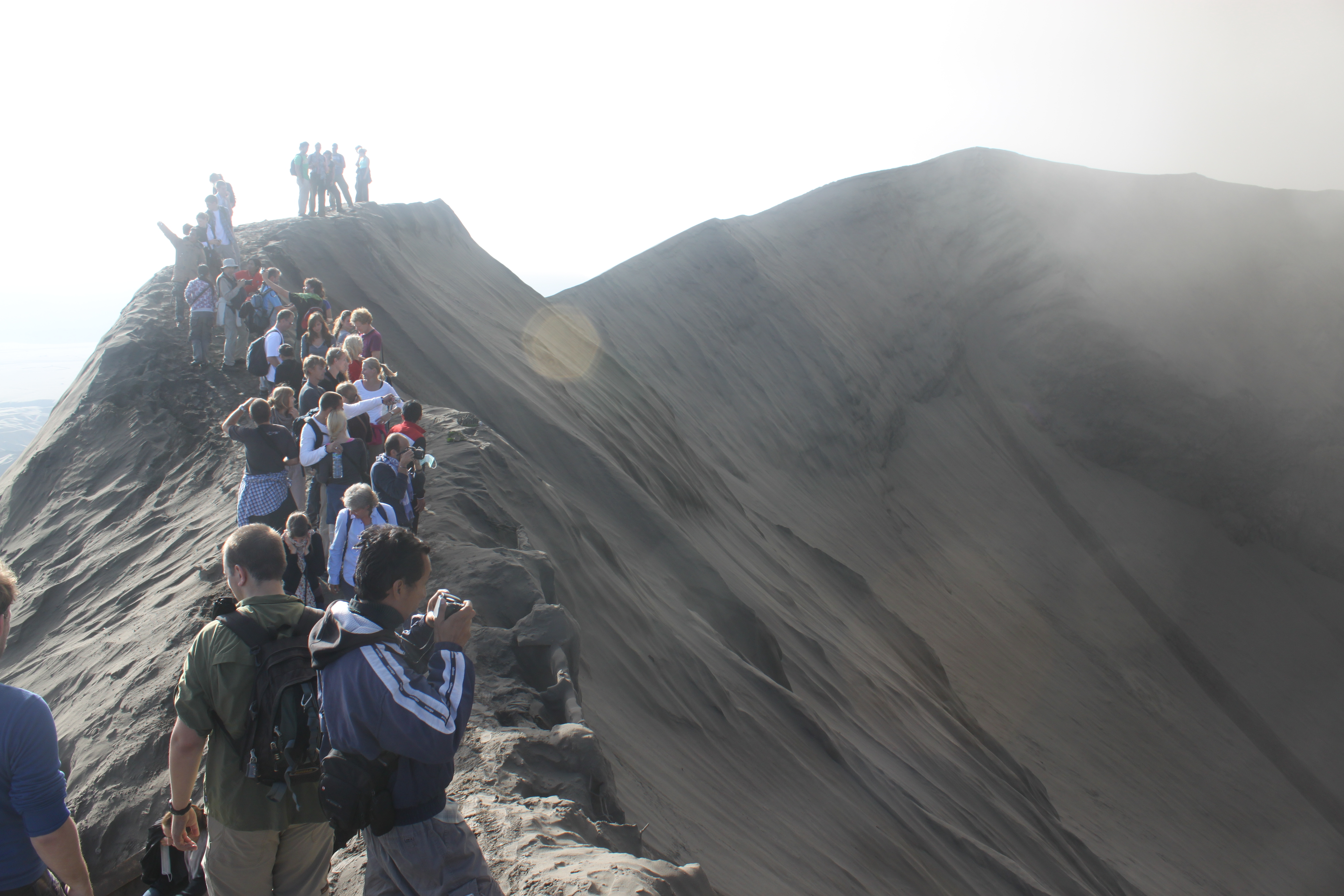
It’s enough though us on edge! We get to the very narrow lip and inside the crater is a huge, perfectly round hole from where the smoke is belching. And the sound – so eerie! You can hear and feel the gurgling, bubbling and occasionally a dull roar as Bromo mumbles away to itself.
Mount Bromo crater gurgling
You can’t see the lava because it is deep in the crater and is shrouded in smoke but you can hear it slaping around. The sound is inconsistent. An extra loud rumble makes us wonder if we have seen enough! This is an eye to the centre of the earth!
No second chance if you slip here!
To slip here is a one-way ticket to certain death and here we were, a bunch of tourist jostling for a vantage point on the very thin lip of the crater. Throw in some vertigo and I’ m seriously edgy! Has anyone ever fallen in? It wouldn’t be hard! Just awesome! Yesterday’s arduous bus ride is well forgotten. Mount Bromo is truly worth it.
It’s back on the crowded van and we are spirited away to the next adventure – Ijen Plateau. It’s another 6 hours in the crowded van over rough roads. We are up in fertile mountains and this region is famous for it’s arabica coffee plantations. We arrive at our destination in Bondowoso (I think) around 7pm. Sadly it’s dark so there is little opportunity to have a look around this pretty place. It has a coffee processing works here where the coffee is washed and dried.
Looking back down the steps from Bromo's crater edge
The bus to mount Bromo is a van and I’m the last pickup. It’s a squeeze and I end up in the back next to a Nick and Annette, brother and sister from Holland. Interestingly a lot of Dutch travell here in Indonesia, connected somehow from the colonial past. Annette is a medical student and she has just completed an internship with a hospital in Jogya. Nick has come over to join her for a trip around Indonesia before heading home. ‘Only 12 hours to go to get to Bromo’. ‘What?’ is my reply! Typically I have signed on to this 3-day trip without reading the fine print.
They’re right. The whole day is spent in this cramped van traveling at reckless pace on typically crowded Indonesian roads. Fortunately I’m in the back seat and can avoid the terrifying vision of near misses and close shaves through the windscreen. I highly recommend not sitting in the front of the vehicles when travelling in Indonesia. The chaotic nature of the traffic continues outside of the city except that both speed and passenger anxiety are amplified considerably. It’s best to focus your attention out of the side windows.
We arrive at our hotel (Sunsia Lodge) in the village of Cemoro Lawang in the dark at 9.00pm, exhausted and hungry. And it’s cold here. It can get down to 5 degrees at night. What have I signed up for?
I wake up feeling a bit fluey so ditch plans for visiting the palace and sleep in. Central Java is ruled by a Govenor who comes with the title King. Jogyakarta is the capital of central java. Apparently central government in Jakarta is trying to replace him with one of their own and the locals aren’t happy.
Part of the traffic mix
We spend the day eating, drinking and hitting the shops. The main shopping area of Jogyakarta on this Saturday night is teaming with people. It’s the last weekend of the school holidays here and the volume of people in the main strip is just mindboggling! It’s a struggle to get anywhere, having to literally push your way through the crowds. The shops stay open late, if they shut at all. The traffic is snail pace with every possible form of transport fighting for space including cars, scooters, pushbikes, pedicabs and horse-drawn carts. Entertainers perform on the edge of the street and crowds gather but even there the pedicabs, scooters and horse carts push there way through. And all this is done with the greatest of civility. There is no agro, people just make way.
Before we came into town we visited a travel agent mate of Agung and I signed up for a 3-day trip to some of east Java’s famous popular national parks, mount Bromo and Injen. It starts tomorrow.
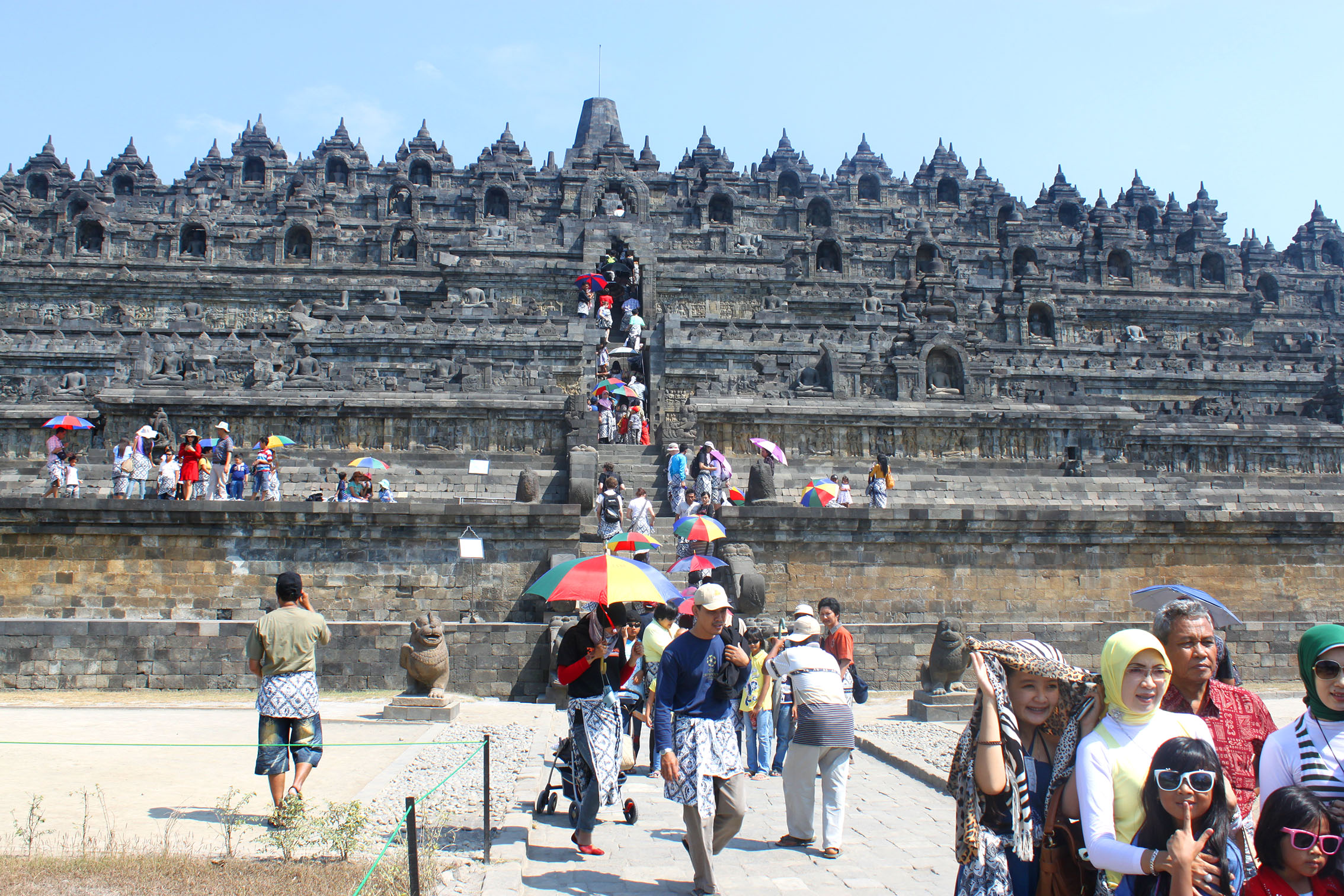
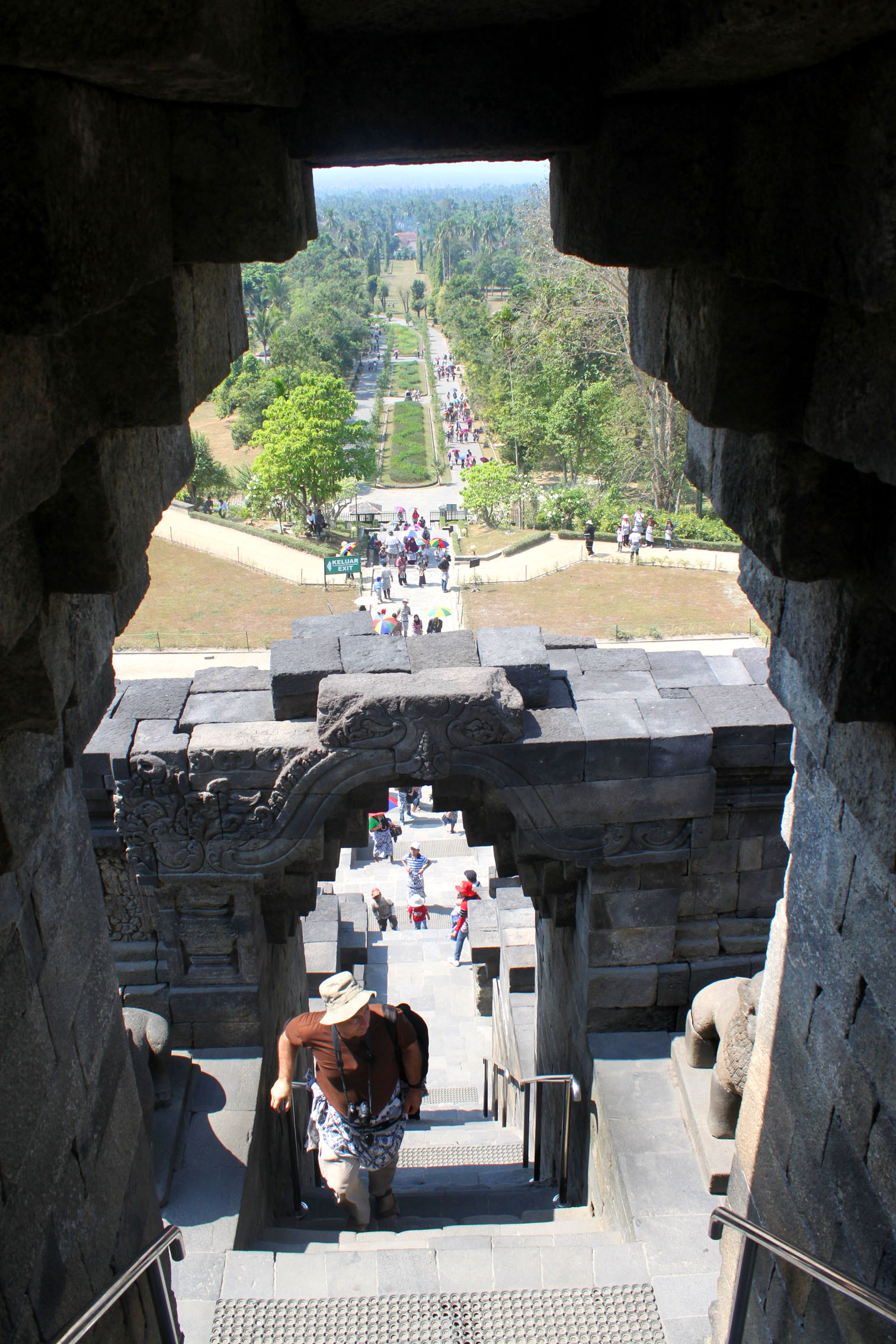
Borobudur is popular with the touristsLooking down from Borobudur
The day starts at 8.30 with a taxi ride to Borobudur. Borobudur is a huge Buddhist temple about an hours drive from Jogya. Built between AD750 and AD850 and is now one of South-east asia’s spectacular sites. Though surviving intact despite all of the surrounding volcanic activity, the temple was completely buried by volcanic ash and recently rediscovered in 1815. It has now been beautiful restored at huge expense was given World Heritage Listing status. A visit here should be a spiritual experience but it is hard to have a special moment when you have to start by fighting your way through endless markets with hard-sell vendors. Once you make it to the magnificent temple you share it with hundreds of other tourists.
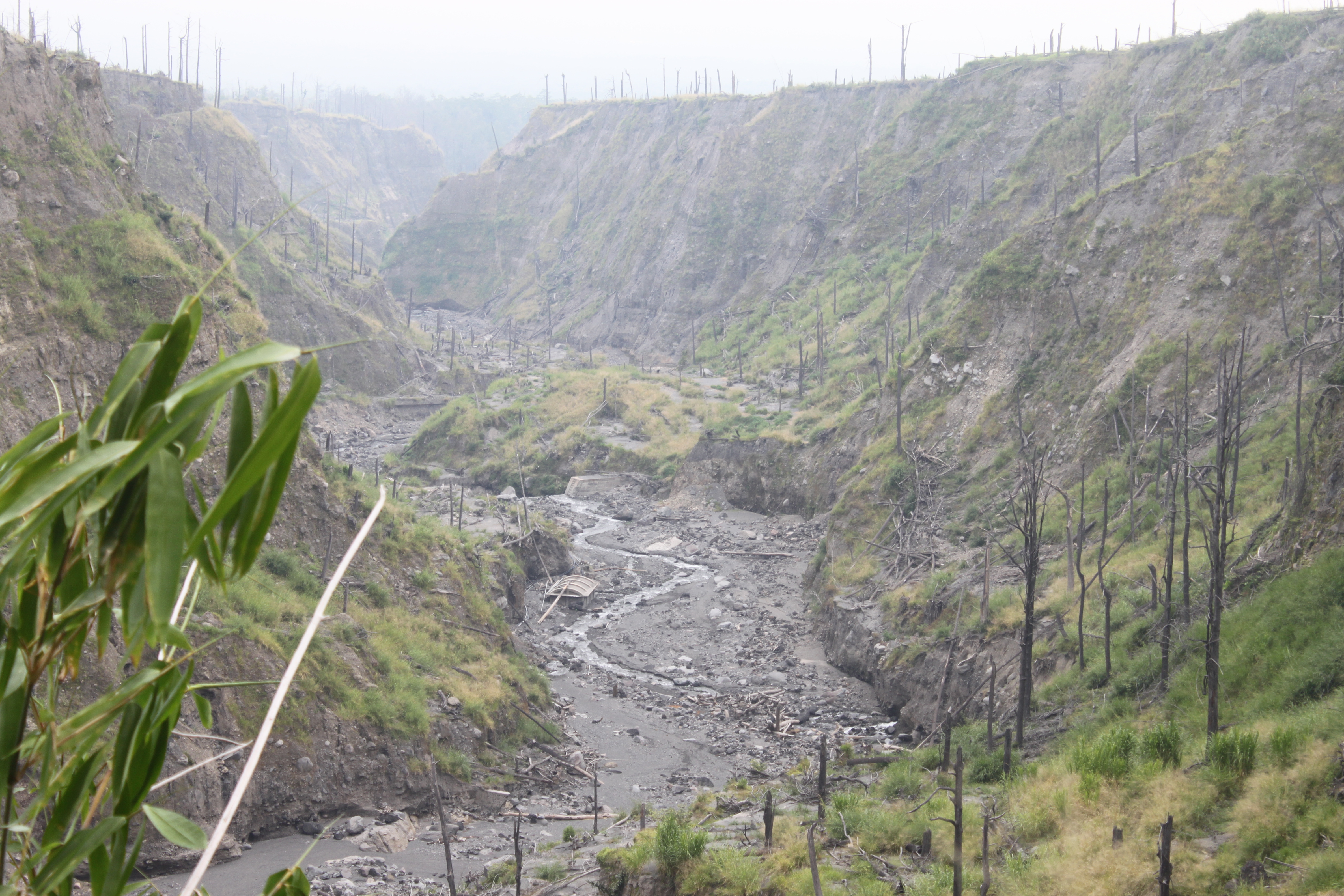
The valley devastated when Merapi blew
Mount Merapi made world news last year when it erupted sending a wall of heat and ash down a valley on it’s southern side and wiping out a village (Kinahrejo??). The spiritual caretaker of the mountain refused to leave and was killed. His decision to stay probably influenced others as over 100 people chose not to leave, also perishing. Or they feared losing their possessions if they left. The site is now a thriving tourist stop for international and local visitors. And the village is being rebuilt while Merapi simmers in the background. Sadly I suspect her work is not yet done. The scale of the destruction is amazing. Trees were stripped for miles and valleys filled with grey mud. There are remnants of buildings to reflect the human cost. Rocks and ash rained down as far away as Jogya. There is an interesting side effect though. Freddy explains that a rare tiger thought to be extinct around here, came running into the villages!
Anyway, from destruction comes opportunity. Vendors have set up shop at the end of the road for the many tourists that come up here for a look. And there are many!
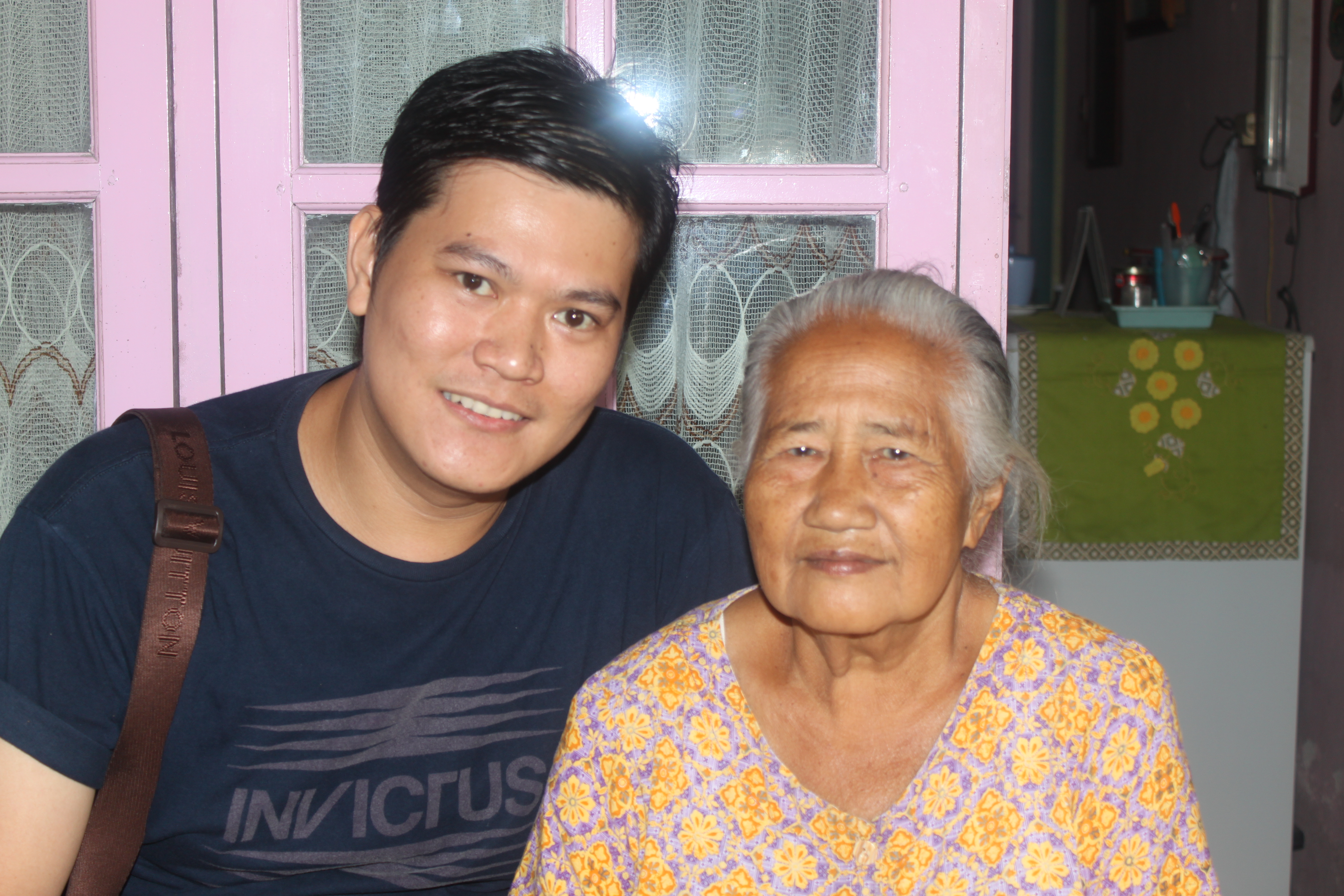
Agung with his aunt
From here we go across the other side of a ridge to another of merapis villages, Kaliurang. This was spared, although covered in ash. The fine grey dust is everywhere. Agung’s fathers’ sister lives here. She is a beautiful old lady who has lived here all her life. they grow flowers, chillis, mushrooms and passionfruit for the markets. The soil is rich and everything grows easily. When Merapi spoke, this village was evacuated but fortunately suffered lightly. This area like any mountain town is popular with local tourists so there are many hotels and flash homes.
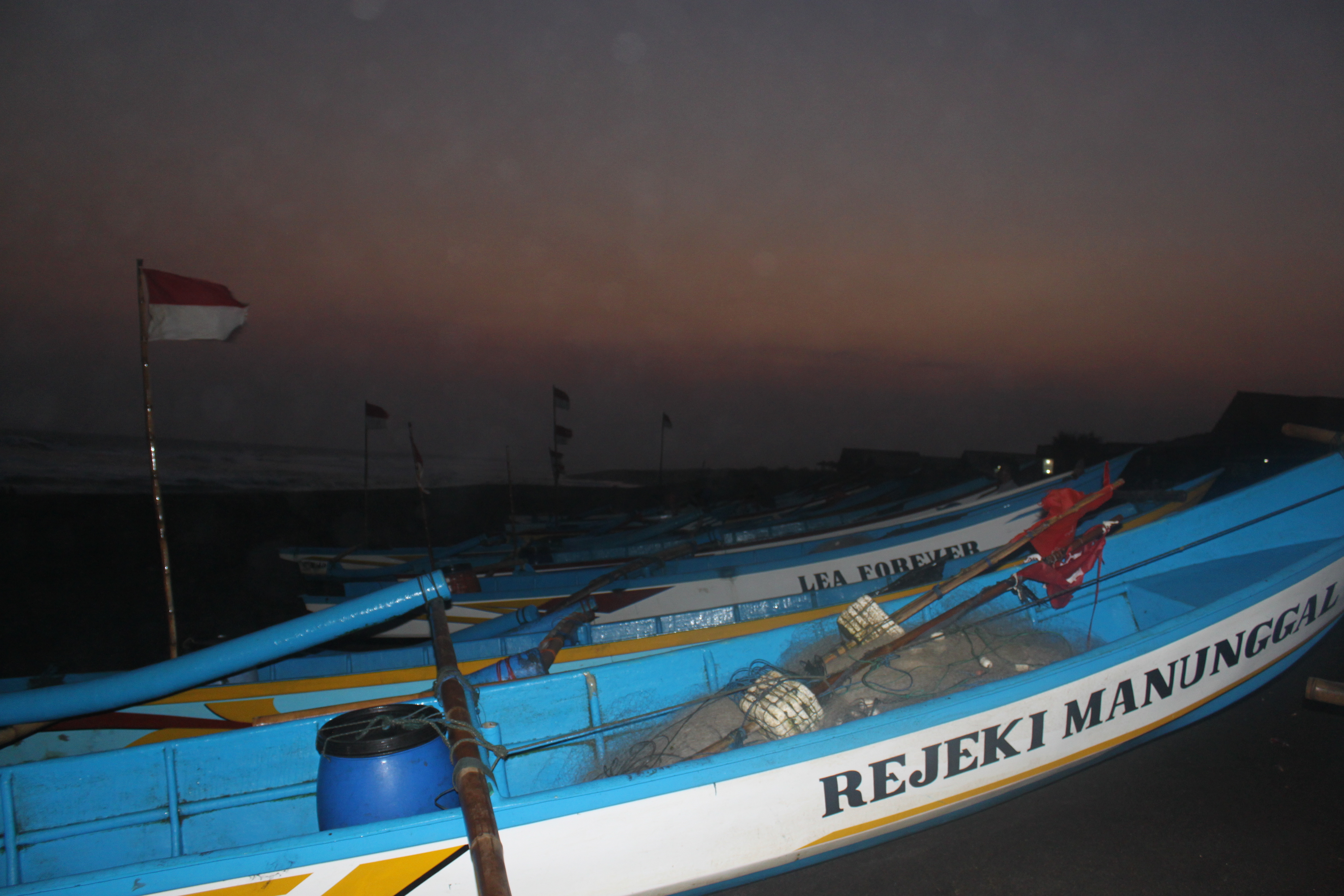
Fishing boats on the beach at the fish markets
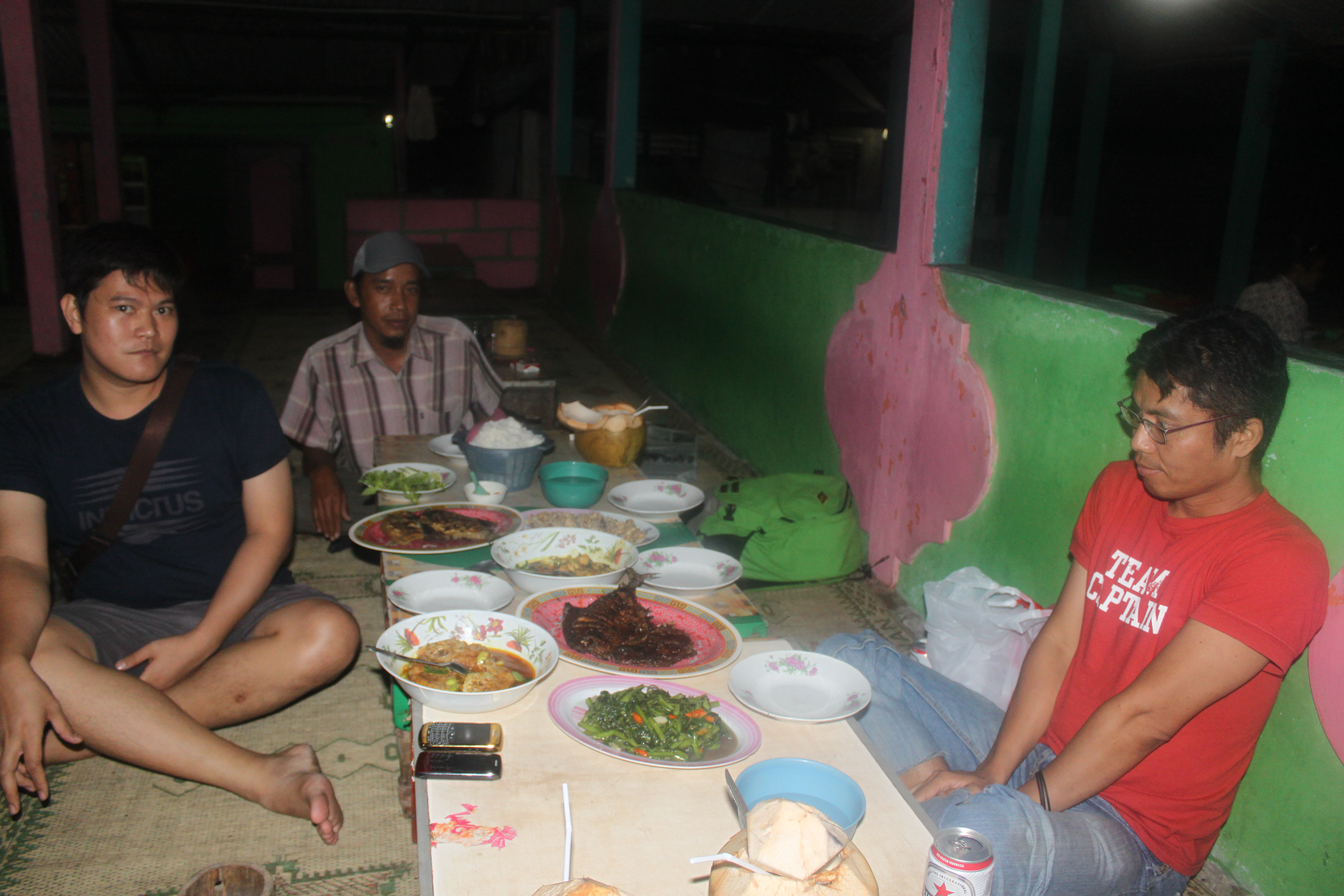
The sun has just set and we off to a popular beach spot for dinner. there is a busy mush market here with freshly caught fish, squid, prawns and muscles of all sorts. Aging seeks out the best looking product, checking out the gills of the fish for freshness. The next step is to get it cooked and that is all dine here too.
Sourcing tonights dinner
For a small fee, you get your fish cooked beautifully at a traditionally styled kitchen.
All this for $10 AUS!
The beach is lined with the fisher boats that supply the markets. They go out at midnight and get back in the morning.
The day isn’t over yet. Agung wants to have a moment with his God so we call into the neCatholic church.
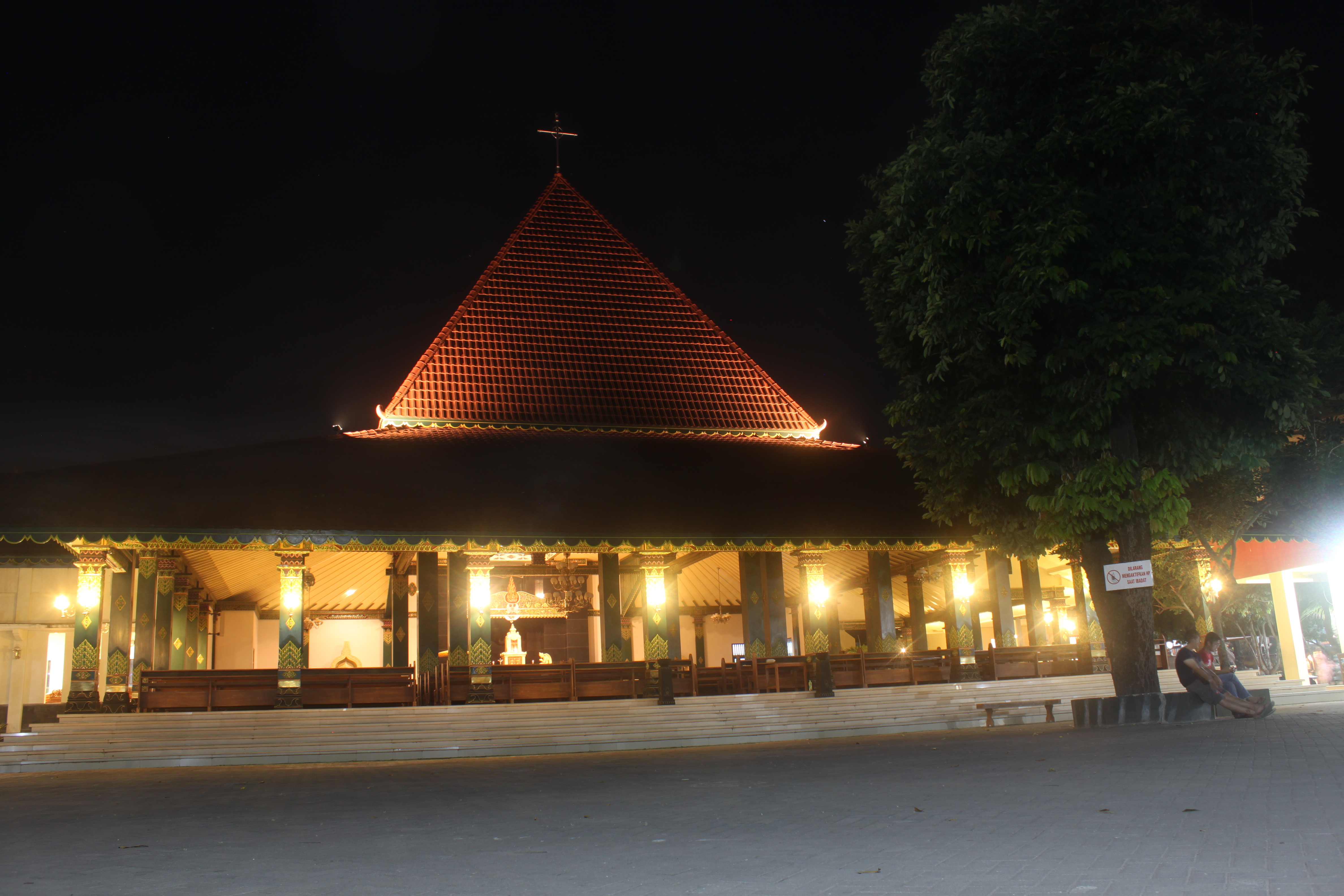
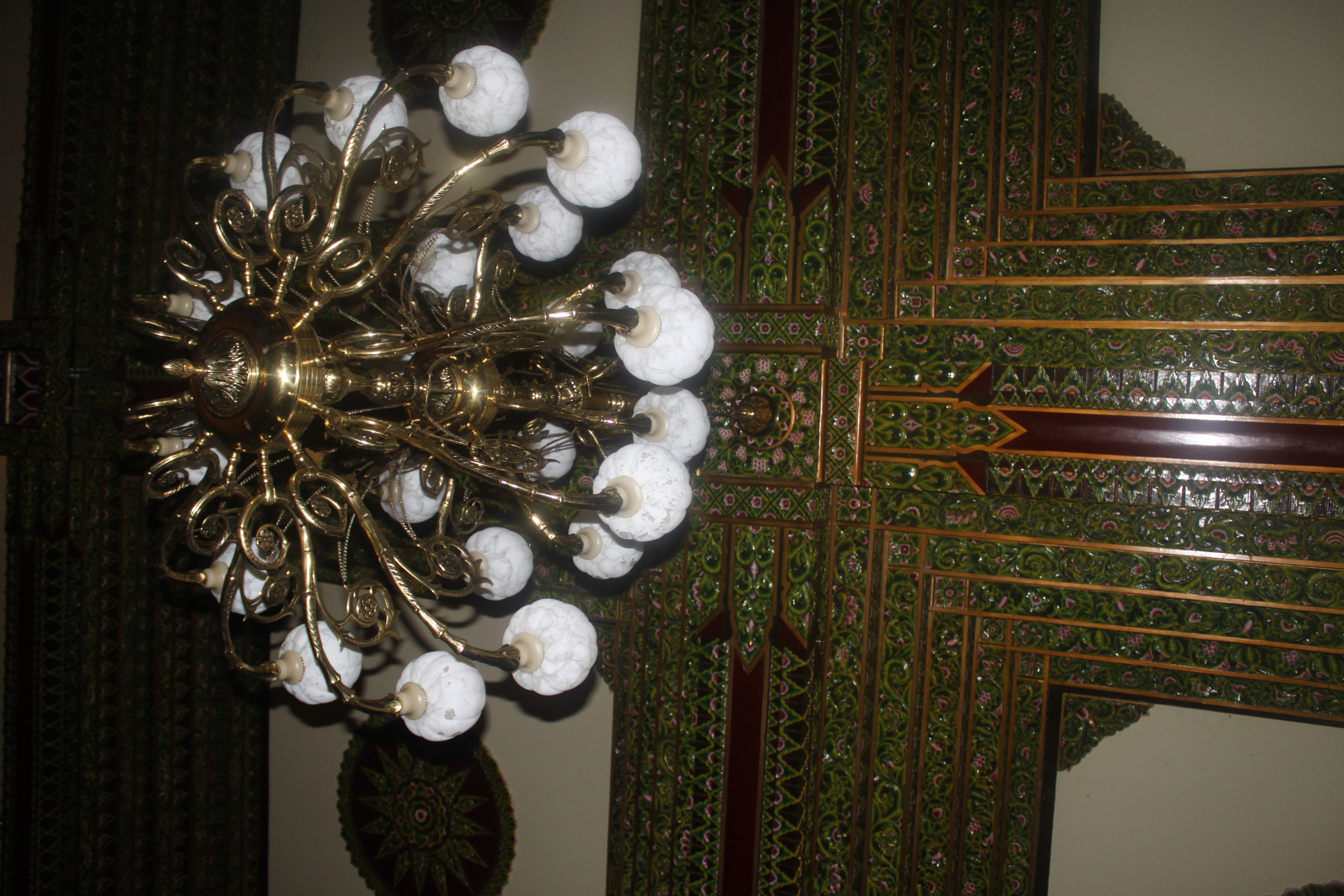
The new Catholic ChurchOrnate lights
This church is like no other Catholic church I have ever seen. It is built in traditional Indonesian style with open walls and beautifully decorated supports and ceiling. There is a space for an orchestra of traditional Indonesian instruments to take part in ceremonies. This church is new because the original one was destroyed in the earthquake of 2006.
On that day the usually crowded church was deserted, avoiding loss of life when the building collapsed. Why it was deserted that day is a mystery, they must have been warned!
Outside the church compound are vendors selling all kinds of religious icons, candles and incense. Very handy!
I must tell you about the traffic here. As in Surabaya, and I suspect in the rest of Indonesia, the traffic has real character! What the hell does that mean? I will try to explain.
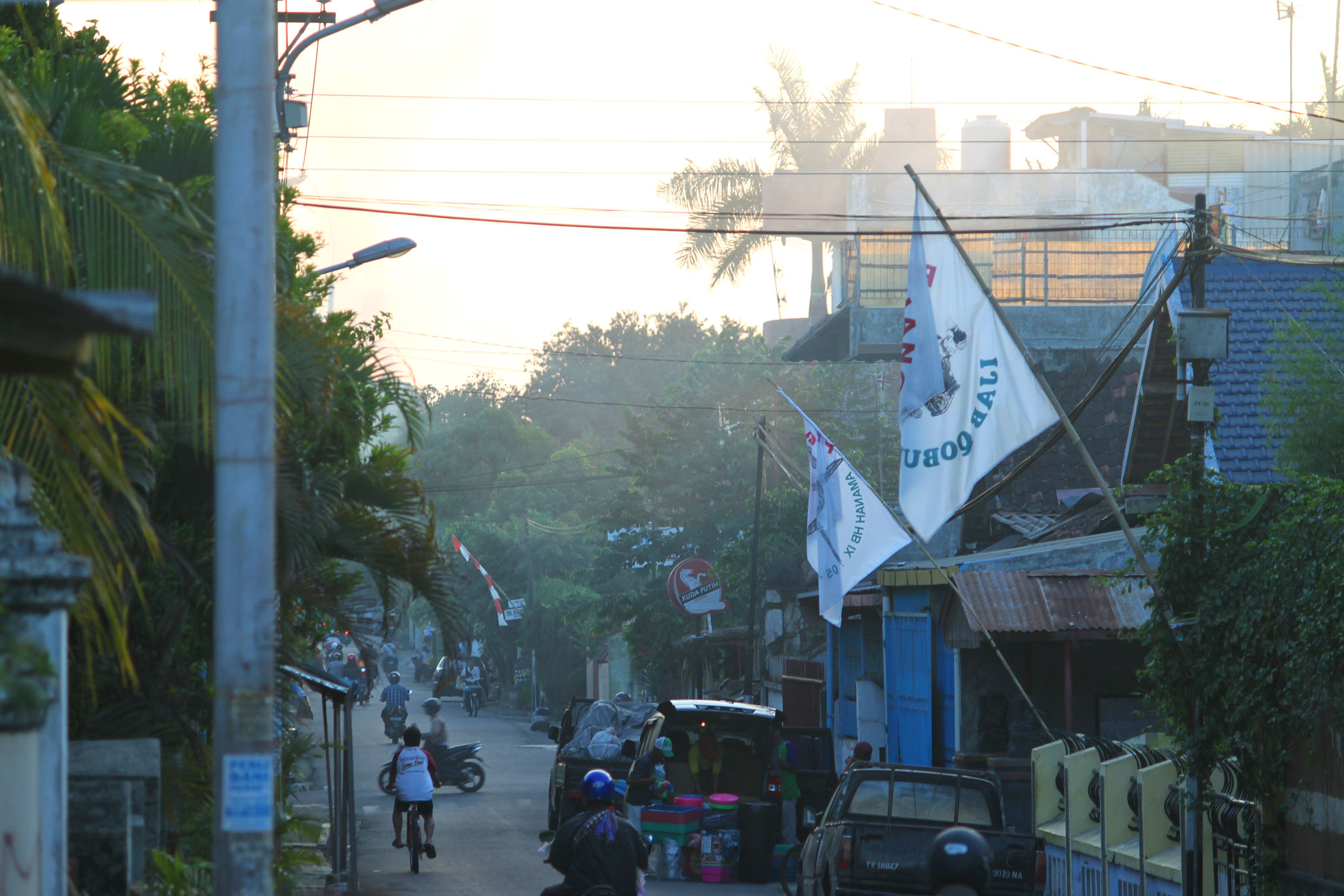
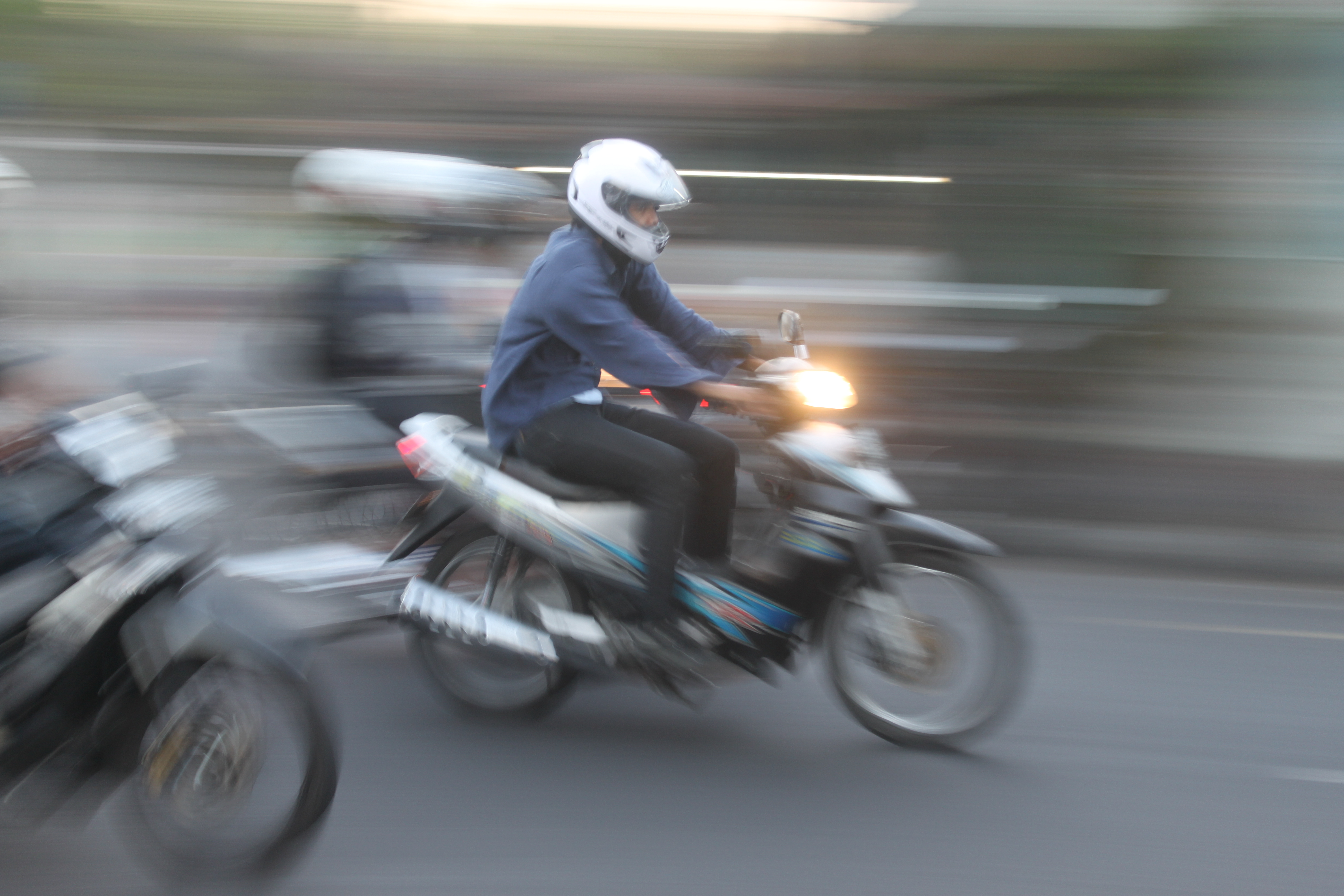
The roads are shared by horse-drawn carts (5%), push bikes (8%), pedicabs (15%), motor cycles and scooters (800%), cars (20%), pedestrians (500%), trucks and buses (4%). Many of the sides streets and some of the main streets are lined with vendors selling anything and everything. Many of the these are mobile and become part of the traffic mix. Traffic lights are rare and largely ignored anyway and there are lines marked on the roads but I am yet work out which side of the road they drive on! Put all this together, throw in some speed and it’s alive. All components travel at a different pace of course, bikes fastest and pedicabs (peddle cabs) slowest.
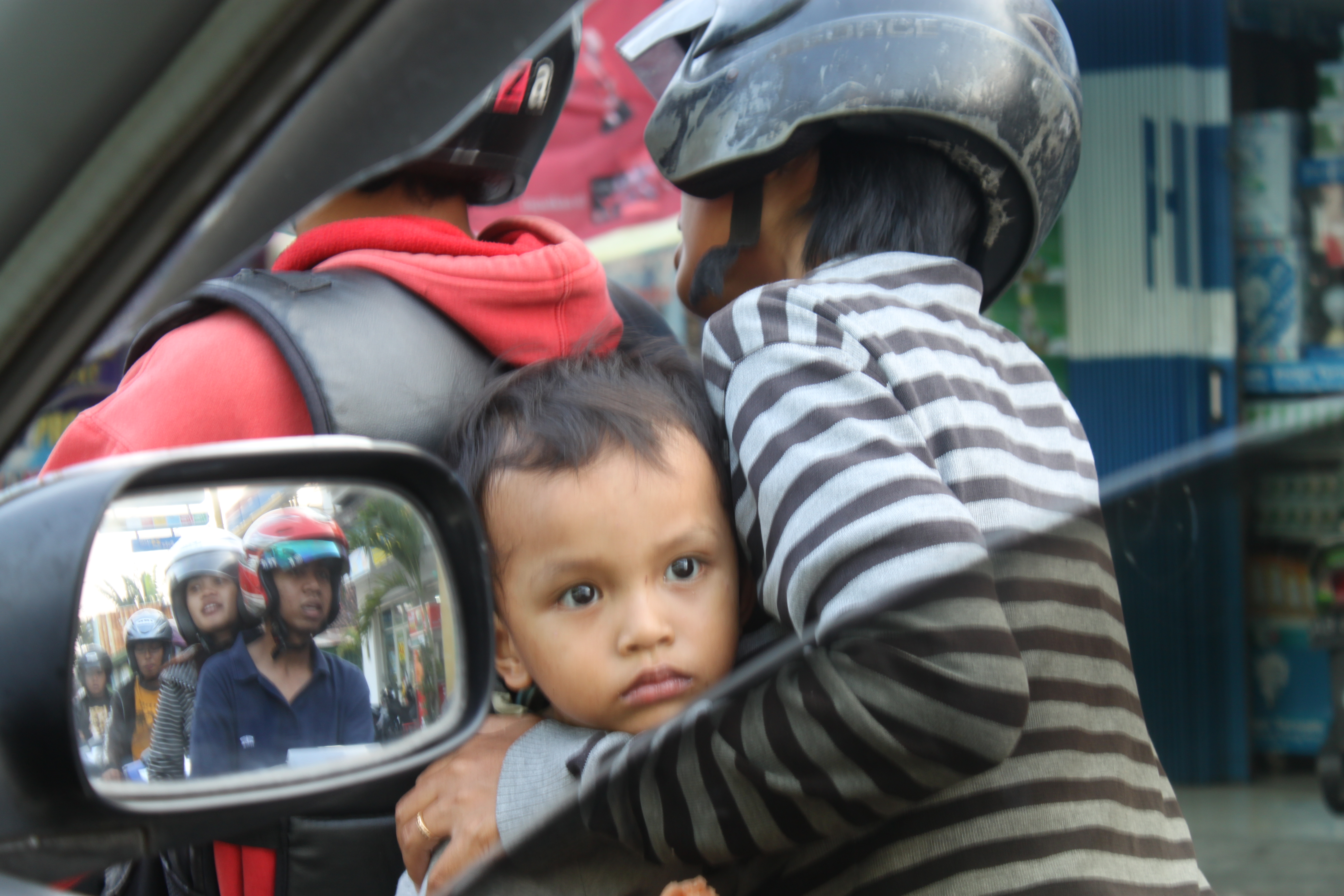
Riding the bikes are all sorts, ranging from young girls to whole families. Yes it isn’t uncommon to find mum, dad and two kids (have seen three) on these small bikes. I’ve even seen a young boy of about five years of age straddling the fuel tank with head rested on folded hands on the handlebars, fast asleep while dad weaves is way through the chaotic traffic. Amazingly this traffic works in a chaotic but functioning way. Drivers and riders do so with civility and calm. There is no agro. Horns and lights are used more to indicate intentions than abuse. And yes you can even chat on the mobile while you ride!
It’s a 5am start to catch the train at 7am to Jogjakarta (Jogya to the locals). Entering the train station we’re greeted by a live band doing covers of well know 60’s music but in Indonesian.
We manage to get upgraded to ‘flash’ class, which means seat allocation and air-conditioning.
The train takes us out of Sarabaya via the slums and into the countryside. Java’s soils are rich, supporting a thriving agricultural industry. Rice, corn, bananas, teak and other crops endlessly stream past and the fields are busy with people. Men and women dot the landscape, head down bum up. Mount Merapi appears in the distance through the smog. It looks like it’s still smoldering from an eruption last year where several villages were wiped out. Visiting the mountain is now on the tourist trail.
Jogjakarta is a very different city to industrial Serabaya. The pace is noticeably slower and the air is cleaner. Walking to our hotel via a shortcut I couldn’t get over how friendly everyone was. Freddy explains we have just walked through the ‘red-light’ district! That wasn’t in the Lonely Planets handbook! Can’t beat local knowledge.
Dinner and charcoal coffee
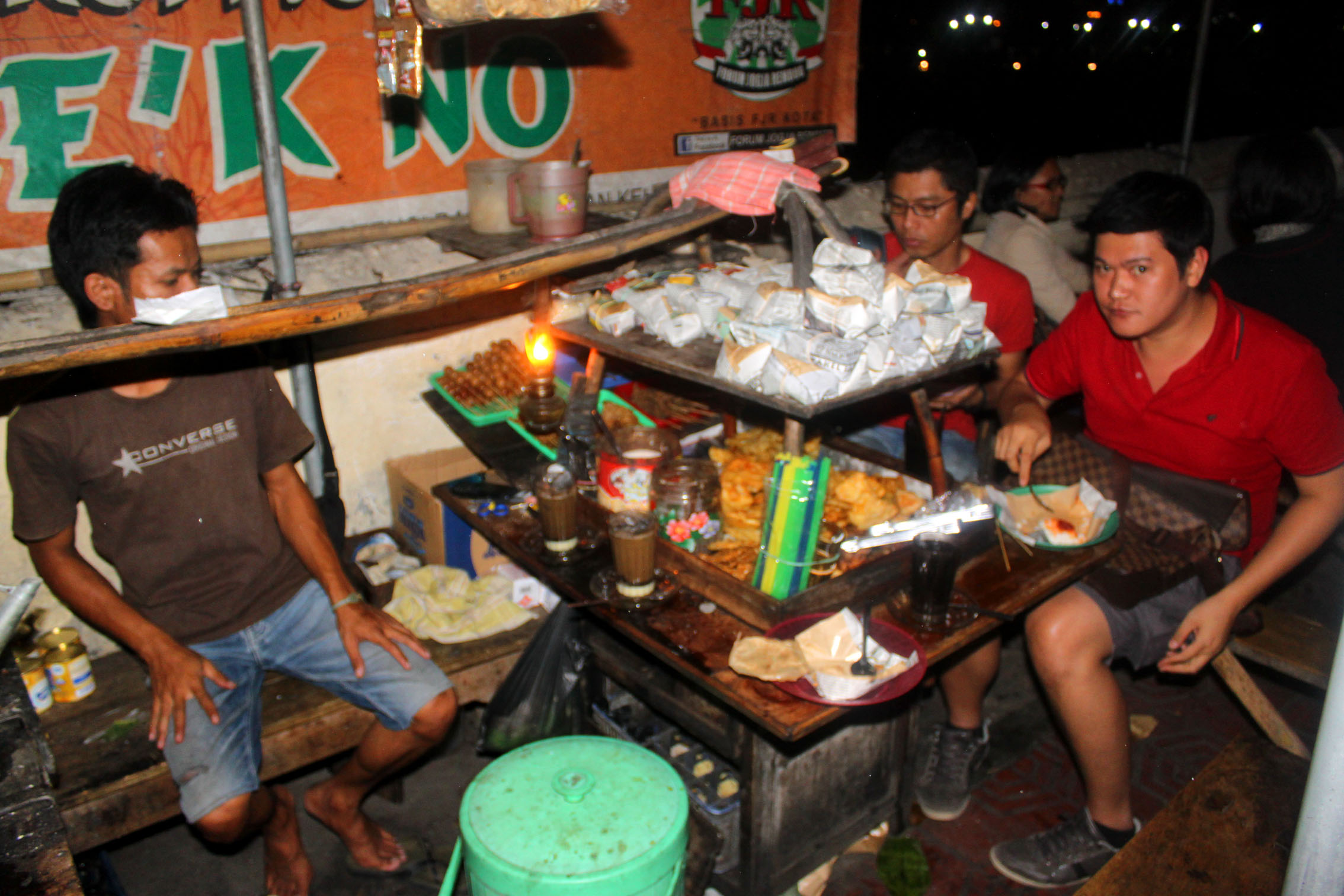
Agung, Freddy’s friend, is a regular visitor to Jogya and is our guide here. We hit the town at pace via a couple of peddle cabs (insert pic) and start down the main tourist strip. This is very glitzy and over the top, equivalent to something you would find on the Gold Coast. It is Thursday night and there are people everywhere. Agung explains it is a bit busier than usual because it is school holidays here at the moment and Jogya is a popular holiday destination for Indonesians also. Like all tourist strips it ends and we are now in the real Jogya. I’m amazed at the number of people out and about eating at street vendors, shopping, socialising. Eating out is the norm it seems. Whole families sit around their favourite vendor and eat. If they are anything like Freddy and Agung, they will travel miles to seek out their favourite food. And the food is so cheap. I shouted a light dinner at one of Agung’s favourite spots and it cost me $3.50AUS! That was for the three of us and included coffee, a very special coffee.
Hard to see but that coal is straight out of the fire and into the coffee!
We came to this vendor because they have a very special way of making coffee. It is instant coffee with a chunk of red-hot coal thrown in! It is a very unique technique and tastes interesting but i don’t think it would take off in Australia.
Night of colour, lit-up peddle cars
But prior to having dinner we visited a park area or huge public space that was alive with people. Push bikes and peddle carts were decked out in colored lights and risen around a circular track. There were hundreds of these things all decorated differently peddled by kids or whole families. Agung explains this happens every night!
There are two huge fig trees in the grounds here and it is said that if you can walk straight between these trees while blind folded then you are a good and decent person. So it is a feature of this place to see people testing their decency by donning a blindfold and heading off in the appropriate direction, with hilarious consequences. I didn’t see anybody prove themselves decent and good!







 angusmccoll
You must be logged in to post a comment.